Kedjehjul för sågverksutrustning
Australiensiska sågverk – från små portabla sågverk i plantager till stora fasta bearbetningsanläggningar för barr- och lövträ – förlitar sig på rullkedjedrift i varje steg av processen att omvandla stock till virke. Sågverkskedjedrivhjul arbeta i några av de tuffaste industriella miljöerna: tunga stötbelastningar från stockstötar, inbäddat barkgrus och sand, konstant fukt från stocktvättning och barkning, och vibrationer från högpresterande sågdrivningar. Se vårt utbud av kedjehjul för skogsbruk och sågverk →
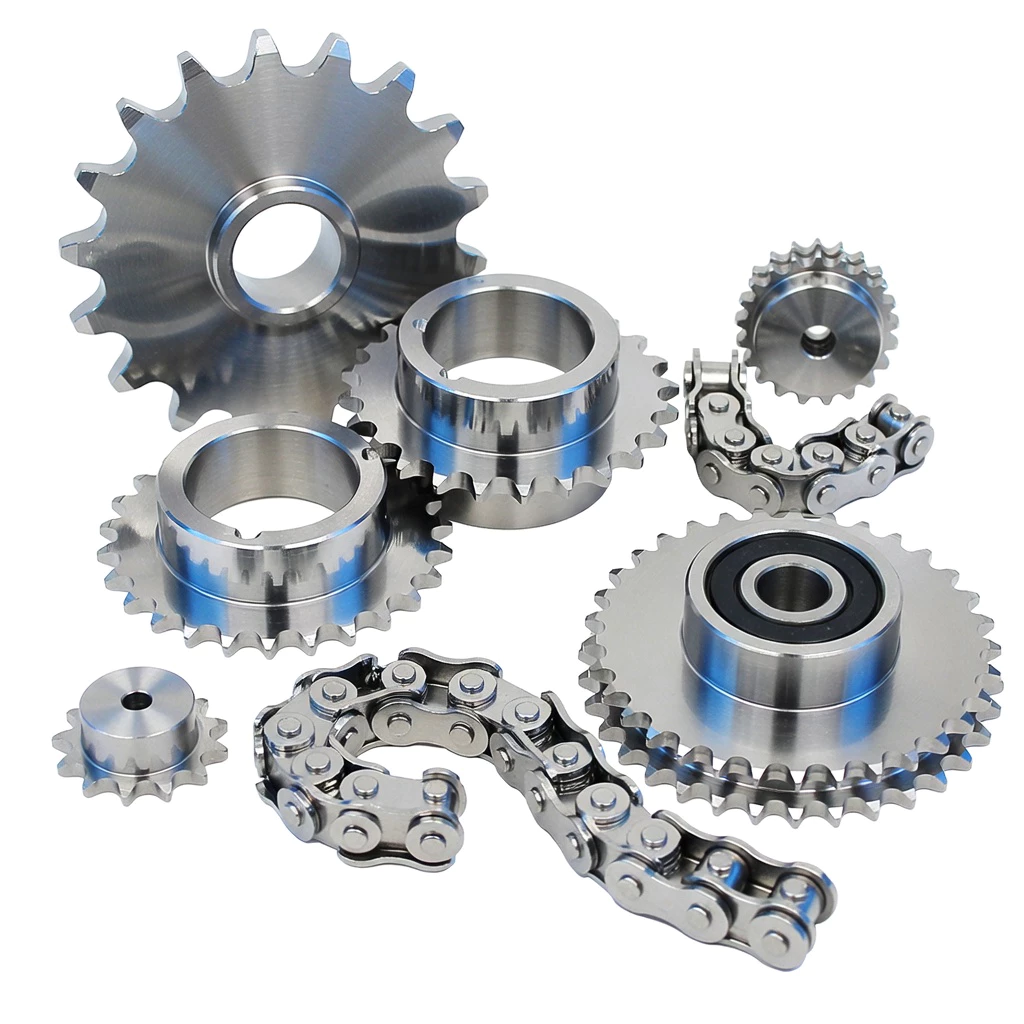
Översikt
Ett modernt sågverk använder rullkedjedrift i flera steg i produktionsprocessen:
- ✓Inmatningstransportör för stockar: Kraftiga ANSI #80 eller #100 kedjedrev på stockinmatningsdäcket som transporterar råa stockar från timmerupplagan till barkningsmaskinen och huvudsågen.
- ✓Drivenheter för timmervändare och positionerare: ANSI #60 eller #80 kedjehjul på stockvändningsmekanismer som roterar stocken för optimal sågorientering.
- ✓Barkningsmaskinens kedjedrift: Kedjedrifter av typen ANSI #80 eller #100 med högt vridmoment driver ring- eller trumbarkningsmaskinen runt stocken.
- ✓Kantklippare och transportörer för skivhantering: ANSI #40 eller #60 kedjehjul på transportband och kantmatningssystem, hanterar grovt sågat virke efter huvudsågen.
- ✓Drivningar för ugnsstaplare och sorterare: ANSI #50- eller #60-kedjehjul på automatiserad staplings- och sorteringsutrustning som hanterar grönt virke före ugnstorkning.
- ✓Spåntransportörers drivningar: ANSI #60 eller #80 kedjehjul som hanterar flis och bark från barknings- och flishuggen till flishögen.
Tekniska specifikationer
| Parameter | Sågverksvärde | Räckvidd |
|---|---|---|
| Kedjestandard (inloggningsflöde) | ANSI #80 / #100 | ANSI #60–#120 |
| Kedjestandard (brädhantering) | ANSI #40 / #60 | ANSI #35–#80 |
| Kedjestandard (spåntransportör) | ANSI #60 / #80 | ANSI #50–#100 |
| Material (inloggningsflöde) | 40Cr legerat stål | C45 för korthanteringsdrivningar |
| Tandhårdhet | HRC 50–60 | HRC 48–62 |
| Falldjup | 1,5–3,0 mm | — |
| Fukt- och barkbeständighet | Dacromet/zinkplåtbelagd | SS304-alternativ för tvättzoner |
| Navstil | Typ C för inloggningsflöde | Typ B konisk bussning för hantering av kort |
| Borrningstolerans | H7 | H6 på högchockade stockdrivningar |
| Strand | Simplex (korthantering) | Duplex för inloggningsflöde |
| Driftsmiljö | Barkdamm, fukt, inbäddat grus | — |
| Smörjning | Manuell (extern) / oljebad (medföljer) | — |
| Bearbetningsklass | DIN-klass 6 | — |
| Deformation efter HT | ≤0,05 mm | — |
| Vikt (ANSI #80 Z=17) | ~3,8 kg | 0,5–40 kg |
| Tonhöjd | 25,4 mm (stockinmatning) | 12,7–38,1 mm |
| Dokumentation | Batchcertifikat på begäran | — |
| Max axeldiameter | Upp till 120 mm | Upp till 180 mm specialanpassad |
| Driftstemperatur | −5°C till +60°C | — |
Prestandafördelar
| 🦔 | Slitstyrka mot bark och grus | Barkgrus och inbäddad sand i nyavverkade stockar fungerar som slipmedel på kedjehjulets tänder. HRC 50–60 induktionshärdad C45 (stockinmatning) och 40Cr-legering (barkningsdrivning) motstår denna abrasiva slitagemekanism och ger 2–3 gånger längre livslängd än ohärdade kedjehjul i sågverksmiljöer. |
| 💦 | Fuktbeständig beläggning | Dacromet (480+ timmar saltspray) och zinkplåtbeläggningar skyddar kedjehjulen i kolstål från den konstanta fukten vid stocktvättning och avbarkning. Dacromet är att föredra för våta stockhanteringszoner; zinkplåt är lämplig för torrare områden med skivhantering. |
| ⚡ | Log-Impact-stötbelastningskapacitet | Kedjedrivningar för stockinmatning utsätts för kraftiga stötbelastningar när enskilda stockar – vissa överstiger 1 000 kg – faller ner på inmatningsdäcket. 40Cr-legerat stål med seg kärna (Charpy 40–60 J) absorberar dessa stötbelastningar utan tandbrott, ett vanligt felläge för standard C45-kedjehjul vid stockhantering. |
| 🔧 | Konisk bussning för planerat underhåll | Kedjehjulen för kartonghantering och sortering byts ofta ut på grund av slitage. QD-versioner med konisk bussning möjliggör byte av kedjehjul på under 20 minuter under planerade underhållsfönster, vilket minimerar produktionsstopp i den vanligtvis kontinuerliga treskiftsdriften vid sågverk. |
Kompatibilitetsinformation
| Sågverksposition / Kedja | Rekommenderat kedjehjul | Anteckningar |
|---|---|---|
| Stockmatningstransportör (ANSI #80 / #100) | ANSI #80 eller #100 40Cr-legering duplex | Typ C dubbelnav; dacrometbelagd |
| Barkningskedjedrift (ANSI #80) | ANSI #80 40Cr-legeringsdrev | Högt vridmoment; fuktig miljö |
| Timmervändardrift (ANSI #60) | ANSI #60 C45 härdat kedjehjul | Stötbelastning från stockrotation |
| Transportör för kantklippning av skivor (ANSI #40 / #50) | ANSI #40 eller #50 färdig borrning | Konisk bussning för snabb omställning |
| Ugnsstaplardrivning (ANSI #50) | ANSI #50 precisionskedjehjul | Klass 6 för exakt staplingsavstånd |
| Spåntransportör (ANSI #60 / #80) | ANSI #60 eller #80 dacromet-drev | Våt spåndammsmiljö |
| Linck, HewSaw, Comact sågverkslinjer (endast referens) | ANSI-ekvivalent per kedjemätning | Endast varumärkesreferens |
| Porter, Stenner, Lucas portabla kvarnar (endast referens) | ANSI #40–#60-ersättning | Bekräfta stigning och borrning |
Urvalsguide
Installation for Sawmill Sprockets
- Isolate and lock out the sawmill drive according to the site LOTO procedure. In large integrated sawmills, LOTO may cover multiple interlocked drives.
- Remove bark and debris from the drive area before disassembly to prevent contamination of the new sprocket bore and shaft.
- Open chain using chain-break press. For ANSI #80 and above, do not attempt to break the chain with a hammer and drift — use a hydraulic press.
- Remove old sprocket. For log in-feed Type C double-hub sprockets, remove both hub retaining bolts before attempting to pull. Use a two-jaw or three-jaw puller rated for the load.
- Clean shaft and keyway. Remove embedded bark grit from the keyway with a file. Apply Loctite 638 to the bore/shaft interface (not thread-lock) for moisture-environment installations.
- Install new sprocket. Torque retaining fasteners to specification; apply stainless or zinc-plated fasteners in moisture zones to prevent rust-seizing.
- Align sprockets using a straight-edge or laser tool — target ≤0.5 mm lateral offset.
- Install chain and tension. Sag 2% of centre distance on slack side. Check idler sprockets on long chip conveyor runs for correct tension.
- Run empty for 5 minutes before introducing logs or boards. Check for unusual noise or vibration.
Troubleshooting Sawmill Sprockets
| Symptom | Probable Cause | Recommended Action |
|---|---|---|
| Log in-feed tooth fracture | C45 sprocket on high-shock log infeed | Upgrade to 40Cr alloy steel; Type C double hub |
| Rapid wear in bark-dust environment | Insufficient tooth hardness | Upgrade to HRC 54–60; add lubrication |
| Corrosion pitting in debarker zone | Insufficient surface protection for moisture | Replace with dacromet; consider SS304 |
| Board-sorter chain skipping | Worn precision sprocket on sorter | Replace with Grade 6 CNC-hobbed sprocket |
| Chain vibration on chip conveyor | Long run without idler/tensioner | Add bearing-mounted idler sprocket |
Australian Customer Case Studies
Vanliga frågor
Relaterade produkter: Transmissionskedjor
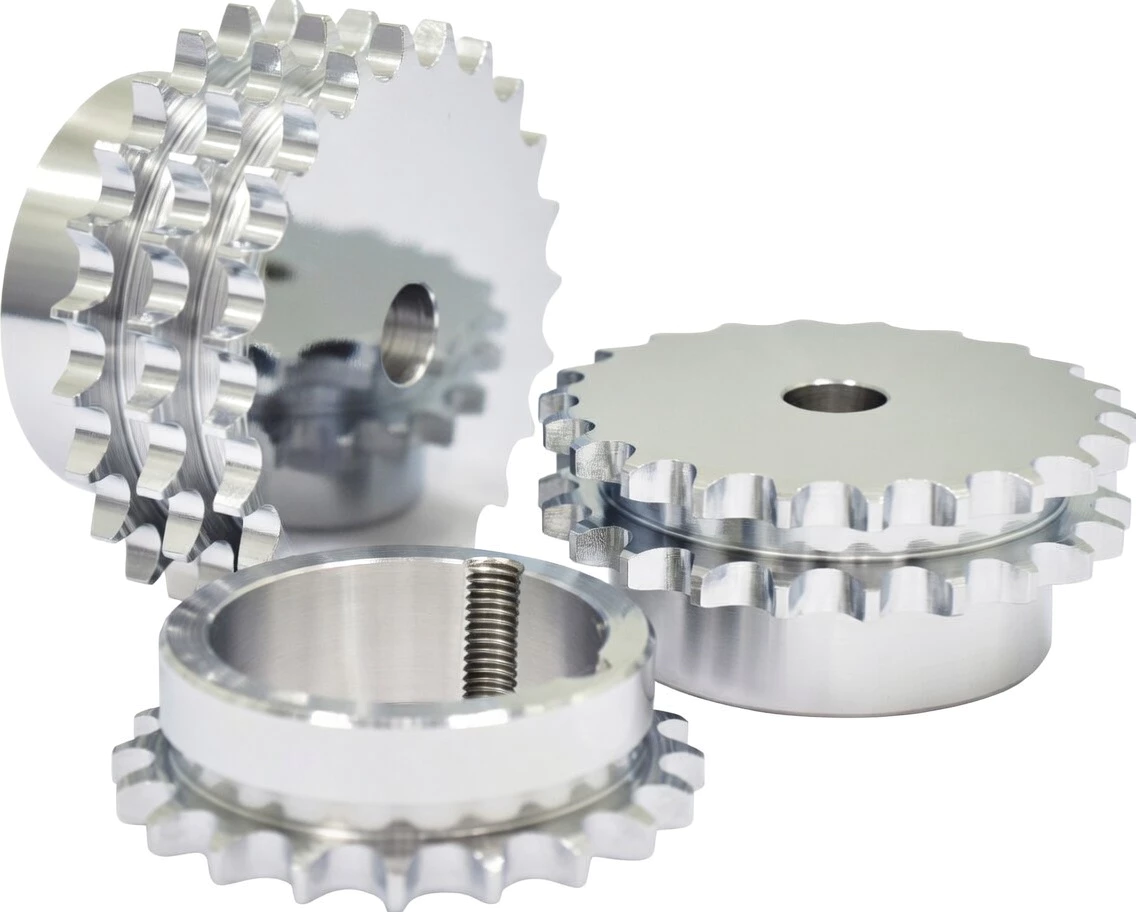
⛓️ Kompatibla transmissionskedjor
We manufacture and supply a complete range of rulltransmissionskedjor paired with every sprocket — ANSI, ISO, double-pitch, stainless, and special-purpose chains for all industrial applications.
Standards & Certifications
All Ever-power Australia sprockets are manufactured to the following international standards:
Kvalitetsåtagande: 100% dimensional inspection, batch hardness testing, and full traceability on every production run. Material test certificates available on request.

Varför välja Ever-power Australien?
We are a vertically integrated sprocket manufacturer with 25+ years of chain drive expertise. Our 35,000 m² facility produces 4 million+ sprockets per year to ISO, ANSI, JIS, DIN, BS and GB standards, ISO 9001 certified. Our manufacturing →
Ready to Order or Need Technical Advice?
Our engineering team provides free selection support and fast quotes. Australian stock on core sizes — same-week dispatch on standard sprockets.