Ruote dentate per elevatori di grano
Grain elevators — the tall towers that dominate the skyline of every Australian country town — rely on bucket elevator chains and flat-link chains to move enormous quantities of grain from receival pits to storage bins. The grain elevator head-drive sprocket E boot sprocket operate in one of the most abrasive environments in agriculture: a constant rain of grain, chaff, and fine dust that abrades sprocket teeth and chain pins without mercy. Explore our heavy-duty agricultural sprockets →
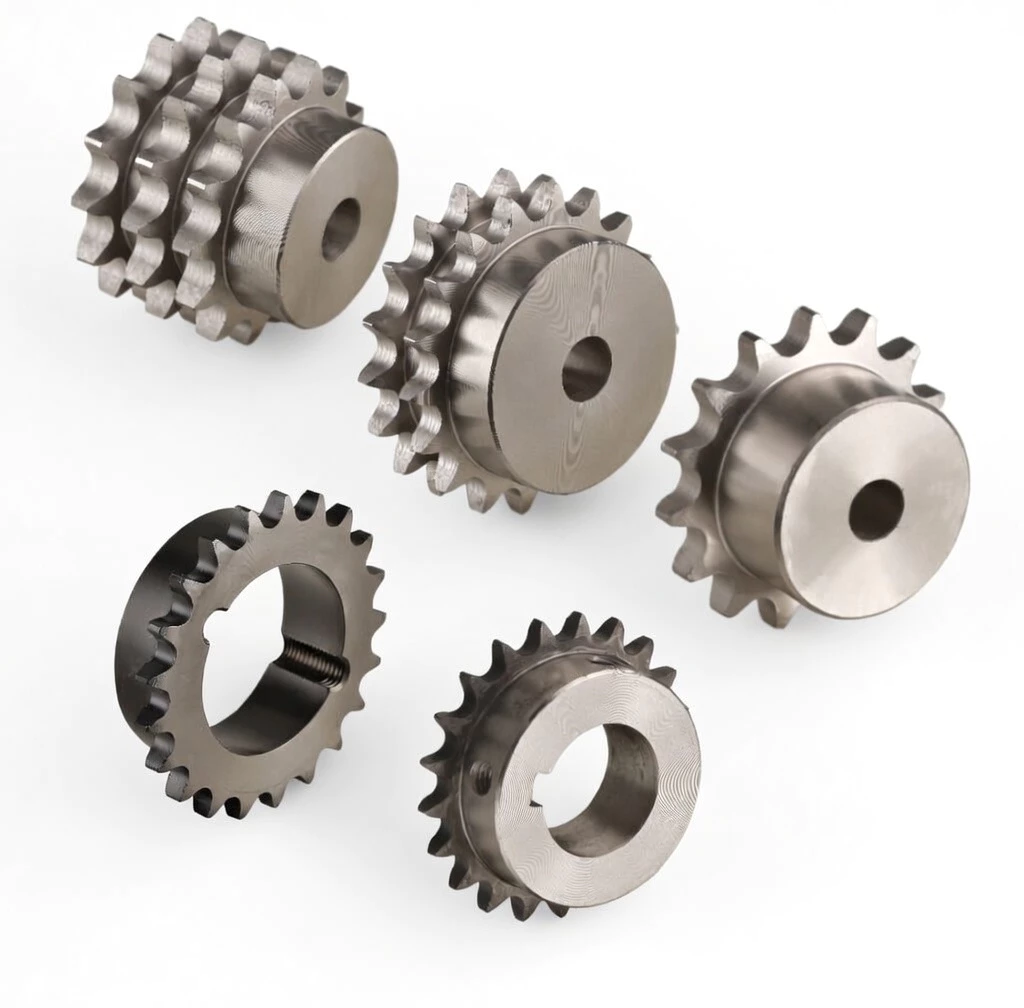
Panoramica
A grain storage elevator (also called a grain leg or bucket elevator) uses a continuous belt or chain with buckets attached to scoop grain from the boot (bottom) and discharge it at the head (top). The drive system at the head consists of a high-torque drive shaft driven by an electric motor through a gearbox, with large-diameter sprockets engaging the chain or using a flat belt. The boot section uses a tail sprocket or drum for chain return and tensioning.
Australian grain storage facilities — from on-farm silos to large receival terminals at port — handle millions of tonnes per harvest season. Drive sprockets operating in this environment must resist grain abrasion, endure extended run times (often 16–20 hours per day during receival), and withstand the impact loads of bucket loading and chain engagement.
Specifiche tecniche
| Parametro | Grain Elevator Value | Allineare |
|---|---|---|
| Chain Type | ANSI roller chain / elevator chain | ANSI #60–#120 |
| Pece | 19.05 mm – 38.1 mm | 15.875–50.8 mm |
| Head Drive Sprocket Z | 17T – 25T | 13T – 32T |
| Boot / Tail Sprocket Z | Same as head or 1–2T less | — |
| Shaft Diameter | 50–120 mm | Up to 180 mm |
| Materiale | C45 carbon steel | 40Cr alloy for large terminal elevators |
| Durezza del dente | HRC 52–60 | HRC 50–62 |
| Profondità del caso | 2.0–3.5 mm | Up to 4.5 mm for large terminal elevators |
| Stile Hub | Type C (double hub) or solid-bore | Large sprockets may use split hub |
| Tolleranza del foro | H7 | H6 on request |
| Superficie | Zinc plate / dacromet | Corrosion protection in humid grain storage |
| Spiaggia | Simplex / Duplex | Duplex for high-capacity chain elevators |
| Alignment Requirement | High (≤0.3 mm) | Misalignment accelerates chain wear rapidly |
| Max Chain Speed | 1.5–3.5 m/s | Typical grain elevator range |
| Operating Temperature | −10°C to +60°C | Australian climate range |
| Lubrificazione | Manual or automatic drip | Abrasive environment demands regular lubrication |
| Grado di lavorazione | Grado DIN 6 | — |
| Deformation post-HT | ≤0,05 mm | — |
| Weight (ANSI #80 Z=17) | ~3.8 kg | 1–40 kg |
Vantaggi in termini di prestazioni
How Grain Elevator Sprockets Work
At the head of a grain elevator, the motor/gearbox drives the head shaft via a V-belt or directly. The head sprocket (or drum, on belt-bucket elevators) is mounted on this shaft and engages the elevator chain, pulling it upward. As the chain passes over the head sprocket, centrifugal and gravitational force causes the buckets to discharge grain into the head housing and distribution chute. The chain then travels down the return leg to the boot, where the boot (tail) sprocket redirects it upward again through the up-leg, scooping grain from the boot pit on the way up.
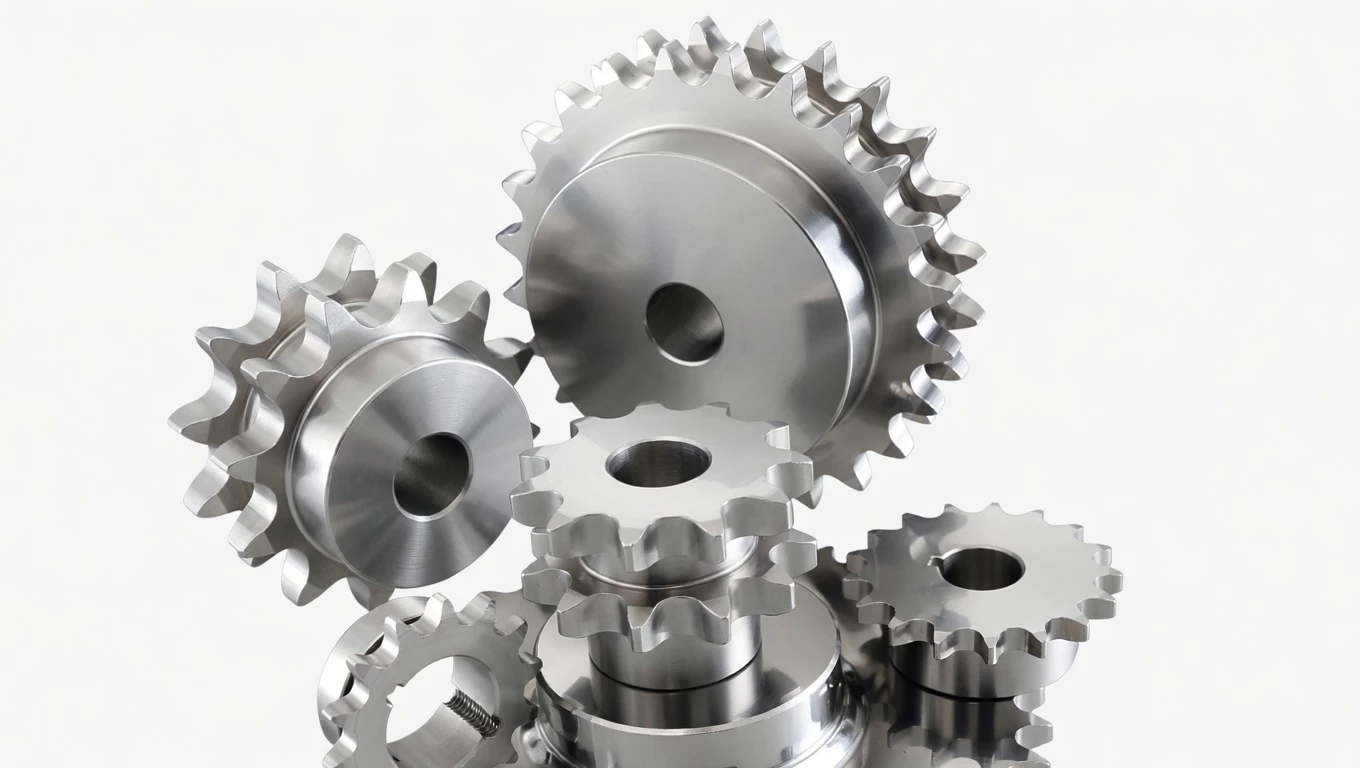
Informazioni sulla compatibilità
| Elevator Type / Chain | Pignone consigliato | Note |
|---|---|---|
| Chain bucket elevator (ANSI #80) | ANSI #80 head & tail sprocket | Most common for farm and co-op grain legs |
| Chain bucket elevator (ANSI #100) | ANSI #100 heavy-duty sprocket | Large terminal elevator legs |
| Chain bucket elevator (ANSI #60) | Pignone ANSI #60 | Smaller on-farm grain legs |
| Laidig, Behlen, GSI grain leg chain (ref only) | ANSI #80 / #100 equivalent | Verify chain pitch and tooth count |
| Sukup, Brock grain elevator (ref only) | ANSI #80 replacement sprocket | Interchangeable aftermarket replacement |
| AWB / GrainCorp terminal elevator chain (ref only) | Custom per drawing | Contact for large terminal specifications |
| Elevator apron (flat-link) drive | Custom flat-link sprocket | Contact our team for specification |
Selection Guide
Installation for Grain Elevator Sprockets
- Lock out the elevator motor. Engage mechanical brakes on the head shaft. Never work inside an elevator leg when the motor is energised.
- Release chain tension at the boot tensioning frame or gravity take-up. Lower the boot shaft assembly to create slack in the elevator chain.
- Open the chain at a connecting link in an accessible position on the up-leg or head housing. Remove the buckets from the section of chain being worked if the chain must be moved through the leg.
- Access the head sprocket through the head housing inspection cover. Remove the retaining nut (typically right-hand thread) and slide the sprocket off the shaft. For Type C double-hub sprockets, remove the outer hub bolts first.
- Clean the head shaft and inspect keyway for wear. Apply anti-seize to shaft to facilitate future removal.
- Install new sprocket. Seat keyway, tighten retaining nut to specification, apply thread-lock compound.
- Re-tension chain at the boot take-up to the correct deflection per the elevator manual.
- Run at low speed without grain for 5 minutes, checking for unusual noise or chain tracking issues. Verify chain is tracking centrally on the head sprocket before full-speed grain receival.
Troubleshooting Grain Elevator Sprockets
| Sintomo | Causa probabile | Azione consigliata |
|---|---|---|
| Chain derailing at head | Misaligned sprocket or worn teeth | Realign head shaft; replace worn sprocket |
| Rapid tooth wear (<1 season) | Insufficient hardness or heavy grain abrasion | Upgrade to HRC 55–60 induction-hardened sprocket |
| Chain climbing off sprocket | Excessive chain elongation (>2%) | Replace chain and sprocket simultaneously |
| Loud clunking at head | Worn or broken sprocket tooth | Stop immediately; inspect and replace |
| Vibration in elevator tower | Imbalanced head sprocket or misalignment | Check runout (≤0.5 mm); realign shaft |
Casi di studio di clienti australiani
Domande frequenti
Prodotti correlati: Catene di trasmissione

⛓️ Catene di trasmissione compatibili
Produciamo e forniamo una gamma completa di catene di trasmissione a rulli Abbinabili a ogni pignone del nostro catalogo: catene ANSI, ISO, a doppio passo, in acciaio inossidabile e per usi speciali, per ogni applicazione industriale.
Standard e certificazioni
Tutti i pignoni Ever-power Australia sono fabbricati e testati secondo i seguenti standard internazionali:
Il nostro impegno: Ispezione dimensionale 100%, test di durezza su ogni lotto e tracciabilità completa di ogni ciclo di produzione. Certificati di prova dei materiali disponibili su richiesta.

Perché scegliere Ever-power Australia?
Siamo un produttore di pignoni verticalmente integrato con oltre 25 anni di esperienza nella trasmissione a catena. Il nostro stabilimento di 35.000 m² produce oltre 4 milioni di pignoni all'anno, conformi agli standard ISO, ANSI, JIS, DIN, BS e GB, con certificazione ISO 9001 per ogni ordine. Scopri di più sulla nostra produzione →
Pronti per ordinare o avete bisogno di assistenza tecnica?
Il nostro team di ingegneri è a disposizione per consigliarvi la specifica esatta del pignone più adatta alla vostra applicazione. Assistenza gratuita nella selezione, preventivi rapidi e disponibilità a magazzino in Australia per le diverse misure di base.