Pignoni per macchine da forno
Industrial baking machinery — tunnel ovens, rack ovens, bread moulders, proofers, spiral coolers, and depositing machines — relies on roller chain drives that must perform reliably in environments ranging from ambient temperature dough-processing rooms to 280°C oven interiors. The bakery chain drive sprocket must combine thermal stability, abrasion resistance (from flour dust), hygiene compliance, and long service intervals in a production environment that rarely stops. Explore food-grade sprockets for baking →
Panoramica
Industrial bakery production in Australia operates on continuous chains: bread is moulded, proofed, transferred to the oven on the baking band or tray conveyor, baked at temperatures up to 280°C, cooled on spiral or linear cooling conveyors, sliced, and packed — all in a continuous chain-driven process. Chain drives are present at every stage, from the flour intake auger to the finished-product packing system. The critical sprocket positions in a bakery are:
- ✓Tunnel oven chain drive: Large ANSI #80 or #100 sprockets driving the oven band or tray conveyor at 200–280°C. Must withstand sustained heat without lubricant breakdown.
- ✓Proofer transport chain: ANSI #50 or ISO 10B sprockets on the proofing chamber conveyor running at 35–50°C with high humidity — corrosion-resistant finish required.
- ✓Spiral cooler drive: ANSI #60 sprockets driving the spiral cooling conveyor belt at ambient to cool temperatures. Low speed, high continuous load.
- ✓Moulder conveyor drives: Small ANSI #35 or #40 sprockets on flour-dusty dough-processing conveyors. Abrasion from flour dust is the dominant wear mechanism.
- ✓Depositing and cutting machines: ANSI #40 or ISO 08B precision drives requiring accurate tooth profiles for consistent product positioning.
Specifiche tecniche
| Parametro | Baking Machinery Value | Allineare |
|---|---|---|
| Tunnel oven chain standard | ANSI #80 / #100 | ANSI #60–#120 |
| Proofer / cooler chain standard | ANSI #50 / #60 or ISO 10B / 12B | — |
| Moulder / depositor chain | ANSI #35 / #40 or ISO 06B / 08B | — |
| Tunnel oven operating temperature | +180°C to +280°C | — |
| Proofer operating temperature | +35°C to +50°C, high humidity | — |
| Material (oven zone) | C45 or heat-resistant alloy steel | SS316 for washdown oven zones |
| Material (product-adjacent zone) | SS304 / SS316 | FSANZ / FDA compliant |
| Tooth Hardness (C45 oven) | HRC 50–60 | — |
| Surface (oven zone) | Plain or heat-resistant coating | No zinc/cadmium in oven zone |
| Lubrication (oven chain) | High-temp chain lubricant (FDA H1) | NSF H1 grade mandatory |
| Stile Hub | Type B / Type C for oven drives | Taper-bushed for cooler drives |
| Tolleranza del foro | H7 | H6 on request |
| Spiaggia | Simplex / Duplex for oven drives | — |
| Grado di lavorazione | Grado DIN 6 | — |
| Max Tooth Runout | ≤0,05 mm | — |
| CIP Resistance (washdown zone) | SS304/316 full CIP compatible | — |
| Documentazione | MTC + dim. report | — |
| Operating life target | 12,000+ hours | — |
| Weight (ANSI #80 Z=17) | ~3.8 kg | — |
Vantaggi in termini di prestazioni
| 🔥 | Oven-Zone Thermal Stability | C45 induction-hardened sprockets maintain structural integrity and tooth geometry at sustained oven temperatures up to 250°C. We do not use zinc-plated or cadmium-coated sprockets in oven zones — zinc decomposes above 420°C producing fumes, and any coating degradation in the food zone is unacceptable. |
| 🔒 | Food-Safe Material in Product Zones | SS304 stainless for product-adjacent zones, with polished tooth flanks (Ra 0.8–1.6 μm) that meet FSANZ and FDA surface-finish requirements. Full material traceability on request. |
| 📏 | Flour-Abrasion Resistant | HRC 50–60 induction-hardened C45 teeth resist the rapid abrasive wear caused by flour dust on moulder and dough-conveyor chain drives — the same abrasion mechanism that destroys unhardened sprockets within weeks in a high-output bakery. |
| ⚙️ | High-Temperature Chain Compatibility | Our oven-zone sprockets are dimensionally matched to common high-temperature oven chain specifications (ANSI #80 and #100 heat-resistant chain). We can supply the matching chain on request for a complete oven drive replacement. |
Informazioni sulla compatibilità
| Bakery Machine / Chain | Pignone consigliato | Note |
|---|---|---|
| Tunnel oven band drive (ANSI #80) | ANSI #80 C45 high-temp sprocket | Plain/heat-resistant finish only in oven zone |
| Tunnel oven band drive (ANSI #100) | ANSI #100 heavy-duty sprocket | Large industrial tunnel ovens |
| Proofer transport chain (ANSI #50 / ISO 10B) | ANSI #50 or ISO 10B SS304 sprocket | High humidity → corrosion-resistant |
| Spiral cooler drive (ANSI #60) | ANSI #60 SS304 / zinc-plate sprocket | Product-adjacent? SS304. Enclosed? Zinc. |
| Moulder conveyor (ANSI #35 / #40) | ANSI #35 or #40 C45 hardened sprocket | Flour-abrasion environment |
| Depositing machine chain (ANSI #40 / ISO 08B) | ANSI #40 or ISO 08B Grade 6 sprocket | Precision hobbing for consistent spacing |
| Mecatherm, AMF, Rademaker oven chains (ref only) | ANSI #80 / #100 interchangeable | Brand reference only; verify tooth count |
| Travaglini, Kaak, WP oven systems (ref only) | ANSI or ISO per chain measurement | Confirm chain standard before ordering |
Selection Guide
Installation for Bakery Chain Drive Sprockets
- Coordinate with production scheduling — bakery lines rarely stop. Schedule the sprocket change during planned sanitation or line-change maintenance windows.
- Allow oven zone to cool to <50°C before working on oven chain drives. Use heat-resistant gloves throughout.
- Isolate drives and lock out. Bakery drives are often interlocked — verify all interlock points before entering machine guards.
- Remove guards and access covers. Photograph chain routing in complex positions before disassembly.
- Remove old sprocket using appropriate tools (two-jaw puller for plain-bore; jack bolts for taper-bushed).
- Clean shaft with food-safe solvent. Do not use petroleum-based solvents in food-zone areas — use an approved food-equipment cleaner.
- Install new sprocket. Use A4 stainless fasteners in food-adjacent zones to prevent galvanic corrosion and contamination.
- Align sprockets. Target ≤0.3 mm lateral offset for precision bakery drives.
- Lubricate chain with appropriate NSF H1 food-grade chain lubricant before restarting — do not start an oven chain dry.
- QA sign-off — bakery facilities under SQF, BRC, or HACCP schemes require maintenance records and sign-off before restarting food production.
Troubleshooting Baking Machinery Sprockets
| Sintomo | Causa probabile | Azione consigliata |
|---|---|---|
| Oven chain jumping | Worn oven drive sprocket tooth tips hooked | Replace oven sprocket (and chain) |
| Corrosion on proofer sprocket | Insufficient material for high-humidity zone | Replace with SS304 stainless |
| Rapid flour-zone sprocket wear | Unhardened sprocket in flour-abrasive environment | Upgrade to HRC 52–60 induction-hardened |
| Depositing machine registration error | Worn teeth increasing pitch backlash | Replace with Grade 6 precision sprocket |
| Chain lubricant smoke in oven zone | Wrong lubricant (non-H1 or low flash point) | Replace with NSF H1 high-temp chain lubricant |
Casi di studio di clienti australiani
Domande frequenti
Prodotti correlati: Catene di trasmissione
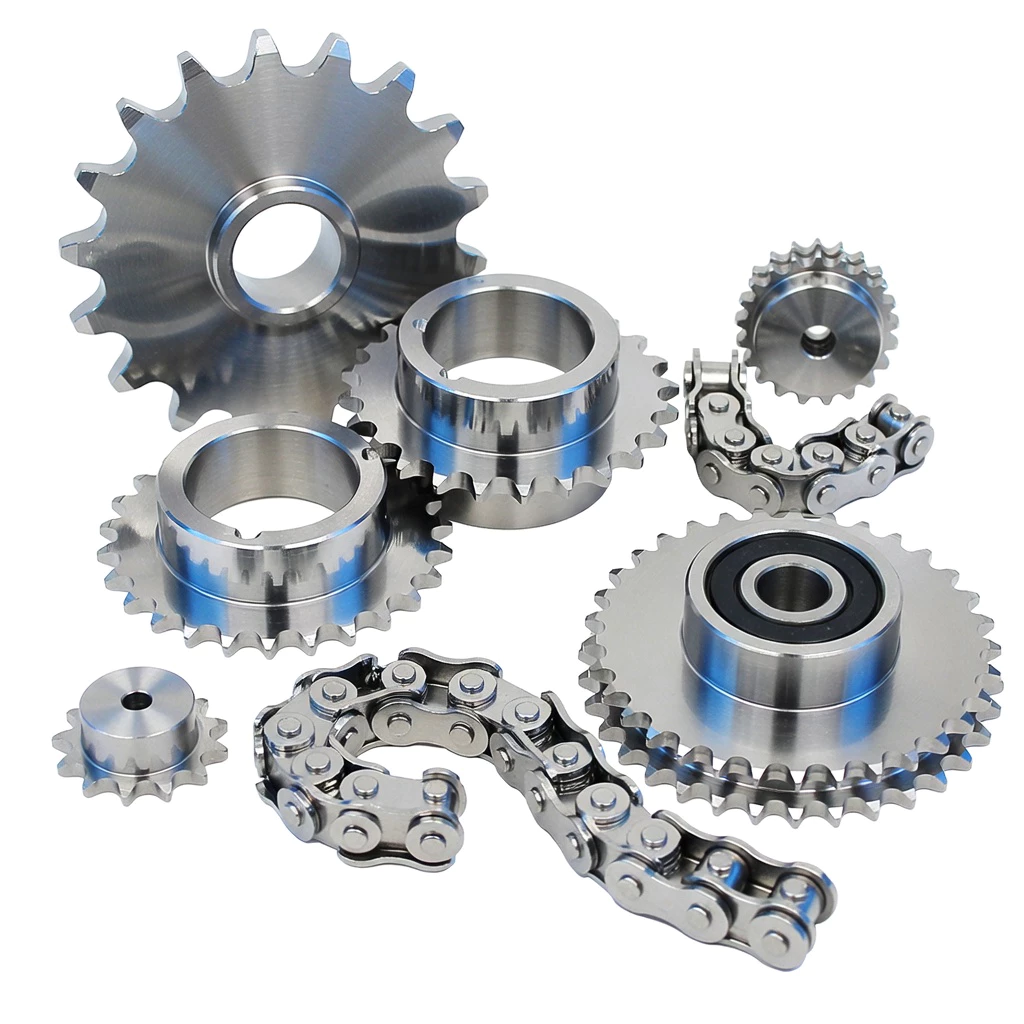
⛓️ Catene di trasmissione compatibili
Produciamo e forniamo una gamma completa di catene di trasmissione a rulli Abbinabili a ogni pignone del nostro catalogo: catene ANSI, ISO, a doppio passo, in acciaio inossidabile e per usi speciali, per ogni applicazione industriale.
Standard e certificazioni
Tutti i pignoni Ever-power Australia sono fabbricati e testati secondo i seguenti standard internazionali:
Il nostro impegno: Ispezione dimensionale 100%, test di durezza su ogni lotto e tracciabilità completa di ogni ciclo di produzione. Certificati di prova dei materiali disponibili su richiesta.

Perché scegliere Ever-power Australia?
Siamo un produttore di pignoni verticalmente integrato con oltre 25 anni di esperienza nella trasmissione a catena. Il nostro stabilimento di 35.000 m² produce oltre 4 milioni di pignoni all'anno, conformi agli standard ISO, ANSI, JIS, DIN, BS e GB, con certificazione ISO 9001 per ogni ordine. Scopri di più sulla nostra produzione →
Pronti per ordinare o avete bisogno di assistenza tecnica?
Il nostro team di ingegneri è a disposizione per consigliarvi la specifica esatta del pignone più adatta alla vostra applicazione. Assistenza gratuita nella selezione, preventivi rapidi e disponibilità a magazzino in Australia per le diverse misure di base.