Product Description
Product Description
Our Gear types: Straight Teeth Gear, sprocket, Oblique Teeth Cylinder Gear, External Spur Gear, Internal Spur Gear, Gear Shaft etc the standard and non standard according to the drawings or samples.
Material: 45#, 40Cr, 20CrMo, 20CrMoti, 17CrNiMo6, 20CrMnTi or the others
Heat treatment: Medium frequency quenching, high frequency quenching, carburizing and quenching, nitriding, Carbon-Nitriding, Salt bath quenching.
Working Process: Gearh hobbing, Gear shaving, Gear shaping, Gear grinding etc
Precision Grade: GB5-8, JIS 1-4, AGMA 12-9, DIN 6-9
Application area: Auto gearbox, medical equipment, metallurgical machinery, port machinery, lifting equipment, mining machinery, electrical power equipment, light industry equipment, environmental protection machinery.
Detailed Photos
Product Parameters
Take the example of our sprocket or chainwheel
The standard and non standard according to the drawings or samples.
Material: C45, S235JR, CAST STEEL or the others
1, Description: Sprocket, chainwheel
2, Types:
A) Standard sprocket
B) Finished bore sprocket
C) Taper bore sprocket
D) Double plate wheels
E) conveyor sprocket
3, Material: C45, S235JR, Nylon
4, Surface treatment: Zinc-plated, black finish
5, Single A-type, double A-type, Welding hub KB-type, Welding hub C-type etc for your reference.
6. Process: Forging( casting)—lathe- teeth shaping—finishing—oil washing—Packing, made by CNC machine
7. Inspection: All items are checked and tested thoroughly during every working procedure and after the product is finally manufactured to ensure that the best quality product enter into the market.
Packaging & Shipping
Our Advantages
After Sales Service
Our Core range of spur gears, industry sprocket, and roller chains are specifically designed to be interchangeable and versatile, this helps us keep lower stock levels while achieving the customization necessary for so many applications. The core offer has also enabled us to offer excellent pricing levels for low quantities, often prototypes are very expensive due to lack of economies of scale we have tried to help with this as much as possible. HangZhou CZPT can offer bespoke units for larger quantities and offer a Supply Chain service where we work closely with our customers to identify the optimal delivery schedule in accordance with OEM production levels. If you are looking for spur gear, drive shafts, industry sprocket etc, you have come to the right place, our expert technical sales staff will recommend the best possible option for both your application and your pocket. Contact us now to discuss your application.
HangZhou CZPT TRADE CO., LTD is responsible for exporting the above products, and we also import some important products from oversea markets.
Our company has got the right of import and export from the Government department.
It is necessary to get your specific requirement when contacting us,
for example of gear, number of teeth, module, pitch diameter, inner hole diameter, thickness, outside drawing etc. and then we will give the accurate offers.
Therefore, hope to get your feedback soon.
Please watch our process steps as below
(1) process these output shafts
(2)process these spur gears and sprockets
(3) turning machining
(4) assembly preparation
(5) fine process workshop
CHOOSE US FOR:
1. We offer engineer suggestion to your specified design in production improvement and cost saving.
2. R&D and QC department focus on the products to meet your strict requirements.
3. Different surface treatments available, plating, power coating, painting, anodized,polishing, electrophoresis, etc.
4. Different dimensions according to buyer’s request.
5. Various packagings according to specific requirements.
6. Customized and tailored orders are welcome.
7. Good quality and Quick action.
8. Our products have been exported to America, Australia,German,Korea,Indian.
CONFIDENTIAL POLICY:
1) The appointed products are only for you.
2) Your informations&documents are confidential.
3) Your drawings&sketch are confidential.
FAQ
Question:
1.Q:How about mould cost?
A: primarily depend on : 1.Drawing, 2.material, 3.weight and quantity.
We need to know the structure of each parts to analyze the mold solution by:
1) –Complete design drawing or actual sample —– the best way
–PDF drawing with complete dimension for each parts
–Clearly photos for each parts with more angle-views to show every features.
2)The materials and surface treatments.
3)The quantity of order.
2.Q:How to control the product processing?
A: The processing report or pictures will be sent to the customer every week/ each month for review.
3.Q:Who will own the mould?
A:Customer, also the mould can be kept in our factory for future order.
4.Q:How long do you make your quotation?
A:After receiving detail informations we will quote in 1 to 3 days.
5.Q: Are the samples/prototype free of charge?
A: charged,but it will be returned to buyer when an order confirmed and order quantity is over 5000 pcs.
After your drawing confirmed and charges done for the prototype, we will produce a sample
by CNC machining. And the first trial samples (1-3pcs) will be shipped to buyer
by the DHL /Fedex at buyer’s express account or prepay the express charges.
MOQ? — 200units and accept sample order.
/* March 10, 2571 17:59:20 */!function(){function s(e,r){var a,o={};try{e&&e.split(“,”).forEach(function(e,t){e&&(a=e.match(/(.*?):(.*)$/))&&1
| Standard Or Nonstandard: | Nonstandard |
|---|---|
| Application: | Machinery, Industry |
| Hardness: | Hardened |
| Manufacturing Method: | Rolling Gear |
| Toothed Portion Shape: | Curved Gear |
| Material: | Alloy Steel |
| Customization: |
Available
| Customized Request |
|---|
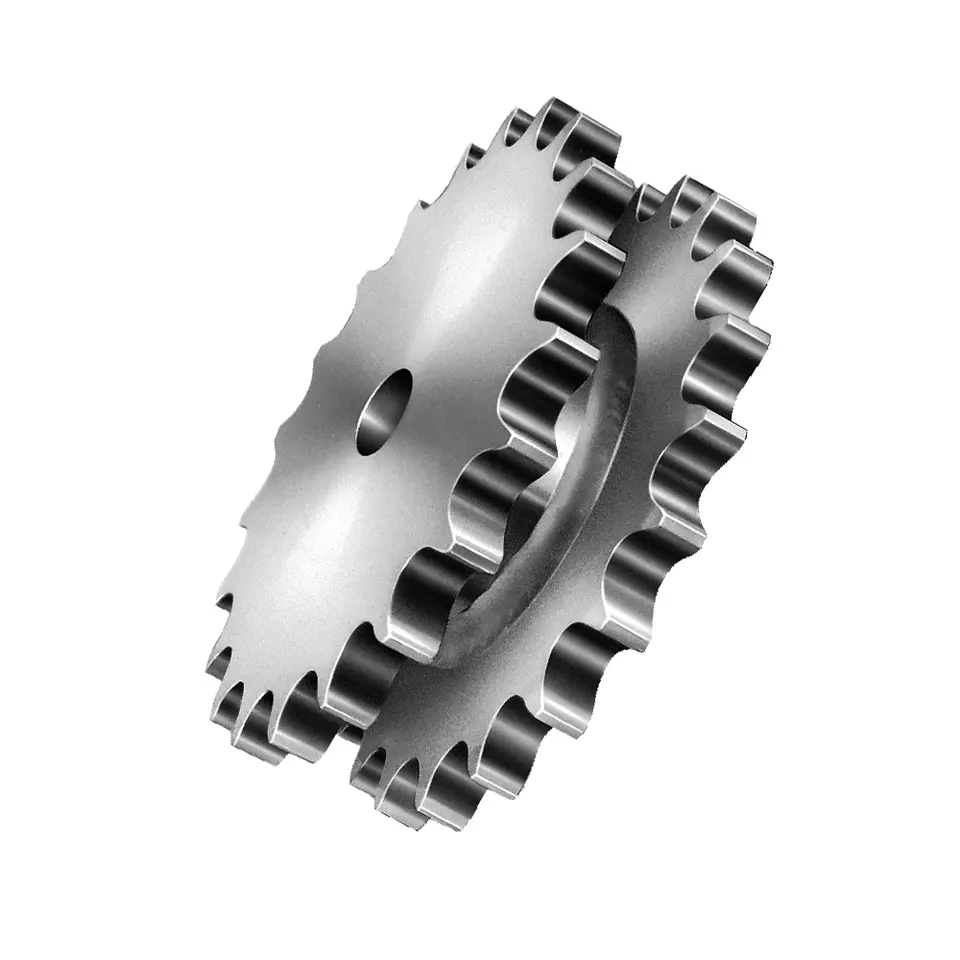
How to Identify and Troubleshoot Common Issues with Wheels and Sprockets
Identifying and troubleshooting common issues with wheels and sprockets can help you maintain their proper functioning and prevent potential problems. Here are some steps to follow:
- Abnormal Noise: If you notice unusual noise during operation, it could indicate misalignment, worn sprockets, or a loose chain. Check for any loose bolts or fasteners and ensure proper alignment of the sprockets.
- Chain Slippage: Chain slippage can occur due to insufficient tension or worn-out sprocket teeth. Check the chain tension and adjust it to the recommended level. Inspect the sprocket teeth for signs of wear and replace them if necessary.
- Uneven Wear: Uneven wear on the sprocket teeth can be a result of misalignment or a worn-out chain. Check the alignment of the sprockets and adjust as needed. If the chain is stretched or has damaged links, replace it with a new one.
- Excessive Vibration: Excessive vibration may be caused by imbalanced wheels or misaligned sprockets. Check for any bent or damaged wheels and ensure proper alignment of the sprockets.
- Chain Skipping: If the chain skips over the sprocket teeth during operation, it could be due to worn sprocket teeth or a loose chain. Inspect the sprocket teeth for signs of wear and replace them if necessary. Adjust the chain tension to the proper level.
- Chain Jamming: Chain jamming can occur if there is debris or dirt between the chain and sprockets. Clean the chain and sprockets thoroughly to remove any obstructions.
- Excessive Chain Wear: Regularly inspect the chain for signs of wear, such as elongation, damaged links, or rust. Replace the chain if it is significantly worn to avoid damage to the sprockets.
- Overheating: Overheating can be caused by high friction between the chain and sprockets or improper lubrication. Ensure proper lubrication and check for any misalignment or tight spots in the system.
By identifying these common issues and performing regular inspections, you can troubleshoot problems early on and take appropriate corrective measures, ensuring the smooth operation and longevity of the wheel sprocket assembly.
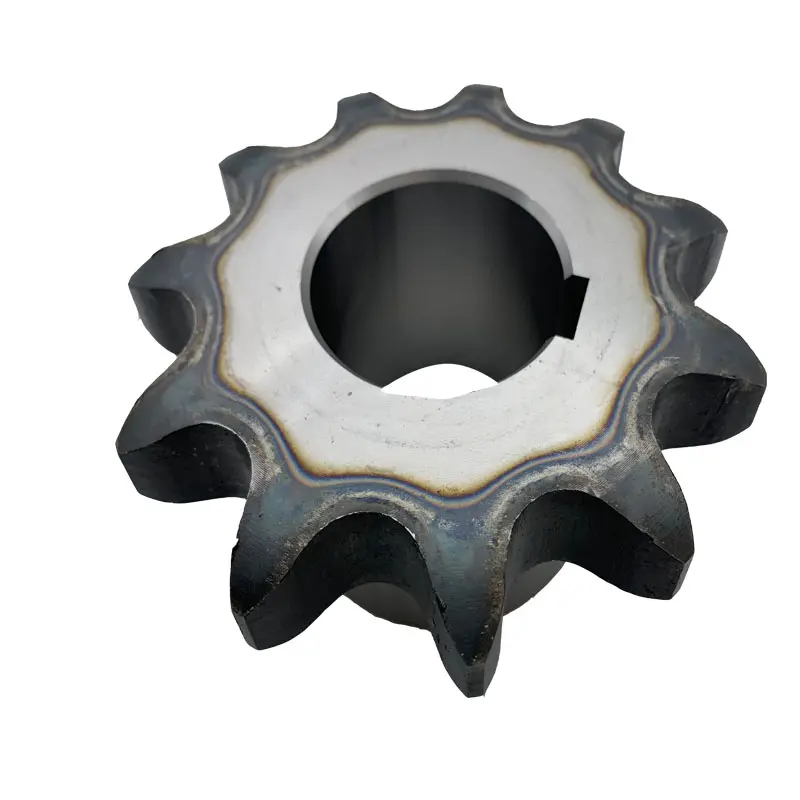
Load-Carrying Capacities of wheel sprocket Combinations
The load-carrying capacity of a wheel sprocket assembly depends on various factors, including the material, size, and design of both the wheel sprocket. Here are some common types of wheel sprocket combinations and their load-carrying capacities:
- Steel Wheel with Steel Sprocket: This combination offers high load-carrying capacity and is commonly used in heavy-duty applications. Steel wheels can handle substantial loads, and when paired with steel sprockets, the assembly can withstand even higher forces.
- Nylon Wheel with Steel Sprocket: Nylon wheels are known for their lightweight and durable nature. When combined with steel sprockets, they provide a good load-carrying capacity while reducing the overall weight of the assembly.
- Polyurethane Wheel with Steel Sprocket: Polyurethane wheels offer excellent wear resistance and are suitable for medium to heavy loads. When paired with steel sprockets, this combination can handle moderate to high load capacities.
- Rubber Wheel with Cast Iron Sprocket: Rubber wheels are known for their shock-absorbing properties and are often used in applications requiring vibration dampening. When used with cast iron sprockets, this combination can handle medium loads.
- Plastic Wheel with Plastic Sprocket: This combination is suitable for light-duty applications where lower loads are expected. Plastic wheels and sprockets are often used in applications that require low friction and quiet operation.
- Custom wheel sprocket Combinations: In some cases, custom wheel sprocket combinations are designed to meet specific load-carrying requirements. These combinations can be tailored to suit the application’s unique demands.
It’s important to note that load-carrying capacities also depend on other factors, such as the type of bearing used in the wheel, the shaft material, and the overall design of the mechanical system. Engineers should carefully consider the intended application, operating conditions, and safety factors when selecting the appropriate wheel sprocket combination to ensure optimal performance and longevity of the system.
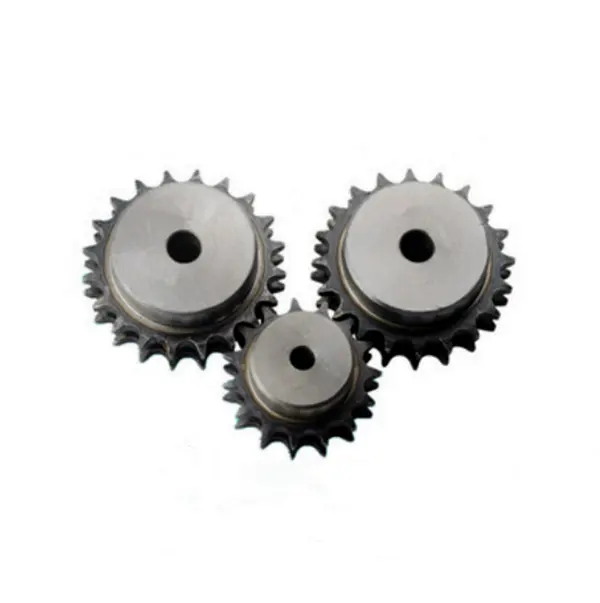
Working Principle of a wheel sprocket System
In a wheel sprocket system, the sprocket is a toothed wheel that meshes with a chain or a belt to transmit rotational motion and power from one component to another. The working principle can be explained in the following steps:
1. Power Input:
The system begins with a power input source, such as an electric motor or an engine, that generates rotational motion or torque.
2. Sprocket and Chain/Belt:
The power is transferred to the sprocket, which is mounted on a shaft. The sprocket has teeth that fit into the gaps of the chain or engage with the teeth of the belt.
3. Chain/Belt Movement:
As the sprocket rotates, it pulls the chain or belt along with it due to the engagement between the teeth. This movement is transmitted to the connected component, which could be another sprocket, a wheel, or any other part of the machinery.
4. Power Output:
The rotational motion or power is then delivered to the connected component, which performs a specific function depending on the application. For example, the power could be used to drive a conveyor belt, rotate the wheels of a vehicle, or operate various industrial machines.
5. Speed and Torque:
The size of the sprocket and the number of teeth, along with the size of the chain or belt, determine the speed and torque ratio between the input and output components. Changing the size of the sprocket or using different-sized sprockets in the system can alter the speed and torque characteristics of the machinery.
6. Efficiency and Maintenance:
Efficient power transmission relies on proper alignment and tension of the chain or belt with the sprocket. Regular maintenance, such as lubrication and inspection, is essential to ensure smooth operation and prevent premature wear or damage to the system.
The wheel sprocket system is widely used in various applications, including bicycles, motorcycles, industrial machinery, agricultural equipment, and more, where efficient power transmission and motion control are required.


editor by CX 2024-02-10