Sprockets for Packaging Machinery
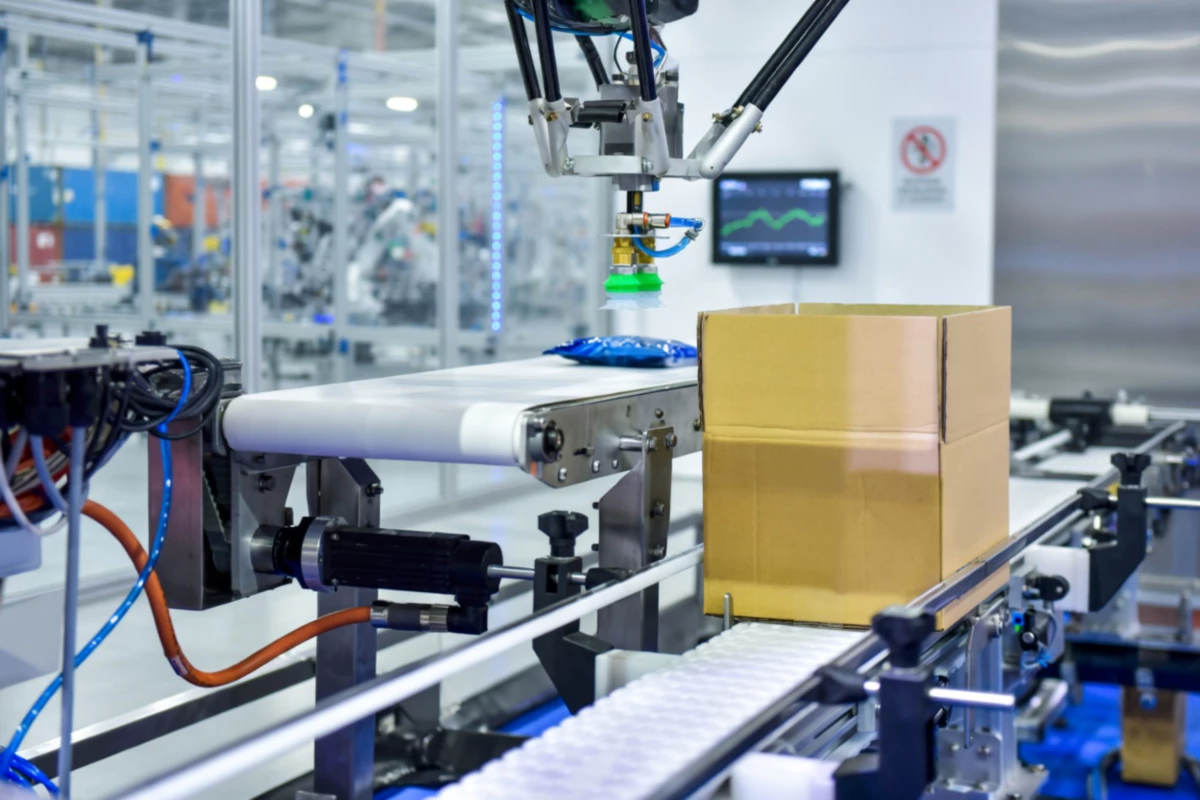
Modern packaging machinery — from case packers and stretch wrappers to carton erectors, palletisers, and flow-wrappers — operates at high cycle rates where vibration, noise, and unplanned stoppages directly impact output and OEE. The packaging machinery sprocket is a precision drive component that must deliver smooth, low-noise power transfer at speeds from 0.5 to 4 m/s, often in environments where lubricant contamination of product is unacceptable. View our complete sprocket range for packaging applications.
Översikt
Packaging lines in Australian food, beverage, pharmaceutical, and consumer goods facilities demand sprockets that combine dimensional precision (for quiet, low-vibration operation at high cycle rates), wear resistance (for extended service intervals in continuous-production environments), and — where product contact zones are adjacent — FDA/FSANZ-compatible materials such as SS304 stainless steel or food-safe coatings.
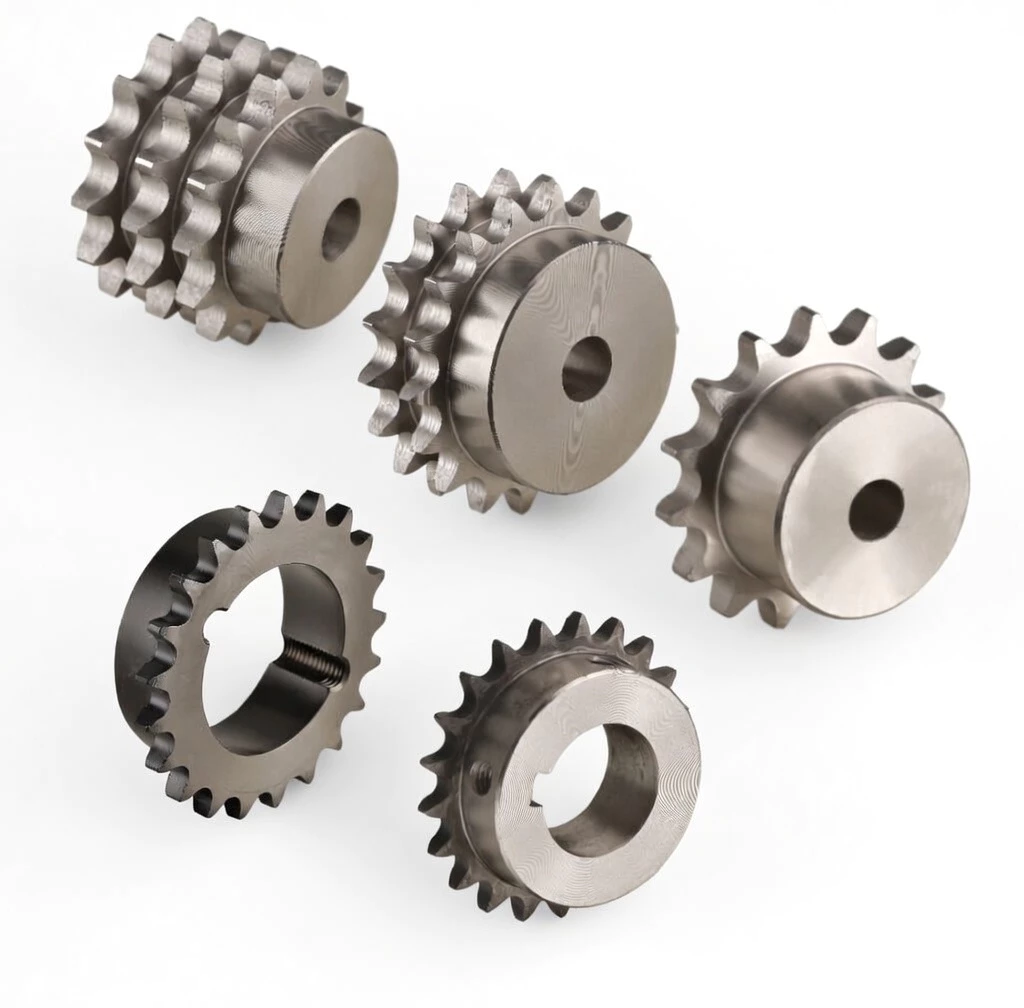
Ever-power Australia manufactures sprockets specifically suited to packaging machinery, with CNC Grade 6 tooth profiles, induction-hardened C45 flanks, and finished bore options for rapid changeover during format changes — a critical productivity factor on multi-format packaging lines.
Tekniska specifikationer
| Parameter |
Typical Packaging Value |
Anpassningsbart sortiment |
| Kedjestandard |
ANSI #35 or ISO 06B-1 |
ANSI #25–#50 / ISO 04B–10B |
| Tonhöjd |
9.525 mm (3/8") or 12.7 mm |
4.76–15.875 mm |
| Speed Range |
0.5–4 m/s pitch line |
Up to 6 m/s (force-lubricated) |
| Tooth Count (driver) |
13T – 19T |
9T – 38T |
| Tooth Count (driven) |
19T – 57T |
13T – 76T |
| Borrningstolerans |
H7 finished bore |
H6, H7, H8 |
| Navstil |
Type B / Taper-bushed (QD) |
Typ A / B / C |
| Material (standard) |
C45 kolstål |
SS304 stainless, 40Cr alloy |
| Tandhårdhet |
HRC 50–58 |
HRC 40–60 |
| Surface |
Black oxide / zinc plate |
Nickel plate, geomet, SS polished |
| Strand |
Simplex |
Duplex on high-torque drives |
| Noise Level |
Low (<72 dB at 1 m) |
Precision Grade 5 for <68 dB |
| Operating Temp. |
−10°C to +80°C |
SS304 up to +400°C |
| Smörjning |
Manual / automatic drip |
NSF H1 food-grade oil compatible |
| Deformation efter HT |
≤0,05 mm |
– |
| Bearbetningsklass |
DIN-klass 6 |
Klass 5 på begäran |
| Weight (ISO 06B Z=19) |
~0.18 kg |
0.05–12 kg |
| Tooth Profile |
Standard involute |
Modified-addendum on request |
| Dokumentation |
Dimensional report on request |
MTC (EN 10204 2.2) available |
Prestandafördelar
🎉
Low-Noise CNC Hobbing
DIN Grade 6 tooth profiles reduce chain impact at each engagement cycle, measurably reducing noise (by up to 8 dB vs. inferior products) on high-speed packaging lines where operator environment matters.
🔒
Food-Safe Material Options
SS304 stainless sprockets for food-contact zones meet FDA, EU 10/2011, and FSANZ material standards. Polished finish (Ra 0.8–1.6 µm) prevents product-residue accumulation and withstands 100-bar CIP washdown.
⚡
Format-Change Ready
Taper-bushed (QD) or finished bore versions allow sprocket swaps in <20 minutes during format changeovers — a critical productivity differentiator on multi-SKU packaging lines.
📈
Konsekvent batchkvalitet
Every production batch 100% CMM-inspected and hardness-verified. Packaging OEM builders receive consistent quality across repeat orders, essential for multi-machine plant installations.
🔢
Corrosion-Resistant Finish
Black oxide, zinc, or dacromet-coated C45 options provide corrosion resistance in humid packaging environments. SS304 for wash-zone sprockets eliminates rust contamination risk entirely.
📦
Low Inventory Cost
Our broad range means packaging engineers can standardise on ANSI #35 or #40 across multiple machine types, reducing spare-parts inventory SKU count and safety-stock requirements.
How Sprockets Function in Packaging Machinery
Sprockets in packaging machinery serve multiple functions across the machine frame:
- ▶Product transport chains: Sprockets on lug chains or slat chains convey cartons, pouches, or bottles through filling, sealing, and labelling stations. Low-noise, precise hobbing ensures smooth product handling without vibration-induced registration errors.
- ▶Index drives: Servo-driven chain with precision sprockets positions products at exact intervals for filling needles or capping heads. Tooth accuracy directly affects dosing precision.
- ▶Film feed drives: Small-pitch sprockets (ANSI #25 or ISO 04B/06B) feed film through stretch wrappers and flow wrappers at precise speeds. Any tooth irregularity causes film tearing or seal defects.
- ▶Palletiser drives: Larger ANSI #50 or #60 sprockets drive conveyor decks and carriage-lift mechanisms on palletising machines — higher torque, lower speed, longer tooth life requirements.
Kompatibilitetsinformation
| Machine Type / Chain |
Kompatibelt kedjehjul |
Anteckningar |
| ANSI #35 roller chain |
ANSI #35 sprocket Z=13–57 |
Standard for small packaging machines |
| ANSI #40 rullkedja |
ANSI #40 kedjehjul |
Most common on case packers & palletisers |
| ISO 06B-1 roller chain |
ISO 06B-1 sprocket |
European OEM packaging machines |
| ISO 08B-1 rullkedja |
ISO 08B-1 kedjehjul |
Heavy-duty carton formers |
| ANSI #25 roller chain |
ANSI #25 sprocket |
Film drive and light-duty index chains |
| Bosch Rexroth, Krones, Sidel conveyor chain |
ISO 08B / ANSI #40 sprocket |
Cross-reference only, not affiliated |
| Ishida, ULMA, Multivac film drives |
ANSI #25 / ISO 06B sprocket |
Precision Grade 6 recommended |
| Hytrol, Ashland conveyor decks |
ANSI #40 / #50 sprocket |
Stock bore or finished bore |
Urvalsguide
Use this quick flow to identify the correct sprocket for your packaging machine:
| Question |
If YES |
If NO |
| Is the machine a European OEM (Bosch, Krones, ULMA)? |
ISO 06B / 08B sprocket |
Check chain pitch with calliper |
| Is the chain pitch 9.525 mm or 12.7 mm? |
ANSI #35 or ANSI #40 |
Measure pitch; consult our team |
| Is it in a food-contact or washdown zone? |
SS304 stainless sprocket |
C45 black oxide or zinc plate |
| Is format changeover frequent (>weekly)? |
Taper-bushed (QD) sprocket |
Standard finished bore sprocket |
Still unsure? Submit your machine specifications to our team for a free selection recommendation.
Installation Steps for Packaging Machinery Sprockets
- Isolate and lock out the machine per site safety procedure. Engage mechanical stops on servo-driven axes.
- Remove guard panels to access the drive. Photograph the chain routing before disassembly if it is complex.
- Open the chain connecting link and remove the chain. Note chain length for new chain sizing.
- Remove old sprocket: loosen set-screw, slide off shaft. For taper-bushed types, thread jack-bolts into release holes and loosen evenly.
- Clean shaft: remove burrs, corrosion, or adhesive residue. Verify shaft diameter against new sprocket bore using a bore gauge.
- Install new sprocket: seat key, slide sprocket to required position, torque set-screw to hub specification.
- Align with mating sprocket: use a precision straight-edge across tooth faces — lateral offset ≤0.3 mm for high-speed packaging drives.
- Install chain and set tension: slack-side sag 1.5–2% of centre distance. Do not over-tension — this accelerates bearing and sprocket wear.
- Verify at slow jog: confirm smooth chain engagement, no vibration or noise. Re-check all fasteners after 2-hour initial run.
Troubleshooting Packaging Line Sprocket Issues
| Problem |
Root Cause |
Solution |
| Film tearing at drive station |
Tooth impact from worn or low-precision sprocket |
Replace with Grade 6 precision hobbed sprocket |
| Chain skipping at index position |
Worn tooth tips reducing engagement depth |
Replace sprocket; verify chain elongation ≤2% |
| Rust on sprocket in humid packing hall |
Insufficient coating or inappropriate material |
Upgrade to SS304 stainless or dacromet-coated |
| High noise at product speed |
Misalignment or worn teeth |
Realign to ≤0.3 mm; replace if worn >15% |
| Sprocket loosening during production |
Insufficient keyway engagement or set-screw torque |
Apply thread-lock; verify keyway fit; upgrade to taper-bushed |
| Dosing errors on filling machine |
Sprocket pitch variation from inferior machining |
Replace with Grade 6 CNC-hobbed sprocket |
“We run continuous 16-hour shifts in a cool, wet dairy environment. The SS304 stainless sprockets from Ever-power have completely eliminated the rust-contamination issues we had with carbon-steel alternatives. Excellent product for food applications.”
February 2025
Trent M. — Brisbane, QLD★★★★☆Plant Manager, Beverage Bottling
“Quick delivery and good product quality. We use taper-bushed sprockets throughout our palletiser drives — changeover during annual maintenance is now half the time. Small improvement in chain noise was also noted.”
March 2025
Eloise H. — Perth, WA★★★★★OEM Packaging Machine Builder
“We specify Ever-power sprockets across our stretch-wrapper range. Consistent quality from batch to batch, which is critical for OEM production. Dimensional reports are supplied with each order as standard.”
January 2025
Deepa R. — Adelaide, SA★★★★★Technical Buyer, Pharmaceutical Packaging
“FDA-compliant SS304 sprockets with material certificates — exactly what our pharmaceutical customer required. Delivered within the lead time quoted. Will continue to source from Ever-power for this application.”
March 2025
Vanliga frågor
► What sprocket size is standard for most Australian packaging machines?
ANSI #35 (9.525 mm pitch) and ANSI #40 (12.7 mm pitch) are the most common sizes in Australian food, beverage, and consumer goods packaging lines. European OEM machines (Bosch, Krones, ULMA) typically use ISO 06B or 08B (also 9.525 or 12.7 mm pitch but with different roller dimensions).
► Do I need stainless steel sprockets for my packaging line?
Stainless steel is required wherever the sprocket is in the food-contact zone, directly above open product, or subject to regular chemical washdowns with caustic or chlorinated cleaning agents. For drives in enclosed guard areas with no product contact, C45 carbon steel with zinc or nickel coating is typically sufficient.
► How do I reduce noise on a high-speed packaging line?
Use CNC Grade 6 or Grade 5 precision-hobbed sprockets, ensure sprocket-to-chain pitch match, maintain correct chain tension (2% sag), and use precision-grade roller chain. Misalignment >0.3 mm is the most common cause of impact noise on packaging drives.
► Can I get sprockets with the same tooth count as the OEM specification but at a lower cost?
Yes. We manufacture interchangeable replacement sprockets for all major packaging machine OEM specifications. Provide the OEM part number, tooth count, pitch, bore, and hub dimensions and we will supply a dimensionally equivalent replacement at a competitive price.
► What is the shelf life of an uninstalled sprocket?
Carbon steel sprockets with black oxide or zinc coating maintain corrosion protection for 12–24 months in a dry indoor storage environment. For longer storage, wrap in VCI (Vapour Corrosion Inhibitor) poly bag. Stainless steel sprockets have indefinite shelf life.
► How do I calculate the correct drive ratio for a packaging speed change?
Drive ratio = driven speed / driver speed = driver tooth count / driven tooth count. If your current setup uses 19T driver and 38T driven (2:1 ratio) and you need to increase line speed by 25%, you need a 25% increase in driver speed, or change to a 24T driver while keeping the 38T driven (1.58:1 ratio).
► Do you supply sprockets pre-assembled with bearings for idler use on packaging conveyors?
Yes. We supply bearing-mounted idler sprockets for all ANSI and ISO chain sizes used in packaging applications. These come pre-fitted with sealed deep-groove ball bearings suitable for continuous-duty packaging conveyor use.
► What is the lead time for urgent replacement sprockets?
For standard ANSI #35 and #40 finished bore sprockets from our Australian stock, we typically dispatch within 1–2 business days. Non-stock sizes and custom bore specifications carry a 5–10 day lead time. Emergency same-day supply may be available for metro areas; contact us to confirm.
► Can packaging machine sprockets be repaired rather than replaced?
Sprocket teeth cannot be economically repaired once worn beyond the 15% hook-tooth threshold — replacement is always the correct action. However, if the bore is damaged by fretting, the bore can be re-machined to a larger diameter and a liner inserted. This is a workshop repair and we recommend consulting your maintenance team.
► Do you offer volume pricing for ongoing packaging line maintenance programmes?
Yes. We have standing supply agreements with several Australian packaging plant operators and OEM builders. Volume pricing, scheduled delivery, and safety-stock programmes are available. Contact our sales team to discuss your annual sprocket consumption and preferred delivery schedule.
Relaterade produkter: Transmissionskedjor
⛓️ Kompatibla transmissionskedjor
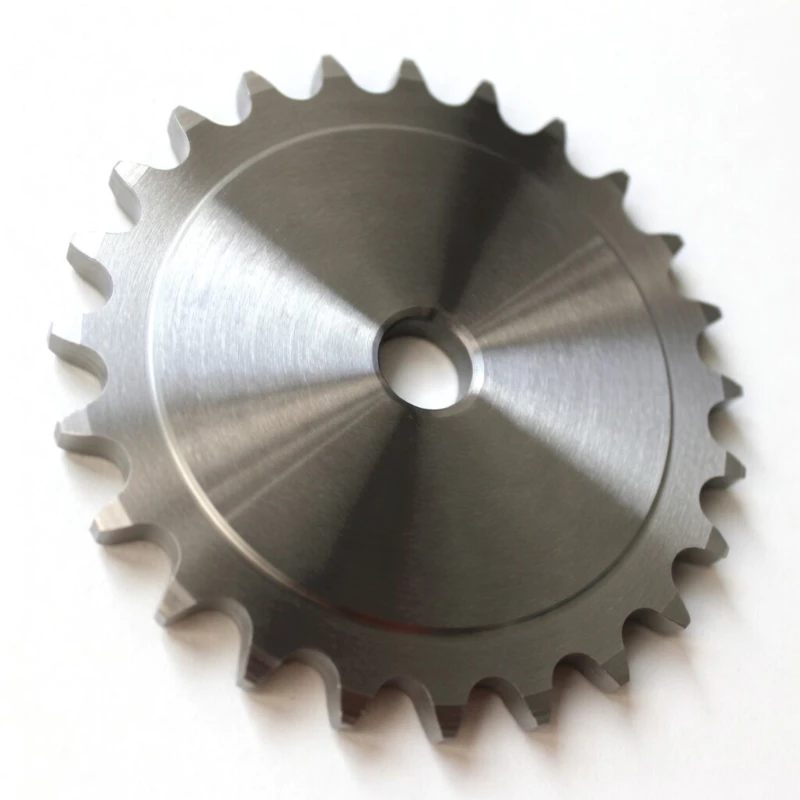
Vi tillverkar och levererar även ett komplett sortiment av rulltransmissionskedjor att para ihop med alla kedjehjul i vår katalog – ANSI-, ISO-, dubbelklingande, rostfria och specialkedjor för alla industriella tillämpningar.
Visa transmissionskedjor →
Certifications & Standards
Alla Ever-power Australia-drev tillverkas och testas enligt följande internationella standarder:
✓ ISO 9001:2015✓ ANSI B29.1✓ ISO 606 / DIN 8187✓ JIS B 1801✓ BS-standarder✓ GB-standarder
Kvalitetsåtagande: 100% dimensionskontroll, hårdhetsverifiering och batchspårbarhet vid varje produktionsomgång. Materialtestcertifikat (EN 10204 2.2) finns tillgängliga på begäran.

Varför välja Ever-power Australien?
Vi är en vertikalt integrerad kedjehjulstillverkare med över 25 års expertis inom kedjedrift. Vår anläggning på 35 000 m² producerar över 4 miljoner kedjehjul per år enligt GB-, ISO-, ANSI-, JIS-, DIN- och BS-standarder. Vi levererar ISO 9001-certifierad kvalitet till OEM-partners, distributörer och direkta industriella köpare över hela Australien. Läs mer om vår tillverkningskapacitet →
ISO 9001-certifierad
4 miljoner+ st/år
OEM-kompatibel
AU-lager tillgängligt