製材設備用スプロケット
Australian sawmill operations — from small portable mills in plantation forestry to large fixed softwood and hardwood processing plants — rely on roller chain drives at every stage of the log-to-lumber conversion process. Sawmill chain drive sprockets operate in some of the harshest industrial environments: heavy shock loads from log impact, embedded bark grit and sand, constant moisture from log washing and debarking, and the vibration of high-powered saw drives. View our forestry & sawmill sprocket range →
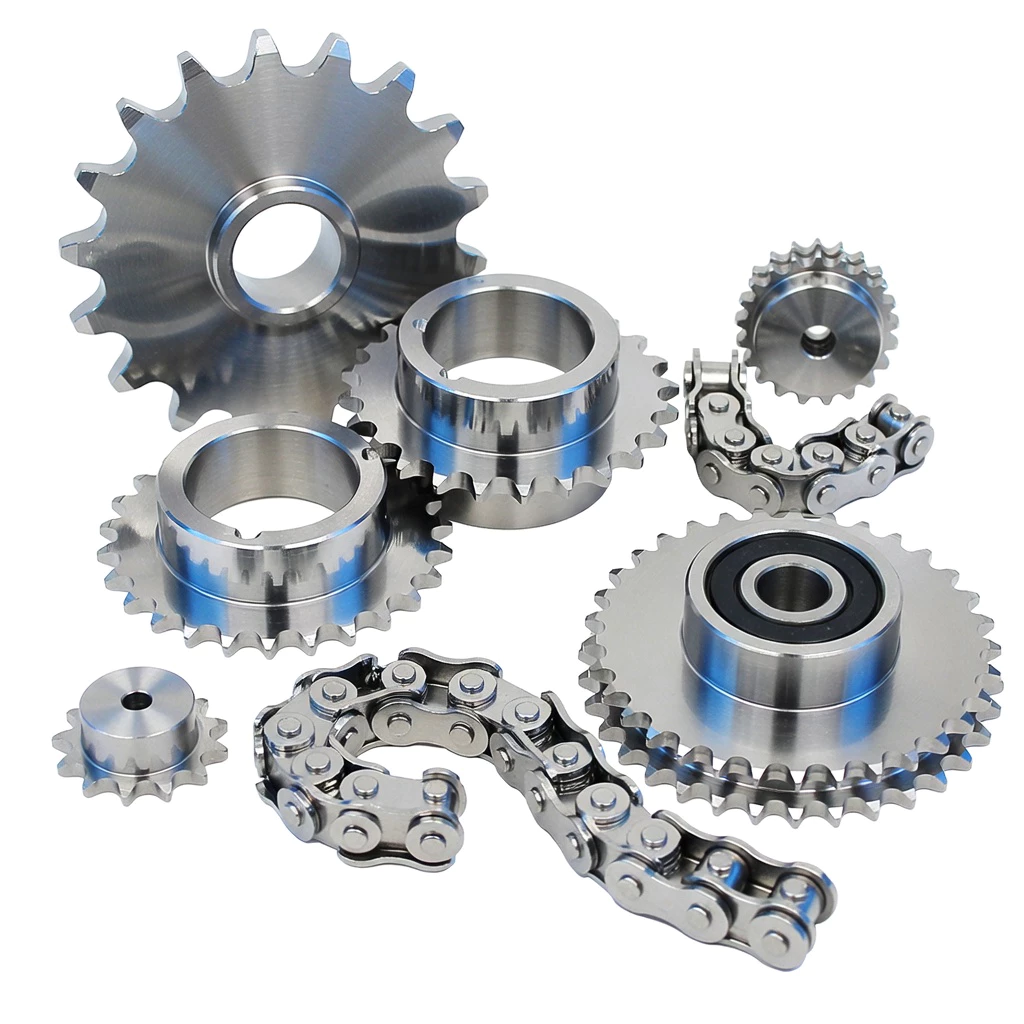
Overview
A modern sawmill uses roller chain drives at multiple stages of the production process:
- ✓Log in-feed conveyor: Heavy-duty ANSI #80 or #100 chain sprockets on the log infeed deck that conveys raw logs from the log yard to the debarker and headsaw.
- ✓Log turner and positioner drives: ANSI #60 or #80 sprockets on log-turning mechanisms that rotate the log for optimal cutting orientation.
- ✓Debarker chain drive: High-torque ANSI #80 or #100 chain drives powering the ring or drum debarker around the log.
- ✓Edger and board-handling conveyors: ANSI #40 or #60 chain sprockets on board conveyor and edger feed systems, handling rough sawn lumber after the headsaw.
- ✓Kiln stacker and sorter drives: ANSI #50 or #60 sprockets on automated stacking and sorting equipment that handles green lumber before kiln drying.
- ✓Chip conveyor drives: ANSI #60 or #80 sprockets handling wood chips and bark from the debarker and chipper to the chip pile.
技術仕様
| パラメータ | Sawmill Value | Range |
|---|---|---|
| Chain Standard (log in-feed) | ANSI #80 / #100 | ANSI #60–#120 |
| Chain Standard (board handling) | ANSI #40 / #60 | ANSI #35–#80 |
| Chain Standard (chip conveyor) | ANSI #60 / #80 | ANSI #50–#100 |
| Material (log in-feed) | 40Cr alloy steel | C45 for board-handling drives |
| 歯の硬度 | HRC 50~60 | HRC 48–62 |
| ケースの奥行き | 1.5–3.0 mm | — |
| Moisture & Bark Resistance | Dacromet / zinc plate coated | SS304 option for wash zones |
| ハブスタイル | Type C for log in-feed | Type B taper-bushed for board handling |
| 内径公差 | H7 | H6 on high-shock log drives |
| 海岸線 | Simplex (board handling) | Duplex for log in-feed |
| Operating Environment | Bark dust, moisture, embedded grit | — |
| Lubrication | Manual (external) / oil bath (enclosed) | — |
| 機械加工グレード | DIN Grade 6 | — |
| Deformation post-HT | ≤0.05 mm | — |
| Weight (ANSI #80 Z=17) | ~3.8 kg | 0.5–40 kg |
| ピッチ | 25.4 mm (log in-feed) | 12.7–38.1 mm |
| Documentation | Batch cert on request | — |
| Max Shaft Diameter | Up to 120 mm | Up to 180 mm custom |
| 動作温度 | −5°C to +60°C | — |
Performance Advantages
| 🦔 | Bark-Grit Abrasion Resistance | Bark grit and embedded sand in freshly harvested logs act as grinding compound on sprocket teeth. HRC 50–60 induction-hardened C45 (log in-feed) and 40Cr alloy (debarker drive) resist this abrasive wear mechanism, delivering 2–3× the service life of un-hardened sprockets in sawmill environments. |
| 💦 | Moisture-Resistant Coating | Dacromet (480+ hours salt spray) and zinc-plate coatings protect carbon-steel sprockets from the constant moisture of log washing and debarking operations. Dacromet is preferred for the log-handling wet zone; zinc plate is adequate for the drier board-handling area. |
| ⚡ | Log-Impact Shock Load Capacity | Log in-feed chain drives receive severe shock loads when individual logs — some exceeding 1,000 kg — drop onto the infeed deck. 40Cr alloy steel with tough core (Charpy 40–60 J) absorbs these impact loads without tooth fracture, a common failure mode of standard C45 sprockets in log handling. |
| 🔧 | Taper-Bushed for Planned Maintenance | Board-handling and sorter chain drive sprockets change frequently due to wear. QD taper-bushed versions allow sprocket replacement in under 20 minutes during planned maintenance windows, minimising production downtime in the typically continuous three-shift sawmill operation. |
互換性情報
| Sawmill Position / Chain | Recommended Sprocket | 注記 |
|---|---|---|
| Log in-feed conveyor (ANSI #80 / #100) | ANSI #80 or #100 40Cr alloy duplex | Type C double hub; dacromet coated |
| Debarker chain drive (ANSI #80) | ANSI #80 40Cr alloy sprocket | High torque; moisture environment |
| Log turner drive (ANSI #60) | ANSI #60 C45 hardened sprocket | Shock load from log rotation |
| Board edger conveyor (ANSI #40 / #50) | ANSI #40 or #50 finished bore | Taper-bushed for quick changeover |
| Kiln stacker drive (ANSI #50) | ANSI #50 precision sprocket | Grade 6 for accurate stacking spacing |
| Chip conveyor (ANSI #60 / #80) | ANSI #60 or #80 dacromet sprocket | Wet chip dust environment |
| Linck, HewSaw, Comact sawmill lines (ref only) | ANSI equivalent per chain measurement | Brand reference only |
| Porter, Stenner, Lucas portable mills (ref only) | ANSI #40–#60 replacement | Confirm pitch and bore |
Selection Guide
Installation for Sawmill Sprockets
- Isolate and lock out the sawmill drive according to the site LOTO procedure. In large integrated sawmills, LOTO may cover multiple interlocked drives.
- Remove bark and debris from the drive area before disassembly to prevent contamination of the new sprocket bore and shaft.
- Open chain using chain-break press. For ANSI #80 and above, do not attempt to break the chain with a hammer and drift — use a hydraulic press.
- Remove old sprocket. For log in-feed Type C double-hub sprockets, remove both hub retaining bolts before attempting to pull. Use a two-jaw or three-jaw puller rated for the load.
- Clean shaft and keyway. Remove embedded bark grit from the keyway with a file. Apply Loctite 638 to the bore/shaft interface (not thread-lock) for moisture-environment installations.
- Install new sprocket. Torque retaining fasteners to specification; apply stainless or zinc-plated fasteners in moisture zones to prevent rust-seizing.
- Align sprockets using a straight-edge or laser tool — target ≤0.5 mm lateral offset.
- Install chain and tension. Sag 2% of centre distance on slack side. Check idler sprockets on long chip conveyor runs for correct tension.
- Run empty for 5 minutes before introducing logs or boards. Check for unusual noise or vibration.
Troubleshooting Sawmill Sprockets
| 症状 | Probable Cause | Recommended Action |
|---|---|---|
| Log in-feed tooth fracture | C45 sprocket on high-shock log infeed | Upgrade to 40Cr alloy steel; Type C double hub |
| Rapid wear in bark-dust environment | Insufficient tooth hardness | Upgrade to HRC 54–60; add lubrication |
| Corrosion pitting in debarker zone | Insufficient surface protection for moisture | Replace with dacromet; consider SS304 |
| Board-sorter chain skipping | Worn precision sprocket on sorter | Replace with Grade 6 CNC-hobbed sprocket |
| Chain vibration on chip conveyor | Long run without idler/tensioner | Add bearing-mounted idler sprocket |
Australian Customer Case Studies
よくある質問
関連製品:伝動チェーン
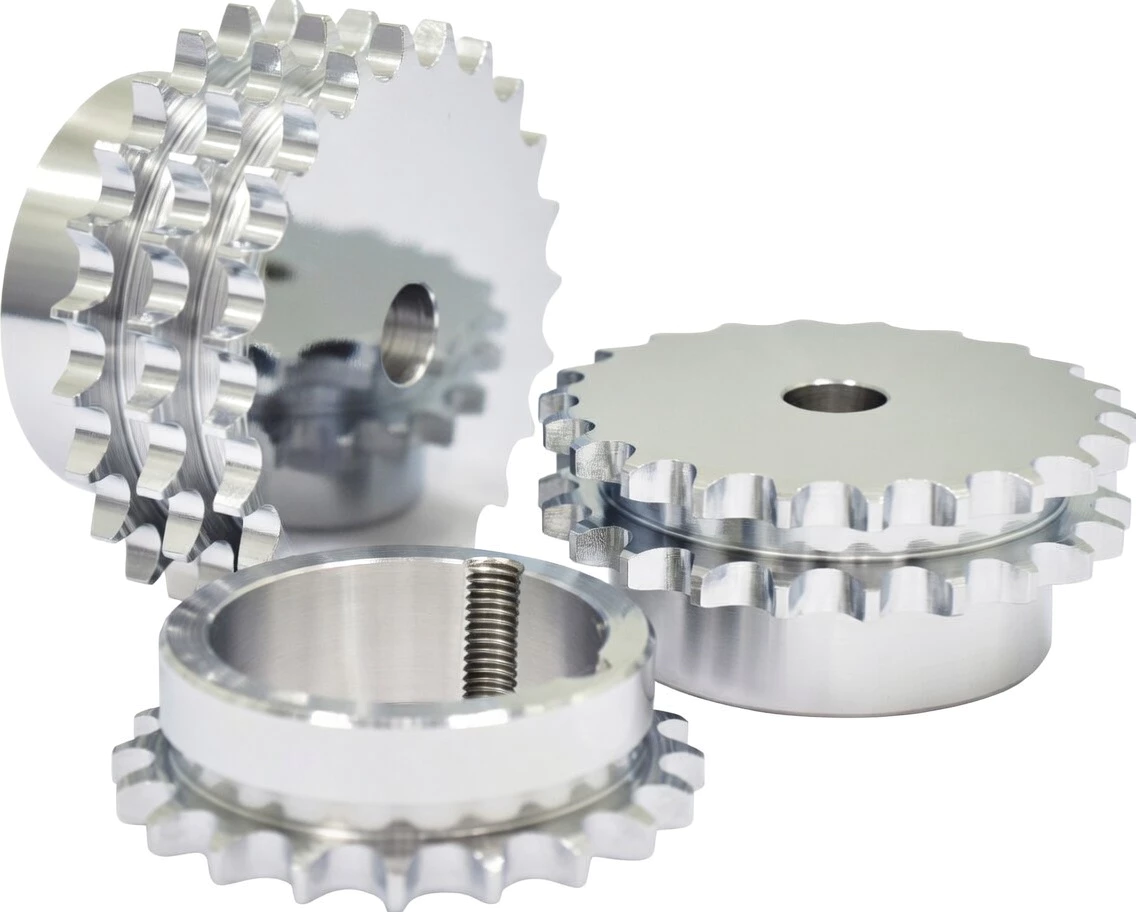
⛓️ 互換性のあるトランスミッションチェーン
We manufacture and supply a complete range of ローラー伝動チェーン paired with every sprocket — ANSI, ISO, double-pitch, stainless, and special-purpose chains for all industrial applications.
Standards & Certifications
All Ever-power Australia sprockets are manufactured to the following international standards:
品質へのこだわり: 100% dimensional inspection, batch hardness testing, and full traceability on every production run. Material test certificates available on request.

エバーパワー・オーストラリアを選ぶ理由とは?
We are a vertically integrated sprocket manufacturer with 25+ years of chain drive expertise. Our 35,000 m² facility produces 4 million+ sprockets per year to ISO, ANSI, JIS, DIN, BS and GB standards, ISO 9001 certified. Our manufacturing →
Ready to Order or Need Technical Advice?
Our engineering team provides free selection support and fast quotes. Australian stock on core sizes — same-week dispatch on standard sprockets.