穀物エレベーター用スプロケット
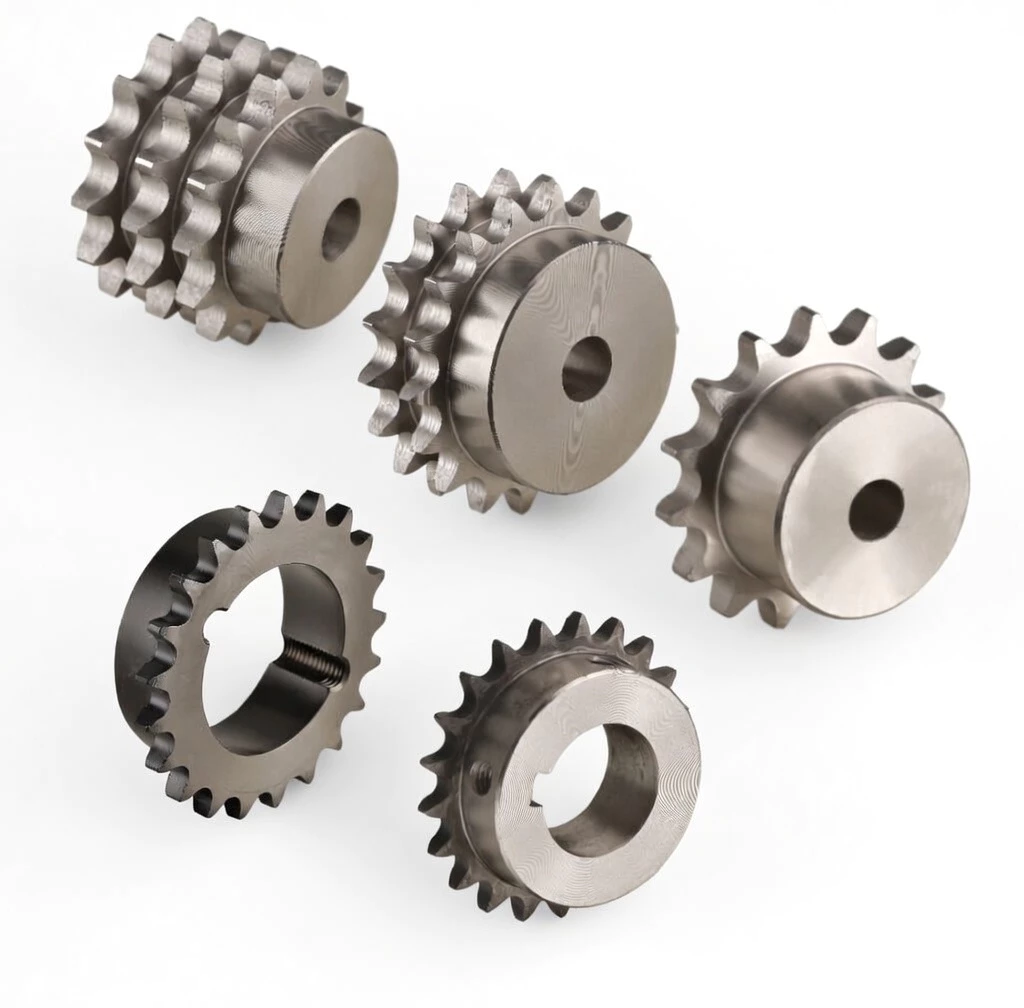
Grain elevators — the tall towers that dominate the skyline of every Australian country town — rely on bucket elevator chains and flat-link chains to move enormous quantities of grain from receival pits to storage bins. The grain elevator head-drive sprocket and boot sprocket operate in one of the most abrasive environments in agriculture: a constant rain of grain, chaff, and fine dust that abrades sprocket teeth and chain pins without mercy. Explore our heavy-duty agricultural sprockets →
Overview
A grain storage elevator (also called a grain leg or bucket elevator) uses a continuous belt or chain with buckets attached to scoop grain from the boot (bottom) and discharge it at the head (top). The drive system at the head consists of a high-torque drive shaft driven by an electric motor through a gearbox, with large-diameter sprockets engaging the chain or using a flat belt. The boot section uses a tail sprocket or drum for chain return and tensioning.
Australian grain storage facilities — from on-farm silos to large receival terminals at port — handle millions of tonnes per harvest season. Drive sprockets operating in this environment must resist grain abrasion, endure extended run times (often 16–20 hours per day during receival), and withstand the impact loads of bucket loading and chain engagement.
技術仕様
| パラメータ |
Grain Elevator Value |
Range |
| Chain Type |
ANSI roller chain / elevator chain |
ANSI #60–#120 |
| ピッチ |
19.05 mm – 38.1 mm |
15.875–50.8 mm |
| Head Drive Sprocket Z |
17T – 25T |
13T – 32T |
| Boot / Tail Sprocket Z |
Same as head or 1–2T less |
— |
| Shaft Diameter |
50–120 mm |
Up to 180 mm |
| 材料 |
C45炭素鋼 |
40Cr alloy for large terminal elevators |
| 歯の硬度 |
HRC 52–60 |
HRC 50–62 |
| ケースの奥行き |
2.0–3.5 mm |
Up to 4.5 mm for large terminal elevators |
| ハブスタイル |
Type C (double hub) or solid-bore |
Large sprockets may use split hub |
| 内径公差 |
H7 |
H6 on request |
| Surface |
Zinc plate / dacromet |
Corrosion protection in humid grain storage |
| 海岸線 |
Simplex / Duplex |
Duplex for high-capacity chain elevators |
| Alignment Requirement |
High (≤0.3 mm) |
Misalignment accelerates chain wear rapidly |
| Max Chain Speed |
1.5–3.5 m/s |
Typical grain elevator range |
| 動作温度 |
−10°C to +60°C |
Australian climate range |
| Lubrication |
Manual or automatic drip |
Abrasive environment demands regular lubrication |
| 機械加工グレード |
DIN Grade 6 |
— |
| Deformation post-HT |
≤0.05 mm |
— |
| Weight (ANSI #80 Z=17) |
~3.8 kg |
1–40 kg |
Performance Advantages
🌿
Grain-Abrasion ResistantThe single biggest cause of premature sprocket failure in grain elevators is abrasive wear from the constant grain, chaff, and dust rain at the head and boot. Our HRC 52–60 induction-hardened teeth resist this abrasive wear mechanism, delivering 2–3× the service life of un-hardened generic sprockets.
🔊
Reduced Maintenance TimeGrain elevators in busy receival facilities cannot afford extended maintenance windows during peak season. Our finished-bore and Type C double-hub sprockets are designed for rapid removal and replacement — minimising the time the elevator is out of service for a sprocket change.
📋
Full Documentation PackageDimensional inspection reports and batch material certificates are available for all grain elevator sprocket orders — meeting the quality documentation requirements of large grain storage operators and export terminal certification programmes.
🔧
Split-Hub Option for In-Situ ReplacementFor large elevator sprockets that cannot be removed without major disassembly (due to access constraints in the elevator tower), we can manufacture split-hub sprockets that can be installed around the shaft without removing bearings or couplings.
How Grain Elevator Sprockets Work
At the head of a grain elevator, the motor/gearbox drives the head shaft via a V-belt or directly. The head sprocket (or drum, on belt-bucket elevators) is mounted on this shaft and engages the elevator chain, pulling it upward. As the chain passes over the head sprocket, centrifugal and gravitational force causes the buckets to discharge grain into the head housing and distribution chute. The chain then travels down the return leg to the boot, where the boot (tail) sprocket redirects it upward again through the up-leg, scooping grain from the boot pit on the way up.
互換性情報
| Elevator Type / Chain |
Recommended Sprocket |
注記 |
| Chain bucket elevator (ANSI #80) |
ANSI #80 head & tail sprocket |
Most common for farm and co-op grain legs |
| Chain bucket elevator (ANSI #100) |
ANSI #100 heavy-duty sprocket |
Large terminal elevator legs |
| Chain bucket elevator (ANSI #60) |
ANSI #60 sprocket |
Smaller on-farm grain legs |
| Laidig, Behlen, GSI grain leg chain (ref only) |
ANSI #80 / #100 equivalent |
Verify chain pitch and tooth count |
| Sukup, Brock grain elevator (ref only) |
ANSI #80 replacement sprocket |
Interchangeable aftermarket replacement |
| AWB / GrainCorp terminal elevator chain (ref only) |
Custom per drawing |
Contact for large terminal specifications |
| Elevator apron (flat-link) drive |
Custom flat-link sprocket |
Contact our team for specification |
Selection Guide
📏Measure the chainMeasure across 10 link pins ÷ 10 to get pitch. 25.4 mm = ANSI #80 or #80H; 31.75 mm = ANSI #100. Confirm roller diameter to distinguish ANSI from ISO chain standards.
📈Count teeth & measure shaftCount worn sprocket teeth. Measure head shaft diameter (use a vernier calliper). Note keyway width — typically DIN 6885 standard on Australian-made grain leg equipment, but imported equipment may vary.
💪Material selectionC45 induction-hardened is appropriate for most on-farm and country elevator applications. For large terminal elevators handling 500,000+ tonnes per season, consider 40Cr alloy steel with deeper case hardening (3.5–4.5 mm).
🔊Head vs. boot sprocketHead and boot sprockets usually share the same tooth count and pitch. Boot sprockets can sometimes use 1–2 fewer teeth to create slight chain slack at the boot for tensioning. Confirm with your elevator service engineer.
Installation for Grain Elevator Sprockets
- Lock out the elevator motor. Engage mechanical brakes on the head shaft. Never work inside an elevator leg when the motor is energised.
- Release chain tension at the boot tensioning frame or gravity take-up. Lower the boot shaft assembly to create slack in the elevator chain.
- Open the chain at a connecting link in an accessible position on the up-leg or head housing. Remove the buckets from the section of chain being worked if the chain must be moved through the leg.
- Access the head sprocket through the head housing inspection cover. Remove the retaining nut (typically right-hand thread) and slide the sprocket off the shaft. For Type C double-hub sprockets, remove the outer hub bolts first.
- Clean the head shaft and inspect keyway for wear. Apply anti-seize to shaft to facilitate future removal.
- Install new sprocket. Seat keyway, tighten retaining nut to specification, apply thread-lock compound.
- Re-tension chain at the boot take-up to the correct deflection per the elevator manual.
- Run at low speed without grain for 5 minutes, checking for unusual noise or chain tracking issues. Verify chain is tracking centrally on the head sprocket before full-speed grain receival.
Troubleshooting Grain Elevator Sprockets
| 症状 |
Probable Cause |
Recommended Action |
| Chain derailing at head |
Misaligned sprocket or worn teeth |
Realign head shaft; replace worn sprocket |
| Rapid tooth wear (<1 season) |
Insufficient hardness or heavy grain abrasion |
Upgrade to HRC 55–60 induction-hardened sprocket |
| Chain climbing off sprocket |
Excessive chain elongation (>2%) |
Replace chain and sprocket simultaneously |
| Loud clunking at head |
Worn or broken sprocket tooth |
Stop immediately; inspect and replace |
| Vibration in elevator tower |
Imbalanced head sprocket or misalignment |
Check runout (≤0.5 mm); realign shaft |
Australian Customer Case Studies
Wayne H. — Moree, NSW
Grain Storage Manager, Country Elevator · April 2025
“We replaced the head and boot sprockets on all four of our grain legs with Ever-power ANSI #80 induction-hardened units before the harvest season. Running 20 hours per day at peak receival — at month 4, the teeth show only minor wear compared to the previous supplier’s sprockets which were hooked by month 2. Outstanding.”
★★★★★
Dave C. — Geraldton, WA
Farm Manager, Large Broadacre Property · February 2025
“Our on-farm grain leg services a 15,000-tonne storage system. The Ever-power ANSI #80 head sprocket has now run through two harvest seasons without needing replacement — previously we replaced every season. The harder tooth surface is clearly making the difference.”
★★★★★
Jess K. — Emerald, QLD
Grain Handling Equipment Technician · March 2025
★★★★★
よくある質問
► What chain size is used in most Australian on-farm grain elevators?
ANSI #80 (25.4 mm, 1" pitch) is the most common chain size on Australian on-farm grain elevator legs handling 50–400 tonnes per hour. ANSI #100 (31.75 mm, 1-1/4") is used on larger co-operative and terminal elevators handling higher throughput volumes.
► How often should grain elevator head sprockets be replaced?
In Australian grain storage operations running 800–1,500 hours per harvest season, induction-hardened ANSI #80 sprockets typically last 2–3 seasons before tooth wear reaches the 15% replacement threshold. Inspect annually (pre-harvest) and replace any sprocket showing a hook-tooth wear profile.
► Should I replace the head and boot sprockets at the same time?
Yes. Head and boot sprockets wear at similar rates if the elevator runs in both directions (as in some bidirectional legs). Replace both at the same service if both show wear, and always replace the chain at the same time. Never fit a new sprocket on worn chain.
► Can grain elevator sprockets be replaced without removing the entire chain?
For the head sprocket, the chain can remain in place if the head housing provides enough clearance to slide the sprocket off without moving the chain more than 200–300 mm. For the boot sprocket, the chain must typically be slackened significantly. Consult the elevator manual or contact our team for guidance on your specific leg configuration.
► What is a split-hub sprocket and when is it needed for grain elevators?
A split-hub sprocket is manufactured in two halves that bolt together around the shaft, eliminating the need to remove bearings or other components to install the sprocket. This is very useful in grain elevator towers where access is limited and the shaft cannot be easily slid out for a full sprocket replacement. We manufacture split-hub sprockets on request — contact us for specifications.
► What is the correct chain tension for a grain elevator?
Correct tension is specified by the elevator manufacturer in the service manual, typically expressed as a specific boot-shaft drop distance on gravity take-up elevators, or a measured chain sag on mechanical take-up systems. Over-tensioning increases bearing loads and accelerates sprocket wear; under-tensioning allows chain slap and derailment risk.
► Do you supply sprockets for both chain-bucket and belt-bucket grain elevators?
We supply sprockets for chain-bucket elevators (ANSI roller chain types). Belt-bucket elevators use a rubber-belt and drum head assembly rather than a chain-and-sprocket system — these are outside our product range. Contact us to confirm your elevator type.
► What surface finish protects grain elevator sprockets from humidity and rain exposure?
For indoor grain storage elevators in humid environments, zinc plate (96-hour salt spray) is typically adequate. For outdoor or semi-outdoor elevator installations exposed to rain and high humidity, dacromet (480+ hour salt spray) is recommended. Both finishes are available on our grain elevator sprocket range.
► Can you supply sprockets for all major grain leg brands operating in Australia?
We supply interchangeable replacement sprockets for all major grain elevator brands used in Australia, including domestic and imported equipment. Provide the OEM part number, chain specification, or measurements and we will identify the correct replacement from our catalogue.
► Do you offer pre-harvest grain elevator sprocket service kits?
Yes. Contact us before harvest with your elevator model and chain size, and we will prepare a pre-harvest service kit containing all head and boot sprockets for your configuration. Kits can include the matching replacement chain sections for a complete drive train replacement at one service.
関連製品:伝動チェーン

⛓️ 互換性のあるトランスミッションチェーン
We manufacture and supply a complete range of ローラー伝動チェーン paired with every sprocket in our catalogue — ANSI, ISO, double-pitch, stainless, and special-purpose chains for every industrial application.
View Chains →
Standards & Certifications
Ever-power Australia製のスプロケットはすべて、以下の国際規格に基づいて製造および試験されています。
✓ ISO 9001:2015✓ ANSI B29.1✓ ISO 606✓ DIN 8187✓ JIS B 1801✓ BS規格
Our commitment: 100% dimensional inspection, batch hardness testing, and full traceability on every production run. Material test certificates available on request.

エバーパワー・オーストラリアを選ぶ理由とは?
We are a vertically integrated sprocket manufacturer with 25+ years of chain drive expertise. Our 35,000 m² facility produces 4 million+ sprockets per year to ISO, ANSI, JIS, DIN, BS and GB standards, with ISO 9001 certification on every order. Learn about our manufacturing →
ISO 9001年間400万個以上OEM対応可能AU Stock
Ready to Order or Need Technical Advice?
Our engineering team is available to recommend the exact sprocket specification for your application. Free selection support, fast quotes, and Australian stock on core sizes.
📩 Get a Free Quote 🔍 Browse Products