Sprockets for Elevators and Lifts
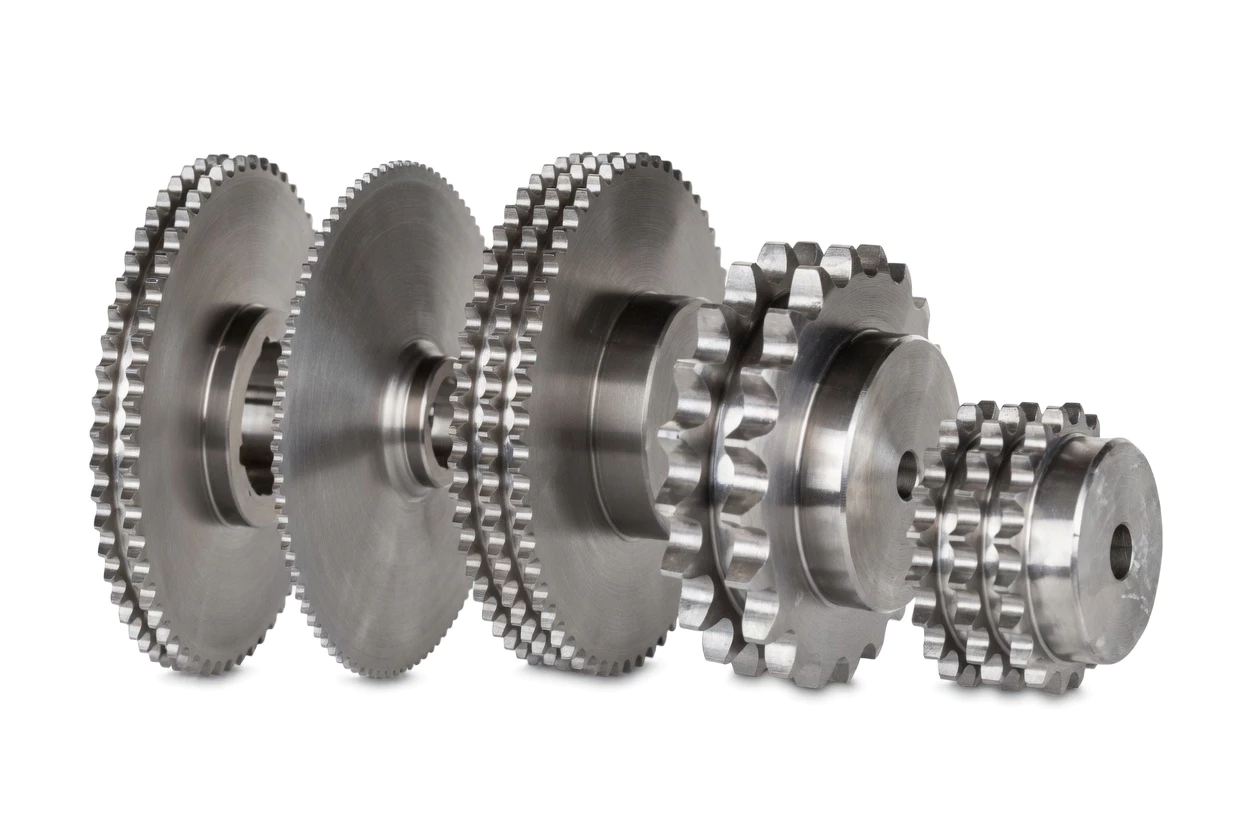
Chain-driven goods lifts, freight elevators, mast climbers, vertical reciprocating conveyors (VRCs), and scissor-lift mechanisms all rely on precision heavy-duty sprockets to transmit motor torque to the lifting chain safely and reliably. In lifting applications, the sprocket is a safety-critical component — subject to sustained dead loads, shock loads from uneven loading, and fatigue loading over the equipment’s service life. View our heavy-duty lifting sprocket range →
Ringkasan
Chain-driven lifting equipment in Australian warehouses, manufacturing plants, and construction sites relies on sprockets that meet significantly higher safety factors than general conveyor sprockets. Australian Standards AS 1418 (Cranes, Hoists and Winches) and AS/NZS 3000 series define the design requirements for lifting chain drives, requiring sprocket materials, heat treatment, and dimensional accuracy to be documented and certified.
We supply lifting-grade chain sprockets for goods lifts, VRCs, mast climbers, counterweight chain drives, and scissor-lift mechanisms — in C45 carbon steel, 40Cr alloy steel, and EN 14 cast iron, with case hardening options and full material traceability for compliance with AS 1418.
Spesifikasi Teknis
| Parameter | Lifting Application Value | Catatan |
|---|---|---|
| Typical Chain Standard | ANSI #60 / #80 / ISO 12B / 16B | Higher load ratings for lifting |
| Pitch | 19.05–25.4 mm (3/4"–1") | Larger pitch for higher load capacity |
| Drive Tooth Count | 11T – 19T | Lower tooth count increases torque density |
| Safety Factor (material) | ≥5:1 on SWL | AS 1418 minimum |
| Bahan | 40Cr alloy steel / C45 | 40Cr for safety-critical applications |
| Kekerasan Gigi | HRC 52–62 | Through-hardened alloy or case-hardened C45 |
| Core Toughness | Charpy 35–50 J at 0°C | Impact-resistant for shock loading |
| Toleransi Lubang | H7 / H6 | High-precision for lifting shaft fit |
| Hub Type | Solid hub / keyed | No taper-bush on primary lifting sprockets |
| Keyway | DIN 6885 / custom | Double keyway on large lifting sprockets |
| Permukaan | Zinc plate / painted | Corrosion protection in machine room |
| Runout (TIR) | ≤0,05 mm | Vibration control for ride comfort |
| Material Cert. | EN 10204 3.1 | Mandatory for safety-critical lifting |
| Hardness Test | Vickers HV10 or Rockwell HRC | Per AS 1418 requirements |
| Suhu Operasional | −20°C to +60°C | â |
| Untai | Simplex or Duplex | Duplex for increased safety factor |
| Design Life | ≥20 years | Commercial goods lift service life |
| Max Pitch Line Load | Application-calculated | Submit load and safety factor for review |
| Chain Type Compatibility | Roller chain, leaf chain | Leaf chain sprockets also available |
Performance Advantages
Working Principle in Chain-Driven Lifting Systems
In a chain-driven goods lift or VRC, the electric motor drives a reduction gearbox connected to the lifting shaft. The drive sprocket is mounted on this shaft and engages the lifting chain, which is attached to the lift car or carriage. As the motor turns, the sprocket draws the chain, raising or lowering the load. The return chain typically runs over an idler or tail sprocket at the top of the mast or shaft. In duplex configurations, two sprockets and two chains provide redundancy to meet AS 1418 safety factor requirements.
Compatibility
| Equipment Type | Sproket yang Direkomendasikan | Catatan |
|---|---|---|
| Goods lift (ANSI #60 chain) | ANSI #60 alloy steel sprocket | AS 1418 lifting grade |
| Goods lift (ANSI #80 chain) | ANSI #80 heavy-duty sprocket | Higher-capacity lifts |
| VRC (vertical reciprocating conveyor) | ANSI #60 / ISO 12B sprocket | Often duplex configuration |
| Mast climber drive chain | ANSI #80 / ISO 16B sprocket | High cycle rate, heavy load |
| Counterweight leaf chain | Leaf chain sprocket (matching pitch) | Specify leaf chain pitch exactly |
| Scissor-lift chain drive | ANSI #50 / ISO 10B sprocket | Lower load, compact geometry |
| Mitsubishi, Alimak, GEDA mast climbers (ref only) | Custom sprocket to drawing | Brand reference for selection only |
Selection Guide for Lifting Sprockets
| 📞 | Consult a Lifting Equipment Engineer | Lifting sprockets for goods lifts and VRCs are safety-critical components. Selection must be validated by a qualified lifting equipment engineer against the AS 1418 safety factor requirements for the SWL and cycle rate of the specific installation. |
| 📐 | Specify Load, Speed, & Cycle Rate | Provide: Safe Working Load (SWL) in kg, lift speed in m/s, daily cycle count, chain pitch and standard, shaft diameter, and required service life. Our engineering team will confirm material, tooth count, and documentation package. |
| 🔬 | Material Documentation Required | Always specify EN 10204 3.1 material certificates for lifting-grade sprockets. This is a requirement of AS 1418 and is required by most equipment certifiers and building compliance inspectors in Australia. |
| 🔎 | Duplex or Simplex? | For AS 1418 compliance, most chain-driven goods lifts require a minimum safety factor of 5:1 on the SWL. In many cases this requires duplex chain configuration — two sprockets and two chains. Confirm with your certifying engineer. |
Installation for Lifting Applications
- Out-of-service isolation: Lock out the motor control panel and fit mechanical brakes to the lifting shaft. Barricade the lift car and install physical stops.
- Support the lift car or carriage independently before removing the lifting chain to prevent uncontrolled descent.
- Remove lifting chain using an appropriate chain tool. Mark chain segments for correct reinstallation orientation.
- Replace sprocket: for large lifting sprockets on heavy shafts, use a hydraulic arbor press. Apply bearing housing heater if H6 fit is specified. Torque all fasteners to specification and record in maintenance log.
- Reinstall and tension chain per OEM maintenance manual. For leaf chain, verify anchor pin orientation and safety catches.
- Conduct load test per AS 1418 following any replacement of safety-critical lifting components. Document test results.
- Return to service: Remove mechanical stops, re-energise motor, verify operation under 10% and 100% rated load. Update maintenance log with sprocket serial number and certificate reference.
Troubleshooting Elevator Sprocket Issues
| Gejala | Cause | Action |
|---|---|---|
| Vibration during lift travel | Worn sprocket teeth or misalignment | Inspect teeth; replace and realign |
| Chain climbing over sprocket teeth | Excessive chain elongation | Replace chain at 2% elongation; replace sprocket |
| Sprocket hub fretting on lifting shaft | Bore fit too loose or insufficient key engagement | Upgrade bore tolerance; apply retaining compound |
| Noise in machine room | Worn or mismatched chain/sprocket | Measure chain pitch; replace matched set |
| Uneven lift speed | Partial tooth wear or chain hang-up | Inspect teeth for hook-wear pattern; replace |
Studi Kasus Pelanggan Australia
Produk Terkait: Rantai Transmisi
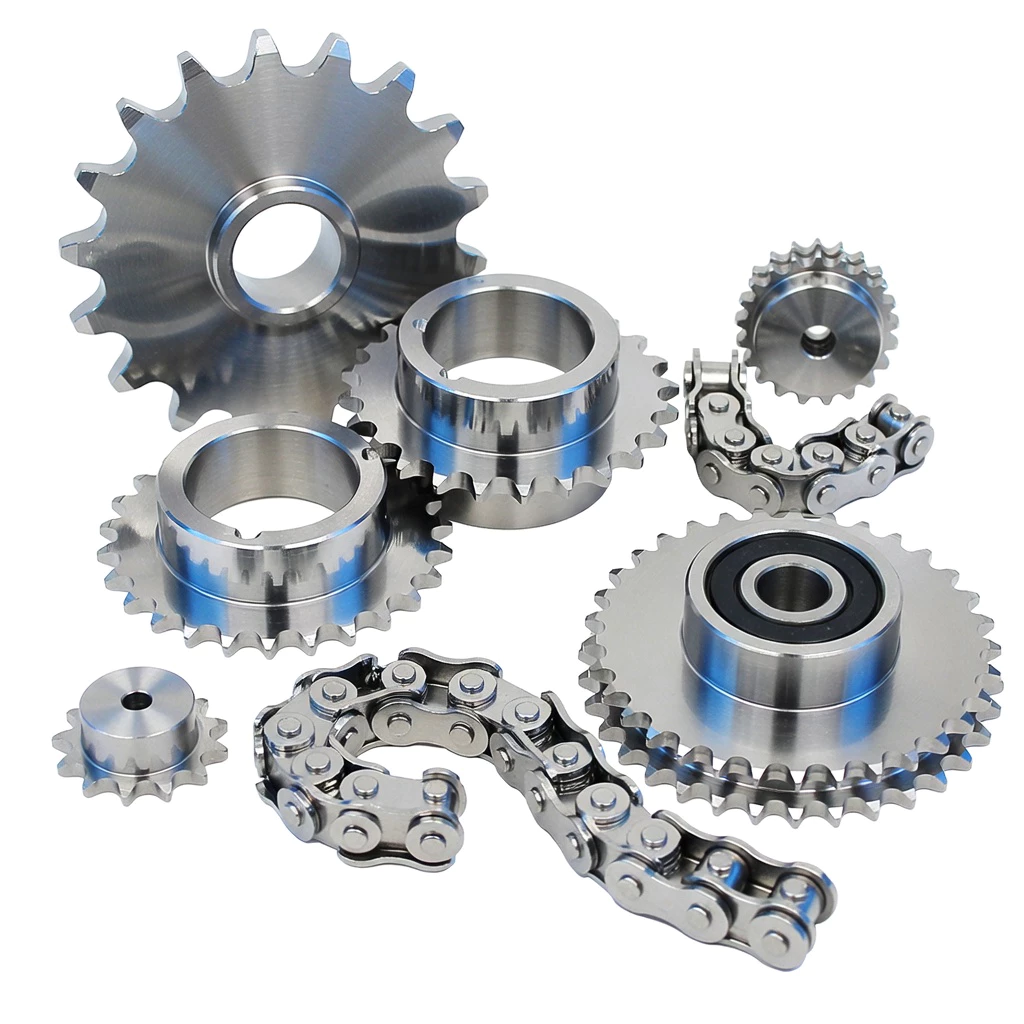
⛓️ Rantai Transmisi yang Kompatibel
We also manufacture and supply the complete range of rantai transmisi rol to pair with every sprocket in our catalogue — ANSI, ISO, double-pitch, stainless, and special-purpose chains for all industrial applications.
Standar & Sertifikasi
Semua sprocket Ever-power Australia diproduksi dan diuji sesuai dengan standar internasional berikut:
Quality commitment: 100% dimensional inspection, hardness verification, and batch traceability on every production run. Material test certificates (EN 10204 2.2) available on request.

Mengapa Memilih Ever-power Australia?
We are a vertically integrated sprocket manufacturer with 25+ years of chain drive expertise. Our 35,000 m² facility produces 4 million+ sprockets per year to GB, ISO, ANSI, JIS, DIN and BS standards. We supply OEM partners, distributors, and direct industrial buyers across Australia with ISO 9001 certified quality on every order. Learn about our manufacturing capability →
4 juta+ pcs/tahun
Mampu OEM
AU Stock Available
Ready to Optimise Your Drive System?
Ever-power Australia’s engineering team is available to recommend the right sprocket for your specific application. Request a free quote or technical consultation today.