Roda Gigi untuk Konveyor Pertambangan Material Curah
Bulk material mining conveyors — underground face conveyor systems, surface ROM (run-of-mine) pad conveyors, and overland bulk conveyor transfer stations — are the arteries of Australian mining operations. A single failed drive sprocket on a face conveyor can halt production at a cost of $50,000–$500,000 per hour in underground coal or metalliferous mines. Mining conveyor chain sprockets must withstand sustained heavy loads (200–5,000+ tonnes per hour), abrasive ore and coal dust, high moisture (underground), and in some cases explosive atmospheres (coal mines). Explore our heavy-duty mining sprockets →

Ringkasan
Mining conveyor chain drive applications range from the small ANSI #60 sprocket on a shuttle conveyor feed drive to the massive ANSI #160 duplex sprocket on a 5,000 tonne-per-hour surface ROM conveyor drive station. In underground coal mine environments, equipment must also comply with ATEX/IECEx explosion protection requirements, which impose additional material and design constraints. Surface mining conveyors face extreme abrasion from ore dust and impact from lump material falling onto the conveyor infeed.
Spesifikasi Teknis
| Parameter | Mining Conveyor Value | Jangkauan |
|---|---|---|
| Chain Standard | ANSI #100 / #120 / #160 | ANSI #60–#240 |
| Pitch | 31.75–50.8 mm | 19.05–76.2 mm |
| Bahan | 40Cr alloy steel | 42CrMo4 for extreme loads |
| Kekerasan Gigi | HRC 54–62 | HRC 52–65 |
| Kedalaman Kasus | 3.0–5.0 mm | Up to 6 mm for large conveyors |
| Gaya Hub | Type C double hub / split hub | Taper-bushed for planned maintenance |
| Max Bore | Up to 200 mm | Up to 300 mm (custom) |
| Shaft Diameter Range | 80–250 mm | — |
| Untai | Duplex standard | Triplex for highest loads |
| Max Pitch Line Load | Up to 60,000 N per strand | Application-specific |
| Abrasion Rating | High (coal/ore dust) | — |
| Permukaan | Plain / dacromet / hard chrome | Hard chrome option for extreme abrasion |
| Dokumentasi | EN 10204 3.1 MTC mandatory | Mine-site requirement |
| Toleransi Lubang | H6 | H5 on precision drives |
| Explosion Protection | ATEX-compatible on request | Underground coal mine requirement |
| Fatigue Life | ≥80,000 hours | — |
| Kelas Pemesinan | DIN Kelas 6 | Grade 5 on request |
| Runout (TIR) | ≤0.1 mm | — |
| Weight Range | 5–250 kg | Application-dependent |
Performance Advantages
Working Principle in Mining Conveyors
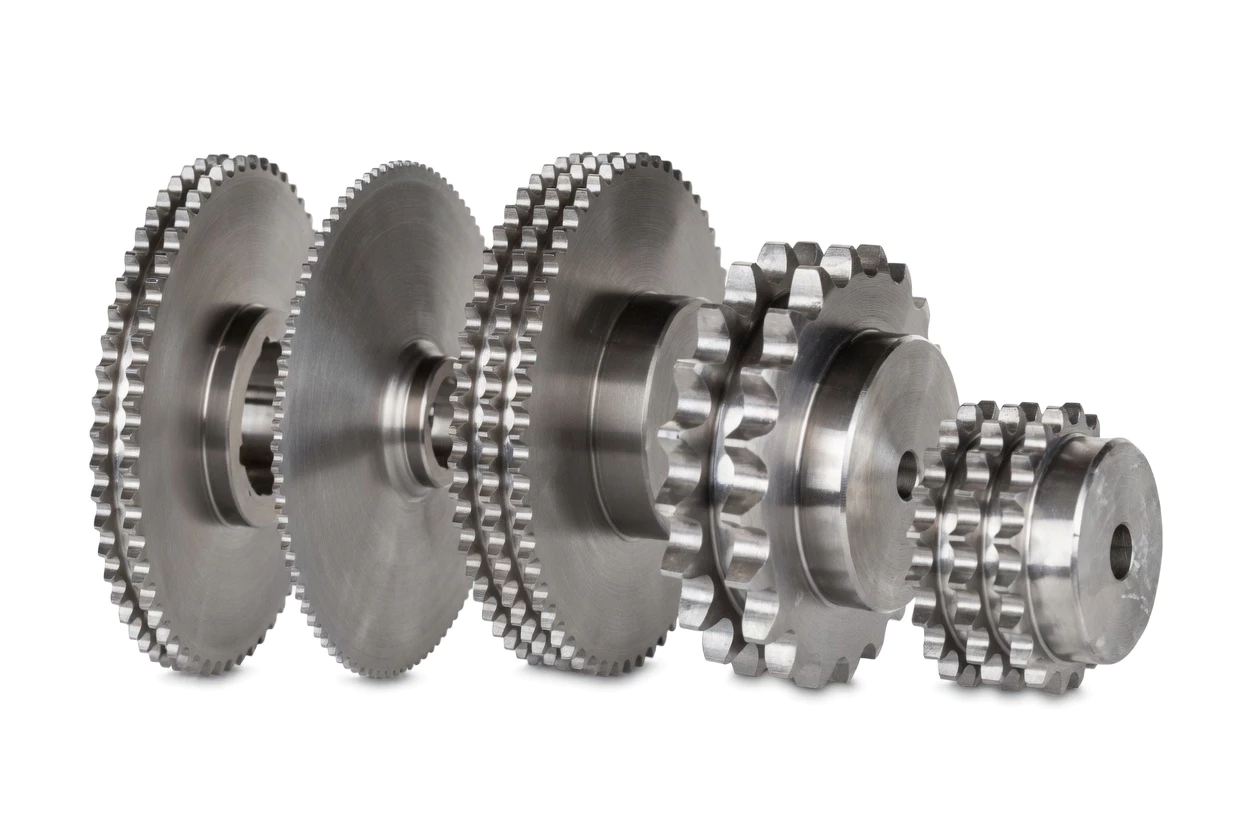
A bulk mining conveyor chain drive typically consists of an electric motor driving a high-ratio gearbox (planetary or parallel shaft) connected to the head-drive shaft via a flexible coupling or direct mount. The head-drive sprocket transmits full motor torque through the chain to the head drum shaft (on belt conveyors) or directly to the chain conveyor in the case of chain-type bulk conveyors. Tail sprockets and intermediate catenary supports maintain chain tension across conveyor runs that can extend to 3–10 km in open-cut surface operations.
Informasi Kompatibilitas
| Conveyor Type / Chain | Sproket yang Direkomendasikan | Catatan |
|---|---|---|
| Underground face conveyor (ANSI #100) | ANSI #100 40Cr alloy sprocket | Duplex for redundancy; ATEX option |
| ROM pad conveyor (ANSI #120) | ANSI #120 42CrMo4 heavy sprocket | High throughput; hard chrome option |
| Surface mine overland conveyor (ANSI #120) | ANSI #120 duplex alloy sprocket | Long centre distance; precise alignment |
| Transfer station conveyor (ANSI #100 / #120) | ANSI #100 or #120 alloy sprocket | High impact at transfer points |
| Underground longwall gate-road conveyor (ANSI #80) | ANSI #80 40Cr alloy with ATEX | Underground coal: ATEX compliance |
| Joy Mining, Komatsu Mining (ref only) | ANSI #80–#120 equivalent | Brand reference; verify tooth count |
| Martin Engineering, Fenner Dunlop (ref only) | ANSI equivalent per chain pitch | Cross-reference for selection only |
Selection Guide for Mining Conveyor Sprockets
Installation for Mining Conveyor Sprockets
- Mine-site LOTO and pre-task risk assessment: Mining conveyor LOTO is a multi-energy, multi-person procedure under WHS Regulations. Obtain all necessary permits before beginning work.
- De-tension the chain using the tail take-up adjustment. For gravity take-up conveyors, lower the take-up weight to its minimum position before opening the chain.
- Open the chain at the most accessible connecting link using a rated chain-break press. Secure chain ends to prevent retraction.
- Remove old sprocket with certified lifting equipment. Mining conveyor sprockets typically weigh 20–250 kg — use a rated chain hoist and sling.
- Use hydraulic puller or heating to remove press-fit sprockets. Never use an oxy-acetylene flame near sealed bearings or rubber chain guides.
- Clean shaft and keyway. Apply Loctite 638 to shaft bore interface. For split-hub installation, clean the split faces and apply high-strength locking compound.
- Pasang sproket baru. For very large sprockets, use a hydraulic hub puller/installer. Record the sprocket serial number and material certificate number in the maintenance log.
- Align the drive train. Use a laser alignment system — target ≤0.3 mm lateral offset and ≤0.1° angular alignment for high-capacity mining conveyors.
- Re-tension chain, restore take-up weight, re-apply all guards and covers.
- No-load commissioning: Run conveyor empty for 30 minutes. Check for unusual noise, vibration, or chain tracking issues. Only then introduce full load.
Troubleshooting Mining Conveyor Sprockets
| Gejala | Kemungkinan Penyebab | Tindakan yang Disarankan |
|---|---|---|
| Rapid tooth wear (<6 months) | Insufficient hardness in abrasive ore dust | Upgrade to 42CrMo4 with hard chrome facing |
| Chain derailment at drive station | Misalignment or worn teeth | Laser realign; replace if tooth wear >15% |
| Bore fretting on drive shaft | H7 bore too loose for high-load mining drive | Replace with H6; apply Loctite 638 |
| Sprocket cracking at hub | Fatigue from cyclic shock loading | Replace with 42CrMo4; review design safety factor |
| Chain vibration on long conveyor | Worn sprocket causing velocity ripple | Replace sprocket; check all guide stations |
Studi Kasus Pelanggan Australia
Pertanyaan yang Sering Diajukan
+ What chain size is typically used on an underground coal mine face conveyor?
+ What is the difference between 40Cr and 42CrMo4 alloy steel for mining sprockets?
+ Are ATEX/IECEx-certified sprockets available for underground coal mine applications?
+ How do I specify a split-hub sprocket for underground mine use?
+ What is the correct alignment tolerance for a high-power mining conveyor chain drive?
+ How often should mining conveyor chain drive sprockets be inspected?
+ Do you supply sprockets for chain-type (dragline) bulk conveyors as well as belt-type conveyors?
+ What is the service life expectation for a well-specified mining conveyor sprocket?
+ Can you supply emergency replacement sprockets for a mine conveyor breakdown?
+ Do you provide engineering calculation support for mining conveyor drive selection?
Produk Terkait: Rantai Transmisi
⛓️ Rantai Transmisi yang Kompatibel
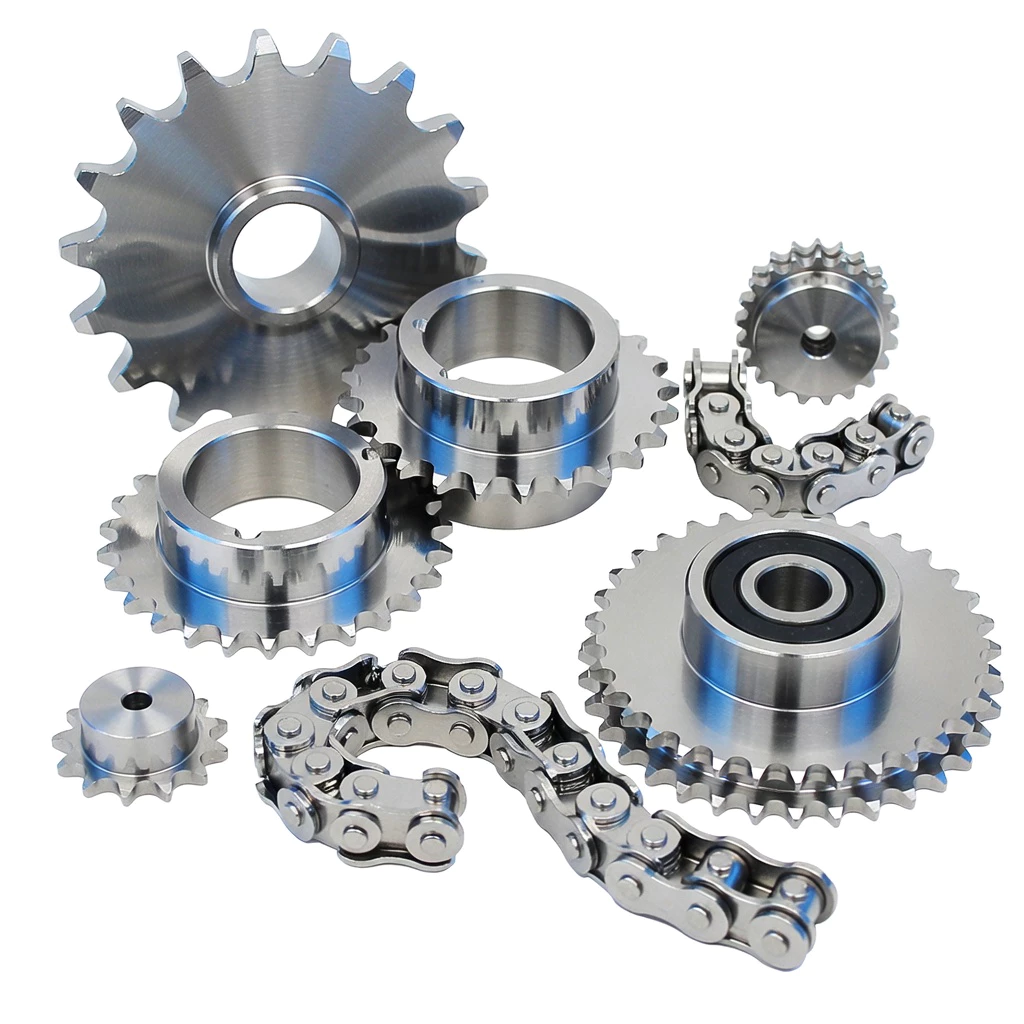
Kami memproduksi dan memasok rangkaian lengkap produk. rantai transmisi rol paired with every sprocket — ANSI, ISO, double-pitch, stainless, and special-purpose chains for all industrial applications.
Standards & Certifications
All Ever-power Australia sprockets are manufactured to the following international standards:
Quality commitment: Inspeksi dimensi 100%, pengujian kekerasan per batch, dan ketertelusuran penuh pada setiap proses produksi. Sertifikat uji material tersedia berdasarkan permintaan.

Mengapa Memilih Ever-power Australia?
We are a vertically integrated sprocket manufacturer with 25+ years of chain drive expertise. Our 35,000 m² facility produces 4 million+ sprockets per year to ISO, ANSI, JIS, DIN, BS and GB standards, ISO 9001 certified. Our manufacturing →
Siap memesan atau membutuhkan saran teknis?
Our engineering team provides free selection support and fast quotes. Australian stock on core sizes — same-week dispatch on standard sprockets.