Descripción del Producto
PC200 20y-27-11581 Piezas para excavadora Piñón de cadena
|
Material |
40SiMnTi |
|
Finalizar |
Liso |
|
Bandera |
Negro o amarillo |
|
Técnica |
Fundición por forja |
|
Dureza superficial |
HRC52-58 |
|
Tiempo de garantía |
2000 horas |
|
Proceso de dar un título |
ISO 9001-9002 |
|
Precio FOB |
FOB Hangzhou USD 200-2000/unidad |
|
Cantidad mínima de pedido |
2 piezas |
|
El tiempo de entrega |
Dentro de los 30 días posteriores a la firma del contrato. |
| Para ktsu | ||||||||
| PC20-7 | PC30 | PC30-3 | PC30-5 | PC30-6 | PC40-7 | PC45 | PC45-2 | PC55 |
| PC120-6 | PC130 | PC130-7 | PC200 | PC200-1 | PC200-3 | PC200-5 | PC200-6 | PC200-7 |
| PC200-8 | PC210-6 | PC220-1 | PC220-3 | PC220-6 | PC220-7 | PC220-8 | PC270-7 | PC202B |
| PC220LC-6 | PC220LC-8 | PC240 | PC300 | PC300-3 | PC300-5 | PC300-6 | PC300-7 | PC300-7K |
| PC300LC-7 | PC350-6/7 | PC400 | PC400-3 | PC400-5 | PC400-6 | PC400lc-7 | PC450-6 | PC450-7 |
| PC600 | PC650 | PC750 | PC800 | PC1100 | PC1250 | PC2000 | ||
| D20 | D31 | D50 | D60 | D61 | D61PX | D65A | D65P | D64P-12 |
| D80 | D85 | D155 | D275 | D355 | ||||
| Para HITACHI | ||||||||
| EX40-1 | EX40-2 | EX55 | EX60 | EX60-2 | EX60-3 | EX60-5 | EX70 | EX75 |
| EX100 | EX110 | EX120 | EX120-1 | EX120-2 | EX120-3 | EX120-5 | EX130-1 | EX200-1 |
| EX200-2 | EX200-3 | EX200-5 | EX220-3 | EX220-5 | EX270 | EX300 | EX300-1 | EX300-2 |
| EX300-3 | EX300-5 | EX300A | EX330 | EX370 | EX400-1 | EX400-2 | EX400-3 | EX400-5 |
| EX450 | ZAX30 | ZAX55 | ZAX200 | ZAX200-2 | ZAX330 | ZAX450-1 | ZAX450-3 | ZAX450-5 |
| ZX110 | ZX120 | ZX200 | ZX200 | ZX200-1 | ZX200-3 | ZX200-5g | ZX200LC-3 | ZX210 |
| ZX210-3 | ZX210-3 | ZX210-5 | ZX225 | ZX240 | ZX250 | ZX270 | ZX30 | ZX330 |
| ZX330 | ZX350 | ZX330C | ZX450 | ZX50 | ||||
| Para CAT | ||||||||
| E200B | E200-5 | E320D | E215 | E320DL | E324D | E324DL | E329DL | E300L |
| E320S | E320 | E320DL | E240 | E120-1 | E311 | E312B | E320BL | E345 |
| E324 | E140 | E300B | E330C | E120 | E70 | E322C | E322B | E325 |
| E325L | E330 | E450 | CAT225 | CAT312B | CAT315 | CAT320 | CAT320C | CAT320BL |
| CAT330 | CAT322 | CAT245 | CAT325 | CAT320L | CAT973 | |||
| D3 | D3C | D4 | D4D | D4H | D5M | D5H | D6 | D6D |
| D6M | D6R | D6T | D7 | D7H | D7R | D8 | D8N | D8R |
| D9R | D9N | D9G | D10 | |||||
| Para Sumitomo | ||||||||
| SH120 | SH120-3 | SH200 | SH210-5 | SH200 | SH220-3 | SH220-5/7 | SH290-3 | SH350-5/7 |
| SH220 | SH280 | SH290-7 | SH260 | SH300 | SH300-3 | SH300-5 | SH350 | SH60 |
| SH430 | ||||||||
| Para KOBELCO | ||||||||
| SK120-6 | SK120-5 | SK210-8 | SK210LC-8 | SK220 | SK220-1 | SK220-3 | SK220-5/6 | SK200 |
| SK200 | SK200 | SK200-3 | SK200-6 | SK200-8 | SK200-5/6 | SK60 | SK290 | SK100 |
| SK230 | SK250 | SK250-8 | SK260LC-8 | SK300 | SK300-2 | SK300-4 | SK310 | SK320 |
| SK330-8 | SK330 | SK350LC-8 | SK235SR | SK450 | SK480 | SK30-6 | ||
| Para DAEWOO | ||||||||
| DH200 | DH220-3 | DH220 | DH220S | DH280-2 | DH280-3 | DH55 | DH258 | DH130 |
| DH370 | DH80 | DH500 | DH450 | /DH225 | ||||
| Para HYUNDAI | ||||||||
| R60-5 | R60-7 | R60-7 | R80-7 | 200€ | R200-3 | R210 | R210 | R210-9 |
| R210LC | R210LC-7 | R225 | R225-3 | R225-7 | R250 | R250-7 | R290 | R290LC |
| R290LC-7 | R320 | R360 | R954 | |||||
| Para KATO | ||||||||
| HD512 | HD1430 | HD 512III | HD 820III | HD820R | HD1430III | HD700VII | HD 1250VII | HD250SE |
| HD400SE | HD550SE | HD1880 | ||||||
| Para DOOSAN | ||||||||
| DX225 | DX225LCA | DX258 | DX300 | DX300LCA | DX420 | DX430 | ||
| Para VOLVO | ||||||||
| EC160C | EC160D | EC180B | EC180C | EC180D | EC210 | EC210 | EC210B | EC240B |
| EC290 | EC290B | EC240 | EC55 | EC360 | EC360B | EC380D | EC460 | EC460B |
| EC460C | EC700 | EC140 | EC140B | EC160B | ||||
/* 10 de marzo de 2571 17:59:20 */!function(){function s(e,r){var a,o={};try{e&&e.split(“,”).forEach(function(e,t){e&&(a=e.match(/(.*?):(.*)$/))&&1
| Servicio posventa: | Servicio en línea |
|---|---|
| Garantía: | 12 meses |
| Tipo: | Piezas del tren de rodaje |
| Personalización: |
Disponible
| Solicitud personalizada |
|---|
.shipping-cost-tm .tm-status-off{background: none;padding:0;color: #1470cc}
|
Costo de envío:
Coste estimado por unidad. |
sobre el costo de envío y el tiempo estimado de entrega. |
|---|
| Método de pago: |
|
|---|---|
|
Pago inicial Pago completo |
| Divisa: | US$ |
|---|
| Devoluciones y reembolsos: | Puedes solicitar un reembolso hasta 30 días después de recibir los productos. |
|---|
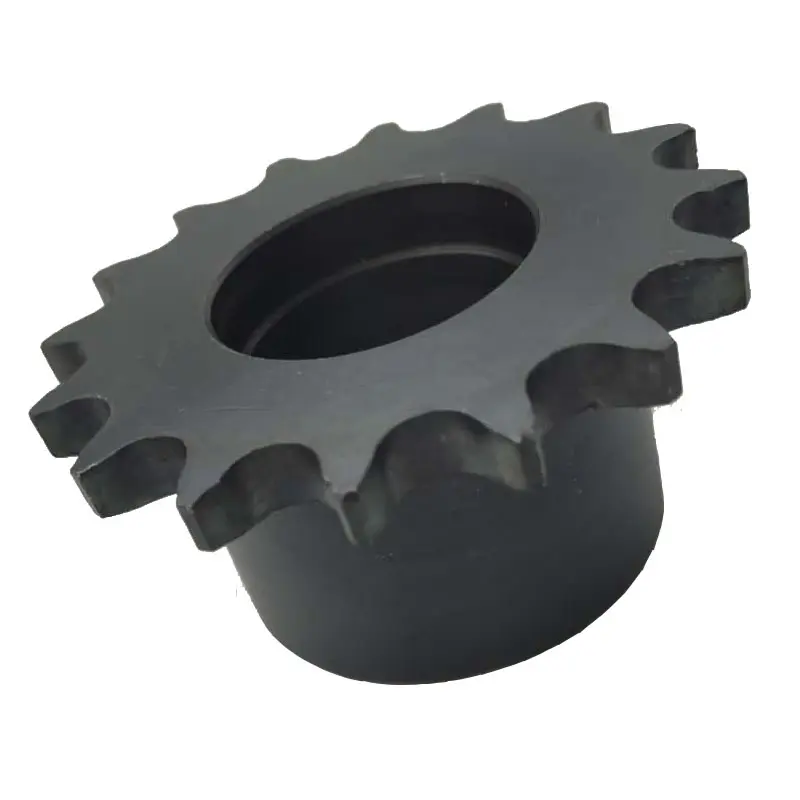
Compatibilidad de piñones de cadena con ruedas
En general, los piñones de cadena están diseñados para funcionar con tipos específicos de ruedas, y existen ciertos requisitos para garantizar una compatibilidad adecuada:
- Tamaño y paso de la cadena: El piñón de la cadena debe coincidir con el tamaño y el paso de la cadena con la que se va a utilizar. Por ejemplo, si tiene una cadena de rodillos con un paso de 0,625 pulgadas, necesita un piñón con el mismo paso para garantizar un ajuste correcto.
- Número de dientes: El número de dientes del piñón debe ser compatible con el número de eslabones de la cadena. La cadena debe engranar suavemente con el piñón, sin atascarse ni saltarse eslabones.
- Perfil dental: El perfil de los dientes del piñón debe coincidir con la forma de los rodillos de la cadena para garantizar un acoplamiento suave y minimizar el desgaste.
- Tamaño del eje: El orificio central (calibre) de la rueda dentada debe coincidir con el diámetro del eje en el que se montará. Utilizar el tamaño de eje correcto garantiza un ajuste seguro y evita vibraciones.
- Configuración del hub: Algunos piñones tienen bujes, que son extensiones a ambos lados del piñón. La longitud y la configuración del buje deben ajustarse a los requisitos de la aplicación específica.
- Material and Strength: Consider the material and strength of the sprocket based on the application’s load and environmental conditions. Heavy-duty applications may require sprockets made of robust materials to withstand the forces and stresses.
It’s crucial to follow the manufacturer’s specifications and guidelines when selecting a chain sprocket for a particular wheel. Mixing incompatible sprockets and wheels can result in premature wear, inefficiencies, and potential safety hazards. If you are unsure about the compatibility, consult with the manufacturer or a knowledgeable expert to ensure you choose the right sprocket for your specific application.
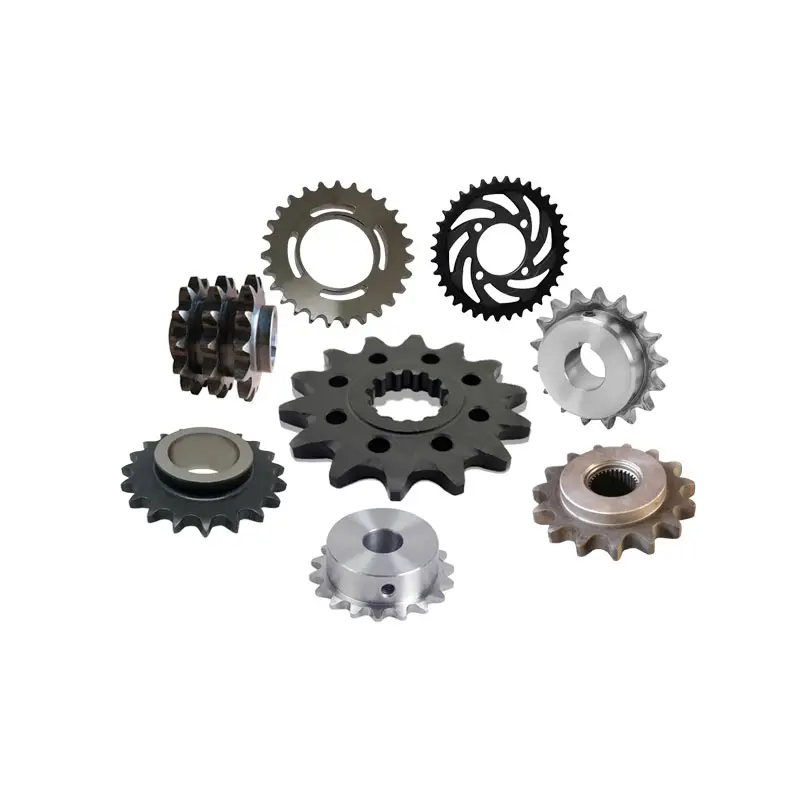
Extending the Lifespan of a wheel sprocket Assembly
To ensure a long lifespan for your wheel sprocket assembly, consider the following maintenance and operational practices:
- Regular Lubrication: Apply the appropriate lubricant to the sprocket teeth and chain or belt regularly. Lubrication reduces friction, wear, and the likelihood of premature failure.
- Proper Tension: Maintain the correct tension in the chain or belt to prevent excessive stress and wear. Follow the manufacturer’s guidelines for tensioning.
- Alignment: Ensure precise alignment between the wheel sprocket. Misalignment can cause accelerated wear and increase the risk of failure.
- Inspections: Regularly inspect the wheel, sprocket, chain, or belt for signs of wear, damage, or fatigue. Replace any worn-out or damaged components promptly.
- Cleanliness: Keep the wheel sprocket assembly clean from dirt, debris, and contaminants that can contribute to wear and corrosion.
- Correct Usage: Operate the machinery within the recommended speed, load, and temperature limits specified by the manufacturer.
- Training and Operator Awareness: Ensure that equipment operators are properly trained to use the machinery correctly and are aware of maintenance procedures.
- Use Quality Components: Invest in high-quality wheels, sprockets, chains, or belts from reputable suppliers to improve durability and reliability.
- Replace Components in Sets: When replacing parts, consider replacing the entire set (e.g., chain and sprockets) to maintain uniform wear and performance.
- Address Vibration Issues: Excessive vibration can accelerate wear. Investigate and address any vibration problems promptly.
By following these practices, you can significantly extend the lifespan of your wheel sprocket assembly, reduce downtime, and enhance the overall efficiency and safety of your machinery.
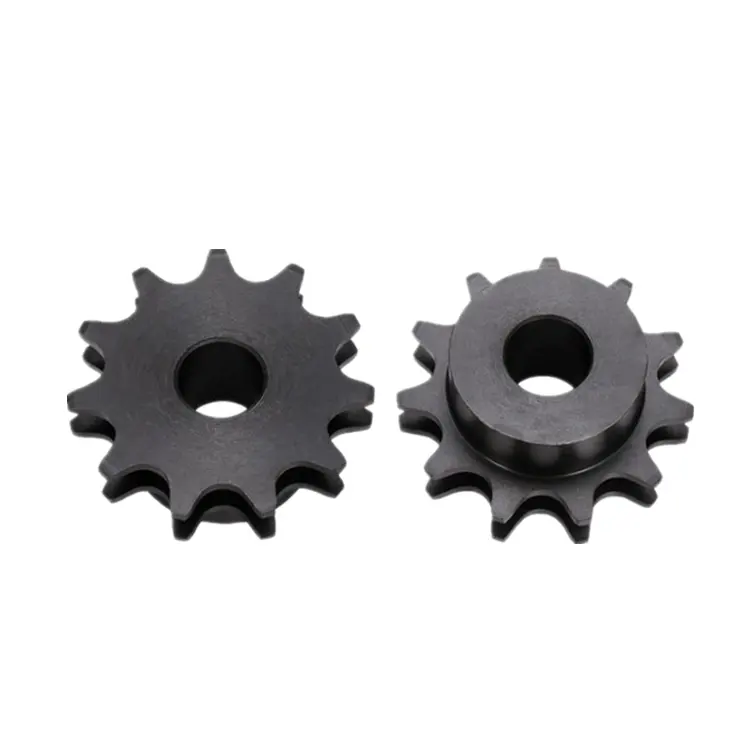
Common Applications of Wheels and Sprockets in Machinery
Wheels and sprockets are crucial components used in various machinery and mechanical systems for power transmission, motion control, and mechanical advantage. Some common applications include:
1. Vehicles:
Wheels and sprockets are extensively used in vehicles, including automobiles, motorcycles, bicycles, and even heavy-duty trucks and construction equipment. Sprockets and chains are commonly found in motorcycles and bicycles for power transmission from the engine or pedals to the wheels.
2. Industrial Machinery:
In industrial settings, wheels and sprockets play a vital role in conveyor systems, where they are used to move materials or products along a production line. Sprockets are also employed in various machinery to transfer rotational motion and power between components.
3. Agricultural Equipment:
Agricultural machinery often relies on wheels and sprockets for functions such as driving tractors, operating harvesting equipment, and propelling irrigation systems.
4. Robotics:
Wheels and sprockets are commonly used in robotic systems to provide mobility and movement capabilities. Sprockets and chains or belts are used in robotic arms and joints to facilitate precise and controlled motion.
5. Material Handling:
Conveyor systems in warehouses and distribution centers utilize wheels and sprockets to move packages, products, and materials efficiently. The sprockets engage with conveyor chains to create a continuous loop for material transport.
6. Mining and Construction:
In heavy industries like mining and construction, large machinery such as excavators, bulldozers, and cranes utilize wheels and sprockets for propulsion and movement. Tracks with sprockets are commonly used in these applications for enhanced traction and stability.
7. Factory Automation:
In automated manufacturing processes, wheels and sprockets are employed in robotic arms and assembly line systems to control movement and manipulate objects with precision.
8. Renewable Energy:
In wind turbines, wheels and sprockets are used to convert the rotational motion of the blades into electrical energy by driving the generator.
These are just a few examples of the diverse applications of wheels and sprockets in machinery and mechanical systems. Their versatility, efficiency, and ability to provide mechanical advantage make them essential components in various industries.


editor by CX 2024-01-10