灌装线用链轮
Food and beverage filling lines — from carbonated soft drink bottling and dairy filling to baby food, condiment, and brewery packaging — demand chain drive sprockets that meet rigorous food-safety, hygiene, and reliability standards. Corrosion, contamination, and maintenance downtime are the three critical failure modes that filling line operators in Australia work hardest to eliminate. Explore our food-grade sprocket range →
Overview
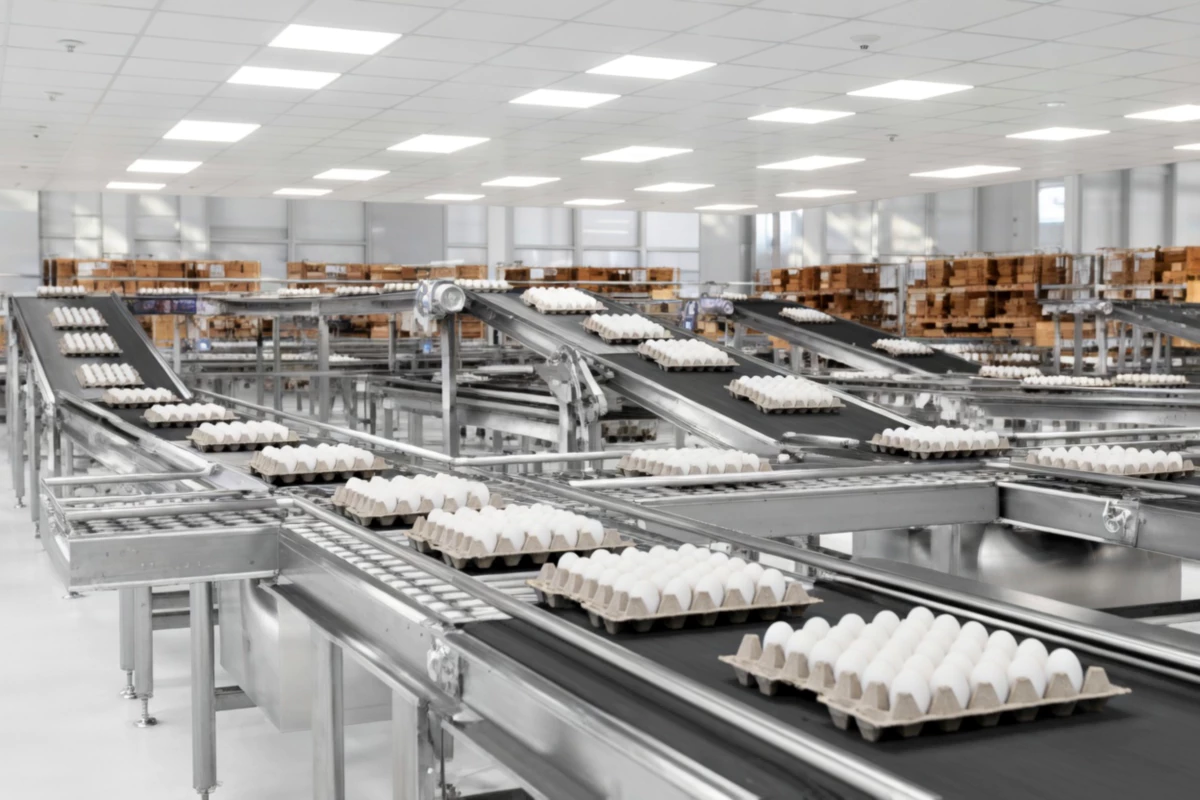
Filling lines in Australian food and beverage facilities operate at 50–1,000+ units per minute, often 16–24 hours per day, and must maintain consistent fill volumes with minimal product contamination risk. Chain drives on filling lines are used for container transport (infeed and outfeed conveyors), fill station indexing, capper drives, labeller transport, and carton erector feeds. All chain drive components in the product-adjacent zone must meet material, finish, and cleanability requirements under Australian FSANZ and international FDA standards.
Technical Specifications
| Parameter | Filling Line Value | Range |
|---|---|---|
| Chain Standard | ANSI #35 / #40 / ISO 06B / 08B | ANSI #25–#50 / ISO 04B–10B |
| Material (product zone) | AISI 304 stainless steel | SS316 on request for chlorinated CIP |
| Material (non-product zone) | C45 zinc plate or dacromet | — |
| Tooth Hardness (SS304) | HRB 90–96 (HRC ~20 equiv.) | — |
| Tooth Hardness (C45) | HRC 50–60 | — |
| Surface Finish (SS304) | Polished Ra 0.8–1.6 μm | Electropolished Ra <0.4 μm on request |
| Bore Tolerance | H7 | H6 on request |
| Hub Style | Finished bore / Taper-bushed | — |
| Pitch | 9.525 mm (3/8") / 12.7 mm (1/2") | — |
| Speed Range | 0.3–2.0 m/s | — |
| CIP Resistance | Full immersion: NaOH 2%, HNO3 1% | SS304; SS316 for higher chloride CIP |
| Washdown Rating | IP69K compatible (sealed hubs) | — |
| Operating Temperature | −10°C to +90°C | Pasteurisers up to +140°C (SS316) |
| Certification | FSANZ / FDA material compliance | SS304 standard; SS316 on request |
| Machining Grade | DIN Grade 6 | Grade 5 for index drives |
| Lubrication | NSF H1 food-grade oil | Dry-film PTFE for no-lube applications |
| Strand | Simplex | Duplex for high-load infeed conveyors |
| Deformation | Minimal (SS304 not heat-treatable) | — |
| Documentation | MTC, dim. report on request | — |
Performance Advantages
How Filling Line Sprockets Work
On a rotary or linear filling machine, roller chain conveyors transport containers (bottles, cans, cartons, pouches) from the infeed lane through the filling station to the outfeed. Sprockets at the drive end of each conveyor segment transmit motor torque to the chain; idler sprockets maintain correct chain tension and guide the return strand. At indexing stations (fill position, capper, labeller), precision-hobbed sprockets on servo-driven shafts position containers at exact intervals for dispensing operations.
In the product-adjacent zone (typically the filling bowl and infeed/outfeed conveyors within 500 mm of the product), all materials must comply with food-safety regulations. SS304 stainless sprockets in this zone eliminate the corrosion and contamination risk that carbon steel sprockets present in washdown environments.
Compatibility
| Machine Type / Chain | Recommended Sprocket | Notes |
|---|---|---|
| ANSI #35 transport chain | ANSI #35 SS304 / C45 sprocket | Container infeed/outfeed conveyors |
| ANSI #40 transport chain | ANSI #40 SS304 sprocket | Product-zone drives |
| ISO 06B-1 chain (European fillers) | ISO 06B-1 SS304 sprocket | Krones, Tetra Pak, Sidel (ref only) |
| ISO 08B-1 chain (European fillers) | ISO 08B-1 SS304 sprocket | Higher-speed filling lines |
| Rotary filler timing chain (ANSI #25) | ANSI #25 precision Grade 6 sprocket | Servo index drives on rotary fillers |
| Capper drive chain (ANSI #35) | ANSI #35 SS304 / zinc plate | Depends on product-contact proximity |
| Pasteuriser tunnel chain (SS316) | ISO 08B SS316 sprocket | High-temperature CIP / pasteuriser |
| NSF H1 lubricant system | Any above sprocket | NSF H1 certified chain oil required |
选材指南
Installation for Filling Line Sprockets
- Notify QA and production scheduling before any filling line component change — food safety protocols require line clearance and sign-off before restart.
- Isolate the line drive motor(s) and engage mechanical interlocks. Verify zero-energy state with a voltmeter.
- Clean the sprocket area thoroughly before disassembly to prevent contamination of the new component.
- Remove old sprocket: loosen set-screw (for plain bore) or thread jack-bolts (for taper-bushed). For SS304 sprockets, use stainless steel tools to avoid embedded carbon-steel particles that can cause surface rust.
- Clean shaft with SS-compatible degreaser. Do not use carbon-steel wire brushes on SS304 sprocket bores — embedded iron particles cause surface rust under CIP conditions.
- Install new sprocket. Seat keyway; tighten set-screw (use A2 or A4 stainless set-screw to avoid galvanic corrosion between carbon-steel fastener and SS sprocket hub).
- Align with mating sprocket using a precision straight-edge — target ≤0.3 mm lateral offset for filling line speeds.
- Install chain, set tension. Use NSF H1 food-grade chain oil for initial lubrication before restarting.
- QA sign-off and line clearance before returning to production. Record component change in the facility maintenance log.
Troubleshooting Filling Line Sprockets
| Symptom | Probable Cause | Recommended Action |
|---|---|---|
| Rust contamination in product zone | Carbon-steel sprocket in washdown zone | Replace with SS304 stainless sprocket |
| Fill-volume variation on index filler | Worn sprocket tooth increasing backlash | Replace with Grade 6 precision sprocket |
| Chain derailment at high fill speed | Misalignment or worn teeth | Realign to ≤0.3 mm; replace if worn |
| CIP damage to sprocket surface | Standard carbon-steel in chlorinated CIP zone | Replace with SS316; verify CIP protocol |
| Sprocket loosening during production | Insufficient set-screw torque / wrong fastener material | Use A4 SS set-screw; apply Loctite 243 |
Australian Customer Case Studies
“We specified SS304 stainless sprockets from Ever-power for our entire filling line in the product-adjacent zone. After 14 months of three-shift operation with daily 80°C NaOH CIP, zero corrosion, zero contamination events. These replaced carbon-steel sprockets that were rusting within 3 months. Excellent product.”— Amanda G., QA Manager, Baby Food Manufacturer, Brisbane, QLD · ★★★★★ · March 2025
“Good quality stainless sprockets at a competitive price. Delivery was prompt. We use them on our keg filling line — they handle our alkaline CIP and hot-water rinse cycles well. Minor delay on a non-standard bore but within the stated lead time.”
“We build and commission filling lines for South Australian food producers. Ever-power SS304 sprockets are our specified component for all product-zone chain drives. Consistent quality, correct documentation, and good availability for the standard ANSI and ISO sizes we use.”
Frequently Asked Questions
+ Is stainless steel required for all sprockets on a filling line?
+ What is the difference between SS304 and SS316 for filling line applications?
+ Can SS304 sprockets be used in a pasteuriser tunnel?
+ What is the NSF H1 requirement for filling line chain lubrication?
+ How do I clean SS304 filling line sprockets in place?
+ What is the tooth hardness of SS304 compared to carbon-steel sprockets?
+ Can filling line sprockets be electropolished for higher hygiene standards?
+ Do you supply complete filling line chain drive sets?
+ What is the lead time for SS304 stainless filling line sprockets?
+ Do you provide material certificates for food-safety compliance programmes?
Related Products: Transmission Chains
⛓️ Compatible Transmission Chains
We manufacture and supply a complete range of roller transmission chains paired with every sprocket in our catalogue — ANSI, ISO, double-pitch, stainless, and special-purpose chains for every industrial application.
Standards & Certifications
All Ever-power Australia sprockets are manufactured and tested to the following international standards:
Our commitment: 100% dimensional inspection, batch hardness testing, and full traceability on every production run. Material test certificates available on request.

Why Choose Ever-power Australia?
We are a vertically integrated sprocket manufacturer with 25+ years of chain drive expertise. Our 35,000 m² facility produces 4 million+ sprockets per year to ISO, ANSI, JIS, DIN, BS and GB standards, with ISO 9001 certification on every order. Learn about our manufacturing →
Ready to Order or Need Technical Advice?
Our engineering team is available to recommend the exact sprocket specification for your application. Free selection support, fast quotes, and Australian stock on core sizes.