Product Description
SPROCKET 5/8” X 3/8” 10B SERIES SPROCKETS
| For Chain Acc.to DIN8187 ISO/R 606 | |||||
| Tooth Radius r3 | 16.0mm | ||||
| Radius Width C | 1.6mm | ||||
| Tooth Width b1 | 9.0mm | ||||
| Tooth Width B1 | 9.1mm | ||||
| Tooth Width B2 | 25.5mm | ||||
| Tooth Width B3 | 42.1mm | ||||
| 10B SERIES ROLLER CHAINS | |||||
| Sân bóng đá | 15.875 mm | ||||
| Internal Width | 9.65 mm | ||||
| Roller Diameter | 10.16 mm | ||||
| Z | de | dp | SIMPLEX | DUPLEX | TRIPLEX | ||||||
| dm | D1 | A | dm | D2 | A | dm | D3 | A | |||
| 8 | 47.0 | 41.48 | 25 | 10 | 25 | 25 | 12 | 40 | 25 | 12 | 55 |
| 9 | 52.6 | 46.42 | 30 | 10 | 25 | 30 | 12 | 40 | 30 | 12 | 55 |
| 10 | 57.5 | 51.37 | 35 | 10 | 25 | 35 | 12 | 40 | 35 | 12 | 55 |
| 11 | 63.0 | 56.34 | 37 | 12 | 30 | 39 | 14 | 40 | 39 | 16 | 55 |
| 12 | 68.0 | 61.34 | 42 | 12 | 30 | 44 | 14 | 40 | 44 | 16 | 55 |
| 13 | 73.0 | 66.32 | 47 | 12 | 30 | 49 | 14 | 40 | 49 | 16 | 55 |
| 14 | 78.0 | 71.34 | 52 | 12 | 30 | 54 | 14 | 40 | 54 | 16 | 55 |
| 15 | 83.0 | 76.36 | 57 | 12 | 30 | 59 | 14 | 40 | 59 | 16 | 55 |
| 16 | 88.0 | 81.37 | 60 | 12 | 30 | 64 | 16 | 45 | 64 | 16 | 60 |
| 17 | 93.0 | 86.39 | 60 | 12 | 30 | 69 | 16 | 45 | 69 | 16 | 60 |
| 18 | 98.3 | 91.42 | 70 | 14 | 30 | 74 | 16 | 45 | 74 | 16 | 60 |
| 19 | 103.3 | 96.45 | 70 | 14 | 30 | 79 | 16 | 45 | 79 | 16 | 60 |
| 20 | 108.4 | 101.49 | 75 | 14 | 30 | 84 | 16 | 45 | 84 | 16 | 60 |
| 21 | 113.4 | 106.52 | 75 | 16 | 30 | 85 | 16 | 45 | 85 | 20 | 60 |
| 22 | 118.0 | 111.55 | 80 | 16 | 30 | 90 | 16 | 45 | 90 | 20 | 60 |
| 23 | 123.5 | 116.58 | 80 | 16 | 30 | 95 | 16 | 45 | 95 | 20 | 60 |
| 24 | 128.3 | 121.62 | 80 | 16 | 30 | 100 | 16 | 45 | 100 | 20 | 60 |
| 25 | 134.0 | 126.66 | 80 | 16 | 30 | 105 | 16 | 45 | 105 | 20 | 60 |
| 26 | 139.0 | 131.70 | 85 | 20 | 35 | 110 | 20 | 45 | 110 | 20 | 60 |
| 27 | 144.0 | 136.75 | 85 | 20 | 35 | 110 | 20 | 45 | 110 | 20 | 60 |
| 28 | 148.7 | 141.78 | 90 | 20 | 35 | 115 | 20 | 45 | 115 | 20 | 60 |
| 29 | 153.8 | 146.83 | 90 | 20 | 35 | 115 | 20 | 45 | 115 | 20 | 60 |
| 30 | 158.8 | 151.87 | 90 | 20 | 35 | 120 | 20 | 45 | 120 | 20 | 60 |
| 31 | 163.9 | 156.92 | 95 | 20 | 35 | 120 | 20 | 45 | 120 | 20 | 60 |
| 32 | 168.9 | 161.95 | 95 | 20 | 35 | 120 | 20 | 45 | 120 | 20 | 60 |
| 33 | 174.5 | 167.00 | 95 | 20 | 35 | 120 | 20 | 45 | 120 | 20 | 60 |
| 34 | 179.0 | 172.05 | 95 | 20 | 35 | 120 | 20 | 45 | 120 | 20 | 60 |
| 35 | 184.1 | 177.10 | 95 | 20 | 35 | 120 | 20 | 45 | 120 | 20 | 60 |
| 36 | 189.1 | 182.15 | 100 | 20 | 35 | 120 | 20 | 45 | 120 | 25 | 60 |
| 37 | 194.2 | 187.20 | 100 | 20 | 35 | 120 | 20 | 45 | 120 | 25 | 60 |
| 38 | 199.2 | 192.24 | 100 | 20 | 35 | 120 | 20 | 45 | 120 | 25 | 60 |
| 39 | 204.2 | 197.29 | 100 | 20 | 35 | 120 | 20 | 45 | 120 | 25 | 60 |
| 40 | 209.3 | 202.34 | 100 | 20 | 35 | 120 | 20 | 45 | 120 | 25 | 60 |
| 41 | 214.8 | 207.38 | *100 | 20 | 40 | 120 | 20 | 50 | *130 | 25 | 60 |
| 42 | 2,199 | 212.43 | *100 | 20 | 40 | 120 | 20 | 50 | *130 | 25 | 60 |
| 43 | 224.9 | 217.48 | *100 | 20 | 40 | 120 | 20 | 50 | *130 | 25 | 60 |
| 44 | 230.0 | 222.53 | *100 | 20 | 40 | 120 | 20 | 50 | *130 | 25 | 60 |
| 45 | 235.0 | 227.58 | *100 | 20 | 40 | *120 | 20 | 50 | *130 | 25 | 60 |
| 46 | 240.1 | 232.63 | *100 | 20 | 40 | *120 | 20 | 50 | *130 | 25 | 60 |
| 47 | 245.1 | 237.68 | *100 | 20 | 40 | *120 | 20 | 50 | *130 | 25 | 60 |
| 48 | 250.2 | 242.73 | *100 | 20 | 40 | *120 | 20 | 50 | *130 | 25 | 60 |
| 49 | 255.2 | 247.78 | *100 | 20 | 40 | *120 | 20 | 50 | *130 | 25 | 60 |
| 50 | 260.3 | 252.82 | *100 | 20 | 40 | *120 | 20 | 50 | *130 | 25 | 60 |
| 51 | 265.3 | 257.87 | *100 | 20 | 40 | *120 | 20 | 50 | *130 | 25 | 60 |
| 52 | 270.4 | 262.92 | *100 | 20 | 40 | *120 | 20 | 50 | *130 | 25 | 60 |
| 53 | 275.4 | 267.97 | *100 | 20 | 40 | *120 | 20 | 50 | *130 | 25 | 60 |
| 54 | 280.5 | 273.03 | *100 | 20 | 40 | *120 | 20 | 50 | *130 | 25 | 60 |
| 55 | 285.5 | 278.08 | *100 | 20 | 40 | *120 | 20 | 50 | *130 | 25 | 60 |
| 56 | 290.6 | 283.13 | *100 | 20 | 40 | *120 | 20 | 50 | *130 | 25 | 60 |
| 57 | 296.0 | 288.18 | *100 | 20 | 40 | *120 | 20 | 50 | *130 | 25 | 60 |
| 58 | 300.7 | 293.23 | *100 | 20 | 43 | *120 | 20 | 57 | *130 | 25 | 64 |
| 59 | 305.7 | 298.28 | *100 | 20 | 43 | *120 | 20 | 57 | *130 | 25 | 64 |
| 60 | 310.8 | 303.33 | *100 | 20 | 43 | *120 | 20 | 57 | *130 | 25 | 64 |
| 62 | 321.4 | 313.43 | *100 | 20 | 43 | *120 | 20 | 57 | *130 | 25 | 64 |
| 64 | 331.5 | 323.53 | *100 | 20 | 43 | *120 | 20 | 57 | *130 | 25 | 67 |
| 65 | 336.5 | 328.58 | *100 | 20 | 43 | *120 | 20 | 57 | *130 | 25 | 67 |
| 66 | 341.6 | 333.64 | *100 | 20 | 43 | *120 | 20 | 57 | *130 | 25 | 67 |
| 68 | 351.7 | 343.74 | *100 | 20 | 43 | *120 | 20 | 57 | *130 | 25 | 67 |
| 70 | 361.8 | 353.84 | *100 | 20 | 43 | *120 | 20 | 57 | *130 | 25 | 67 |
| 72 | 371.9 | 363.94 | *100 | 20 | 43 | *120 | 20 | 57 | *130 | 25 | 67 |
| 75 | 387.1 | 379.10 | *100 | 20 | 43 | *120 | 20 | 57 | *130 | 25 | 67 |
| 76 | 392.1 | 384.15 | *100 | 20 | 43 | *120 | 20 | 57 | *130 | 25 | 67 |
| 78 | 402.2 | 394.25 | *100 | 20 | 43 | *120 | 20 | 57 | *130 | 25 | 67 |
| 80 | 412.3 | 404.36 | *100 | 20 | 43 | *130 | 20 | 57 | *130 | 25 | 67 |
| 85 | 437.6 | 429.62 | *100 | 20 | 50 | *130 | 20 | 58 | *130 | 25 | 67 |
| 90 | 462.8 | 454.88 | *100 | 20 | 50 | *130 | 20 | 58 | *130 | 25 | 67 |
| 95 | 488.5 | 480.14 | *100 | 20 | 50 | *130 | 20 | 58 | *130 | 25 | 67 |
| 100 | 513.4 | 505.40 | *100 | 20 | 50 | *130 | 20 | 58 | *130 | 25 | 67 |
| 110 | 563.9 | 555.92 | *100 | 20 | 50 | *130 | 20 | 58 | *130 | 25 | 67 |
| 114 | 584.1 | 576.13 | *100 | 20 | 50 | *130 | 20 | 58 | *130 | 25 | 67 |
| 120 | 614.4 | 606.45 | *100 | 20 | 50 | *130 | 20 | 58 | *130 | 25 | 67 |
| 125 | 639.7 | 631.51 | *100 | 20 | 50 | *130 | 20 | 58 | *130 | 25 | 67 |
Notice: *welding hub
BASIC INFO.
| Product name | DIN ISO Standard Sprocket for Roller Chain |
| Materials Available | 1. Stainless Steel: SS304, SS316, etc |
| 2. Alloy Steel: C45, 45Mn, 42CrMo, 20CrMo, etc | |
| 3. OEM according to your request | |
| Surface Treatment | Heat treatment, Quenching treatment, High frequency normalizing treatment, Polishing, Electrophoresis paint processing, Anodic oxidation treatment, etc |
| Characteristic | Fire Resistant, Oil Resistant, Heat Resistant, CZPT resistance, Oxidative resistance, Corrosion resistance, etc |
| Design criterion | ISO DIN ANSI & Customer Drawings |
| Size | Customer Drawings & ISO standard |
| Application | Industrial transmission equipment |
| Package | Wooden Case / Container and pallet, or made-to-order |
| Certificate | ISO9001: 2008 |
| Advantage | Quality first, Service first, Competitive price, Fast delivery |
| Delivery Time | 20 days for samples. 45 days for official order. |
INSTALLATION AND USING
The chain spoket, as a drive or deflection for chains, has pockets to hold the chain links with a D-profile cross section with flat side surfaces parallel to the centre plane of the chain links, and outer surfaces at right angles to the chain link centre plane. The chain links are pressed firmly against the outer surfaces and each of the side surfaces by the angled laying surfaces at the base of the pockets, and also the support surfaces of the wheel body together with the end sides of the webs formed by the leading and trailing walls of the pocket.
NOTICE
When fitting new chainwheels it is very important that a new chain is fitted at the same time, and vice versa. Using an old chain with new sprockets, or a new chain with old sprockets will cause rapid wear.
It is important if you are installing the chainwheels yourself to have the factory service manual specific to your model. Our chainwheels are made to be a direct replacement for your OEM chainwheels and as such, the installation should be performed according to your models service manual.
During use a chain will stretch (i.e. the pins will wear causing extension of the chain). Using a chain which has been stretched more than the above maximum allowance causes the chain to ride up the teeth of the sprocket. This causes damage to the tips of the chainwheels teeth, as the force transmitted by the chain is transmitted entirely through the top of the tooth, rather than the whole tooth. This results in severe wearing of the chainwheel.
FOR CHAIN STHangZhouRDS
Standards organizations (such as ANSI and ISO) maintain standards for design, dimensions, and interchangeability of transmission chains. For example, the following Table shows data from ANSI standard B29.1-2011 (Precision Power Transmission Roller Chains, Attachments, and Sprockets) developed by the American Society of Mechanical Engineers (ASME). See the references[8][9][10] for additional information.
ASME/ANSI B29.1-2011 Roller Chain Standard SizesSizePitchMaximum Roller DiameterMinimum Ultimate Tensile StrengthMeasuring Load25
| ASME/ANSI B29.1-2011 Roller Chain Standard Sizes | ||||
| Size | Sân bóng đá | Maximum Roller Diameter | Minimum Ultimate Tensile Strength | Measuring Load |
|---|---|---|---|---|
| 25 | 0.250 in (6.35 mm) | 0.130 in (3.30 mm) | 780 lb (350 kg) | 18 lb (8.2 kg) |
| 35 | 0.375 in (9.53 mm) | 0.200 in (5.08 mm) | 1,760 lb (800 kg) | 18 lb (8.2 kg) |
| 41 | 0.500 in (12.70 mm) | 0.306 in (7.77 mm) | 1,500 lb (680 kg) | 18 lb (8.2 kg) |
| 40 | 0.500 in (12.70 mm) | 0.312 in (7.92 mm) | 3,125 lb (1,417 kg) | 31 lb (14 kg) |
| 50 | 0.625 in (15.88 mm) | 0.400 in (10.16 mm) | 4,880 lb (2,210 kg) | 49 lb (22 kg) |
| 60 | 0.750 in (19.05 mm) | 0.469 in (11.91 mm) | 7,030 lb (3,190 kg) | 70 lb (32 kg) |
| 80 | 1.000 in (25.40 mm) | 0.625 in (15.88 mm) | 12,500 lb (5,700 kg) | 125 lb (57 kg) |
| 100 | 1.250 in (31.75 mm) | 0.750 in (19.05 mm) | 19,531 lb (8,859 kg) | 195 lb (88 kg) |
| 120 | 1.500 in (38.10 mm) | 0.875 in (22.23 mm) | 28,125 lb (12,757 kg) | 281 lb (127 kg) |
| 140 | 1.750 in (44.45 mm) | 1.000 in (25.40 mm) | 38,280 lb (17,360 kg) | 383 lb (174 kg) |
| 160 | 2.000 in (50.80 mm) | 1.125 in (28.58 mm) | 50,000 lb (23,000 kg) | 500 lb (230 kg) |
| 180 | 2.250 in (57.15 mm) | 1.460 in (37.08 mm) | 63,280 lb (28,700 kg) | 633 lb (287 kg) |
| 200 | 2.500 in (63.50 mm) | 1.562 in (39.67 mm) | 78,175 lb (35,460 kg) | 781 lb (354 kg) |
| 240 | 3.000 in (76.20 mm) | 1.875 in (47.63 mm) | 112,500 lb (51,000 kg) | 1,000 lb (450 kg |
For mnemonic purposes, below is another presentation of key dimensions from the same standard, expressed in fractions of an inch (which was part of the thinking behind the choice of preferred numbers in the ANSI standard):
| Pitch (inches) | Pitch expressed in eighths |
ANSI standard chain number |
Width (inches) |
|---|---|---|---|
| 1⁄4 | 2⁄8 | 25 | 1⁄8 |
| 3⁄8 | 3⁄8 | 35 | 3⁄16 |
| 1⁄2 | 4⁄8 | 41 | 1⁄4 |
| 1⁄2 | 4⁄8 | 40 | 5⁄16 |
| 5⁄8 | 5⁄8 | 50 | 3⁄8 |
| 3⁄4 | 6⁄8 | 60 | 1⁄2 |
| 1 | 8⁄8 | 80 | 5⁄8 |
Notes:
1. The pitch is the distance between roller centers. The width is the distance between the link plates (i.e. slightly more than the roller width to allow for clearance).
2. The right-hand digit of the standard denotes 0 = normal chain, 1 = lightweight chain, 5 = rollerless bushing chain.
3. The left-hand digit denotes the number of eighths of an inch that make up the pitch.
4. An “H” following the standard number denotes heavyweight chain. A hyphenated number following the standard number denotes double-strand (2), triple-strand (3), and so on. Thus 60H-3 denotes number 60 heavyweight triple-strand chain.
A typical bicycle chain (for derailleur gears) uses narrow 1⁄2-inch-pitch chain. The width of the chain is variable, and does not affect the load capacity. The more sprockets at the rear wheel (historically 3-6, nowadays 7-12 sprockets), the narrower the chain. Chains are sold according to the number of speeds they are designed to work with, for example, “10 speed chain”. Hub gear or single speed bicycles use 1/2″ x 1/8″ chains, where 1/8″ refers to the maximum thickness of a sprocket that can be used with the chain.
Typically chains with parallel shaped links have an even number of links, with each narrow link followed by a broad one. Chains built up with a uniform type of link, narrow at 1 and broad at the other end, can be made with an odd number of links, which can be an advantage to adapt to a special chainwheel-distance; on the other side such a chain tends to be not so strong.
Roller chains made using ISO standard are sometimes called as isochains.
WHY CHOOSE US
1. Reliable Quality Assurance System
2. Cutting-Edge Computer-Controlled CNC Machines
3. Bespoke Solutions from Highly Experienced Specialists
4. Customization and OEM Available for Specific Application
5. Extensive Inventory of Spare Parts and Accessories
6. Well-Developed CZPT Marketing Network
7. Efficient After-Sale Service System
The 219 sets of advanced automatic production equipment provide guarantees for high product quality. The 167 engineers and technicians with senior professional titles can design and develop products to meet the exact demands of customers, and OEM customizations are also available with us. Our sound global service network can provide customers with timely after-sales technical services.
We are not just a manufacturer and supplier, but also an industry consultant. We work pro-actively with you to offer expert advice and product recommendations in order to end up with a most cost effective product available for your specific application. The clients we serve CZPT range from end users to distributors and OEMs. Our OEM replacements can be substituted wherever necessary and suitable for both repair and new assemblies.
| Standard Or Nonstandard: | Standard, Nonstandard |
|---|---|
| Application: | Motor, Electric Cars, Motorcycle, Machinery, Marine, Toy, Agricultural Machinery, Car, Motor, Electric Cars, Motorcycle, Machinery, Marine, Toy, Agricultural Machinery, Car |
| Hardness: | Hardened Tooth Surface |
| Manufacturing Method: | Rolling Gear, Cut Gear |
| Toothed Portion Shape: | Spur Gear |
| Material: | 1045, Stainless Steel |
| Samples: |
US$ 0/Piece
1 Piece(Min.Order) | |
|---|
| Customization: |
Available
| Customized Request |
|---|
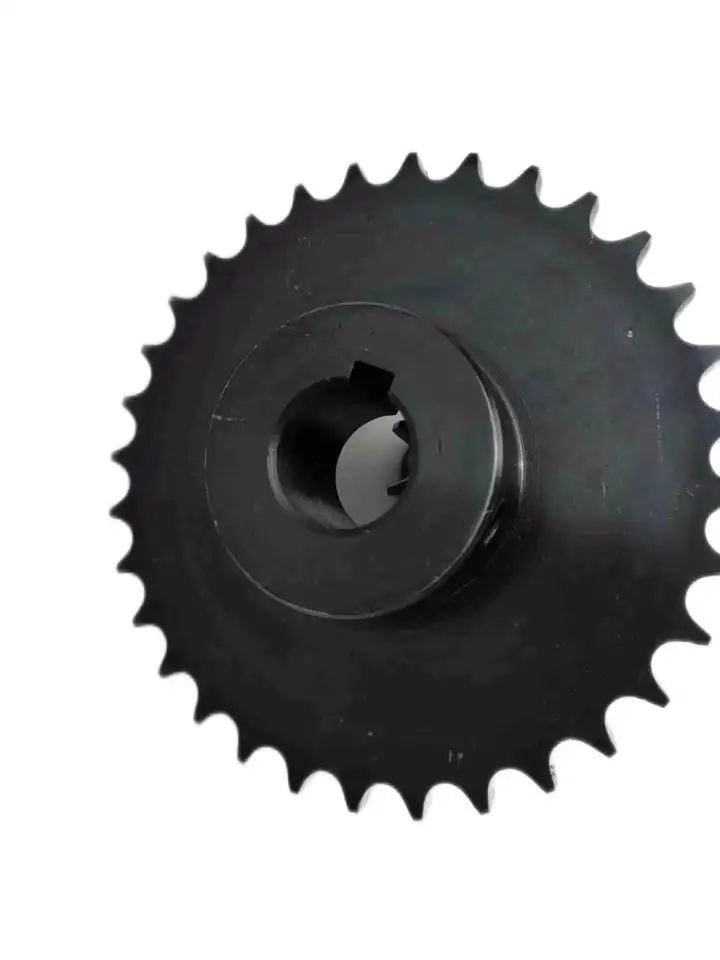
Calculating Torque Requirements for a wheel sprocket Assembly
Calculating the torque requirements for a wheel sprocket assembly involves considering various factors that contribute to the torque load. The torque requirement is crucial for selecting the appropriate motor or power source to drive the system effectively. Here’s a step-by-step guide:
- 1. Determine the Load Torque: Identify the torque required to overcome the resistance or load in the system. This includes the torque needed to move the load, overcome friction, and accelerate the load if applicable.
- 2. Identify the Sprocket Radius: Measure the radius of the sprocket (distance from the center of the sprocket to the point of contact with the chain or belt).
- 3. Calculate the Tension in the Chain or Belt: If using a chain or belt drive, calculate the tension in the chain or belt. Tension affects the torque required for power transmission.
- 4. Account for Efficiency Losses: Consider the efficiency of the system. Not all the input power will be converted into output power due to friction and other losses. Account for this efficiency in your calculations.
- 5. Use the Torque Equation: The torque (T) can be calculated using the following equation:
T = (Load Torque × Sprocket Radius) ÷ (Efficiency × Tension)
It’s essential to use consistent units of measurement (e.g., Newton meters or foot-pounds) for all values in the equation.
Remember that real-world conditions may vary, and it’s advisable to add a safety factor to your calculated torque requirements to ensure the system can handle unexpected peak loads or variations in operating conditions.
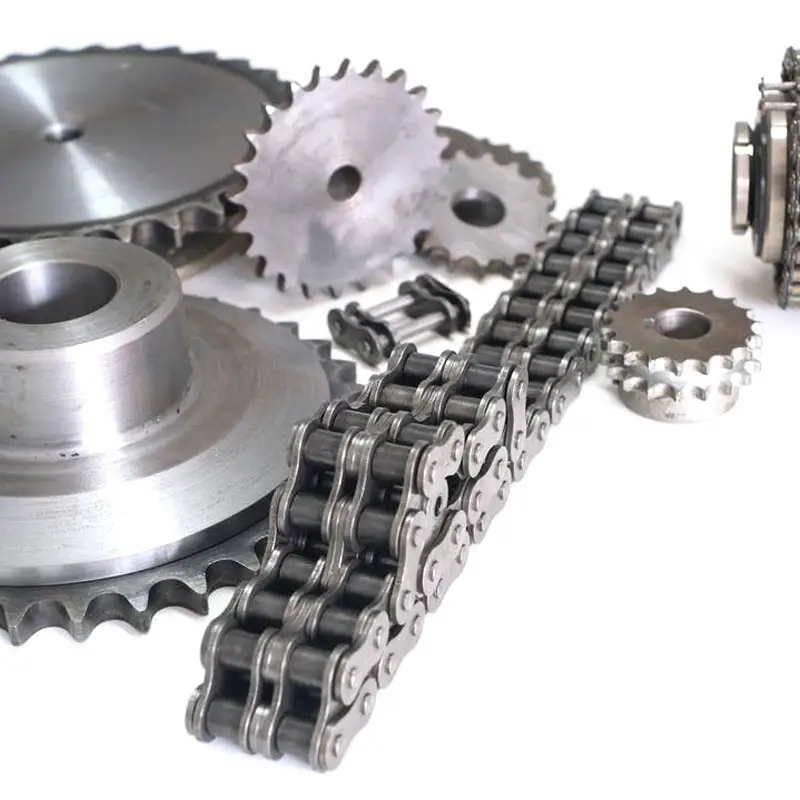
Using a Belt Sprocket in Place of a Chain Sprocket with a Wheel
Yes, in many cases, a belt sprocket can be used in place of a chain sprocket with a wheel, provided that the system is designed to accommodate the change.
Both chain sprockets and belt sprockets serve the same fundamental purpose of transferring rotational motion and power between the wheel and the driven component. However, there are some important considerations to keep in mind when replacing a chain sprocket with a belt sprocket:
- Alignment: Belt sprockets and chain sprockets must be aligned properly with the wheel to ensure smooth and efficient power transmission. Any misalignment can cause premature wear and reduce the system’s overall performance.
- Tension: Chain-driven systems require specific tension to prevent slack and maintain proper engagement between the sprockets and the chain. Belt-driven systems, on the other hand, require appropriate tension to prevent slippage. Ensuring the correct tension for the specific type of sprocket is crucial for reliable operation.
- Load Capacity: Consider the load capacity and torque requirements of the system when selecting a belt sprocket. Belt sprockets may have different load-carrying capabilities compared to chain sprockets, and using the wrong type can lead to premature wear or failure.
- Speed and RPM: Belt-driven systems may have different operating speeds and RPM limits compared to chain-driven systems. Ensure that the selected belt sprocket can handle the desired rotational speed without exceeding its design limitations.
- System Design: Changing from a chain-driven system to a belt-driven system (or vice versa) may require modifications to the overall system design, including the size of the sprockets and the layout of the system. Consult with an engineer or a qualified professional to ensure that the replacement is appropriate and safe.
Overall, replacing a chain sprocket with a belt sprocket can be a viable option in certain applications. However, it’s essential to consider the factors mentioned above and evaluate the compatibility of the new sprocket with the existing system to achieve optimal performance and longevity.
Advantages of Using a wheel sprocket Configuration
Using a wheel sprocket configuration for power transmission offers several advantages over other methods. Here are some key benefits:
1. Efficient Power Transmission:
The wheel sprocket assembly provide a highly efficient method of transmitting power between shafts with minimal energy loss. The teeth of the sprocket mesh with the links of the chain or the teeth of another sprocket, ensuring a positive engagement that reduces slippage and maximizes power transfer.
2. Versatility:
Wheels and sprockets are available in various sizes, configurations, and materials, making them highly versatile components for different applications. They can accommodate a wide range of speed and torque requirements, making them suitable for various mechanical systems.
3. Compact Design:
The compact design of wheel sprocket assemblies allows for space-saving installations in machinery. The concentric arrangement of the components minimizes the overall footprint, making it ideal for applications with limited space.
4. Precise Speed Control:
By selecting sprockets with different numbers of teeth, the gear ratio can be easily adjusted to achieve precise speed control in the driven shaft. This level of control is essential for many applications, such as conveyor systems, where different speeds are required for different processes.
5. High Torque Capacity:
wheel sprocket systems can handle high torque loads, making them suitable for heavy-duty applications. This high torque capacity is especially beneficial in industrial settings where large loads need to be moved or lifted.
6. Smooth and Quiet Operation:
When properly lubricated and maintained, the interaction between the sprocket and the chain or other sprockets results in smooth and quiet operation. This makes wheel sprocket systems preferable in applications where noise reduction is important.
7. Easy Installation and Maintenance:
Installing a wheel sprocket assembly is relatively straightforward, and they require minimal maintenance when used correctly. Periodic lubrication and tension adjustments are typically all that is needed to keep the system running smoothly.
8. Suitable for High-Speed Applications:
wheel sprocket configurations are well-suited for high-speed applications where belts or gears may not be as practical due to limitations in speed capabilities.
In summary, the wheel sprocket configuration offers efficient power transmission, versatility, compactness, precise speed control, high torque capacity, smooth operation, and ease of installation and maintenance. These advantages make it a popular choice in a wide range of mechanical systems and industrial applications.


editor by CX 2023-10-24