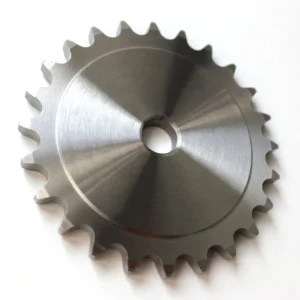
Description
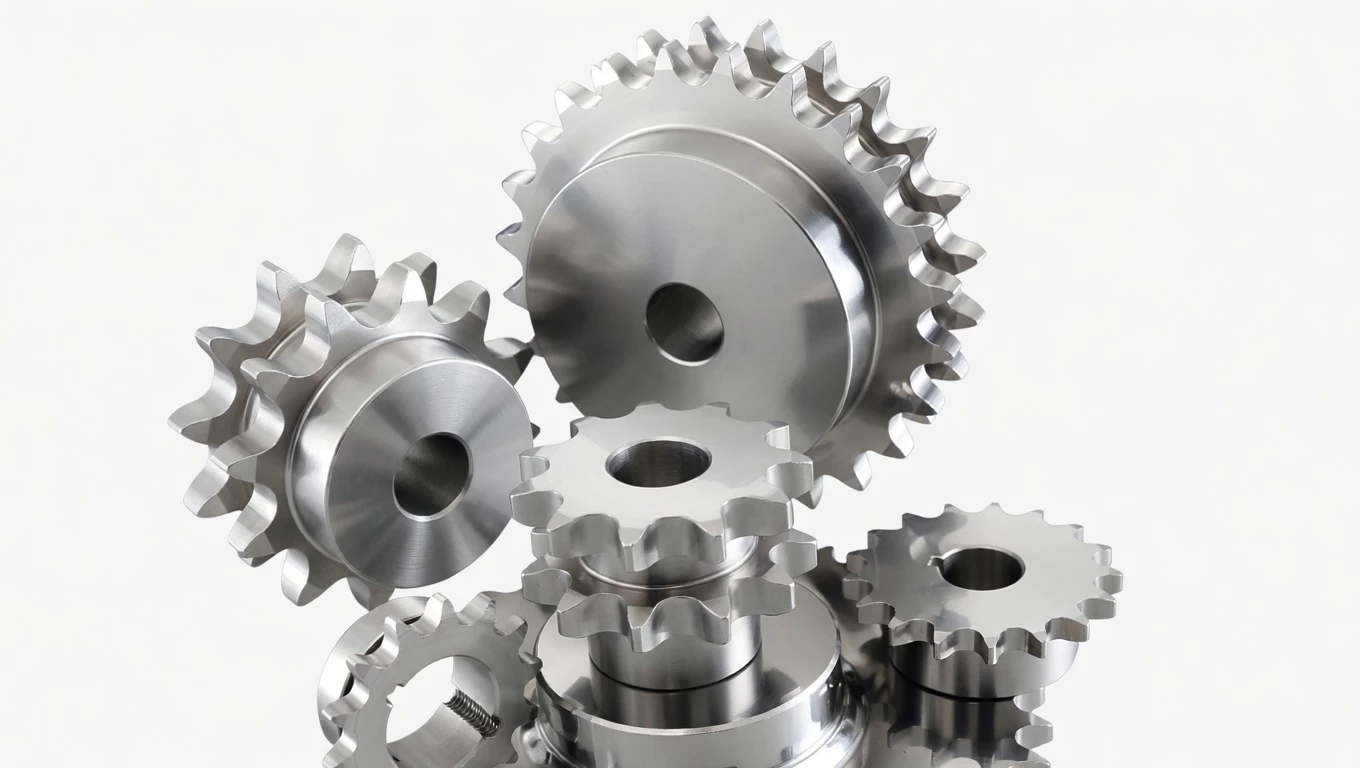
Technical Specifications — K100A Platewheel (Stock Bore)
| Parameter | Value | Notes |
|---|---|---|
| Model | K100A | Asian Standard K Series |
| Poziom | 31.750 mm | |
| Roller Diameter | 19.05 mm | |
| Tooth Width | 17.6 mm | |
| Teeth Range | Z=10–90 | |
| Hub Style | A Type (Platewheel, no hub) | Weld or bolt mounting |
| Tworzywo | C45 Carbon Steel | |
| Tooth Hardness | HRC 50–60 | Induction hardened |
| Surface | Black oxide / machined |
Key Features
Flat Disc (No Hub) Design
Platewheel design eliminates the hub — enabling direct welding or bolting to shafts, flanges, or driven discs where standard hub sprockets would interfere with adjacent components.
⚡
Simple Mounting Flexibility
Bolt pattern or weld attachment allows the platewheel to be secured at any angular position and repositioned if the drive geometry changes — no keying or boring required.
Hardened Teeth
Induction-hardened tooth flanks (HRC 50–60) provide full wear resistance despite the thinner cross-section compared to hub-type sprockets.
Wide Tooth Range
Z=10–90 tooth counts available — enabling drive ratios from 1:1 to extreme reductions in a single platewheel product family.
Compatibility
Designed for 31.750 mm pitch roller chain (Asian standard K-series equivalent). The platewheel is supplied without a bore — it is intended for welding or bolting to your shaft or flange. Bolt-circle drilling available on request. Contact our team for custom drilling or welding preparation options.
Aplikacje



Customer Reviews
Grant S. ★★★★★ Australia
“Welded K100A platewheels to our roller-conveyor drive shafts — perfect fit, clean weld preparation, and teeth aligned perfectly with our existing chain.”
K100A Z=19 Platewheel · March 2025
Mei L. ★★★★★ China
“Excellent flatness on the disc face — our welding team confirmed less than 0.2 mm run-out after welding. Good manufacturing quality.”
K100A Z=25 Platewheel · January 2025
Ben A. ★★★★☆ New Zealand
“Good product, slightly longer lead time than expected for custom tooth count but quality was worth it.”
K100A Z=30 Platewheel · February 2025
Frank B. ★★★★★ Germany
“We use these as OEM components on our conveyor modules. Consistent quality across batches of 500+ pieces.”
K100A Z=21 Platewheel · April 2025
Często zadawane pytania
- Position the platewheel on the shaft stub or mounting flange; check concentricity with a dial indicator (target TIR < 0.3 mm).
- Tack-weld at 4 equidistant points before full weld run to maintain alignment.
- Complete continuous weld fillet as per drawing specification; allow to cool slowly (do not quench).
- Re-check tooth plane alignment after welding — correct if heat distortion has introduced misalignment.
- Install roller chain and set tension; re-inspect weld integrity after first 50 hours of operation.
✓ ISO 9001:2015✓ ANSI B29.1✓ ISO/DIN 8187✓ JIS B 1801✓ BS/DIN Standards✓ GB Standards

Why Choose Ever-power Australia?
We are a vertically integrated manufacturer with over 25 years of chain drive experience. Our facility spans 35,000 m² and produces over 4 million sprockets per year. We supply OEM partners, distributors, and direct industrial buyers across Australia, with products meeting GB, ISO, ANSI, JIS, DIN and BS standards.
ISO 9001 Certified
4M+ pcs/year
OEM Capable
AU Stock Available
4M+ pcs/year
OEM Capable
AU Stock Available
Ready to Order? Get a Free Quote Today
Our engineering team is available 24/7 to assist with specifications, custom designs, and volume pricing for Australian businesses.