Opis produktu
Opis produktu
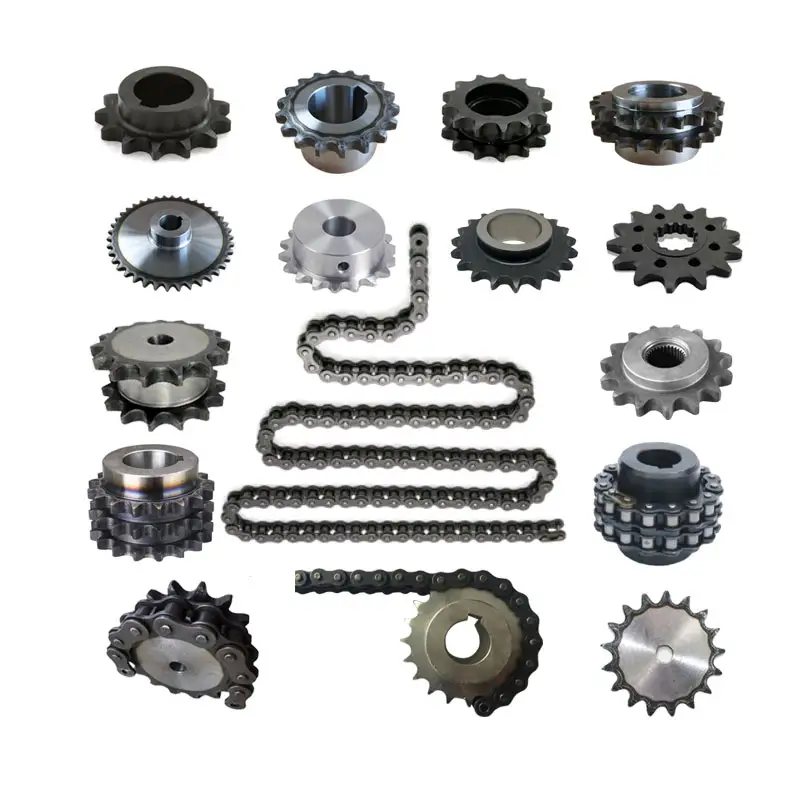
Sprocket:
1. Material: C45 & Cast Iron 304 stainless steel
2. Supply standard and non standard sprockets according to European and American Standard & Drawing
3. Superior quality & Competitive price & Prompt delivery
Product Attribute
| Product name | Koło zębate |
| Surface Treatment | Annealing, natural anodization, heat treatment, polishing, nickel plating, chrome plating, znic plating,Black surface painted etc. |
| Products Available | Transmission machinery such as mining machinery, agricultural machinery, engineering machinery, forestry machinery, petrochemical industry, automatic assembly lines, etc |
| material | carbon steel,stainless steel, alloy steel |
| Certyfikat | ISO,SGS,DIN,JIS |
| product type | European Standard American Standard |
| Port | Any sea port or airport in China |
| Marka | TV OEM |
| Zapłata | L/C, T/T, D/P, Western Union |
| Package | Chain, Plastic Bag, Color Box, Wooden Case. or OEM |
| European standard | 03A-1 04A-1 05A-1-2 06A-1-2-3 081A-1 083A-1/084A-1 085A-1 086A-1
08A-1-2-3 10A-1-2-3 12A-1-2-3 16A-1-2-3 20A-1-2-3 24A-1-2-3 28A-1-2-3 32A-1-2-3 |
| 03B-1 04B-1 05B-1-2 06B-1-2-3 081B-1 083B-1/084B-1 085B-1 086B-1
08B-1-2-3 10B-1-2-3 12B-1-2-3 16B-1-2-3 20B-1-2-3 24B-1-2-3 28B-1-2-3 32B-1-2-3 |
|
| American standard | 25,35,41,40,50,60,80,100,120,140,160,180,200,240
35-2,40-2,50-2,60-2,80-2,100-2,120-2,140-2,160-2,200-2 35-3 ,40-3 ,50-3 ,60-3 ,80-3, 100-3,120-3 |
| We also carry out OEM according to your requirements |
|
Detailed Photos
Product Parameters
Our Advantages
Company advantages:
Own Import & Export License, The TV trade mark registered successfully in many countries, Sales network spread all over China, Products export to 65 countries in 5 continents.
Membership:
1. The member of China General Machine Components Industry Association.
2. The member of China Chain Transmission Association.
3. The member of China Chain Standardization Association.
4. The member of China Agricultural Association Machinery Manufacturers.
With our excellent trained staffs and workers, advanced and efficient equipments, completely sales network, strict QA systems. You are confidence that our premium qualified chain can meet all customers’ specification and strictest quality standards.
Factory Display
| WHY CHOOSE US |
Comprehensive Product Portfolio We produce and supply a wide range of power transmission
products including drive chains, leaf chains, conveyor chains, agricultural chains, sprockets, and
couplings. This one-store-for-all shopping experience will significantly reduce your searching costs while
guarantee youfind what you want at 1 click.
Value Choice Products Our products are the best combination of quality and price, and you get what
you want within your budgets
Seasoned Sales Associates and Engineers We have 15 seasoned sales associates and 5 engineers;
on our team at your disposal any time when you need a helping hand. They are well trained with industry
know-now and will always respond to your requests within 24 hours.
100% Customer Retention Rate Our regular customers from overseas come back not just for our
premium quality products, but for the superior services that we’ve provided over the years.
| Często zadawane pytania |
| Q1: What’s your average lead time? A: It varies. Our regular end-to-end lead time is 1-2 months.. We also provide express shipments for rush orders. For details,please consult our sales associate. Q2: Is your price better than your competitors given the same quality? Q4: Can we inspect the goods before shipment? Q5: What kind of payment method is acceptable for your mill? Q6: What if I have any other questions? |
|
Shipping Cost:
Estimated freight per unit. |
Do negocjacji |
|---|
| Standardowe czy niestandardowe: | Standard |
|---|---|
| Aplikacja: | Machinery |
| Twardość: | Utwardzona powierzchnia zęba |
| Próbki: |
US$ 10/Piece
1 sztuka (minimalne zamówienie) | Order Sample |
|---|
| Personalizacja: |
Dostępny
| Spersonalizowane żądanie |
|---|
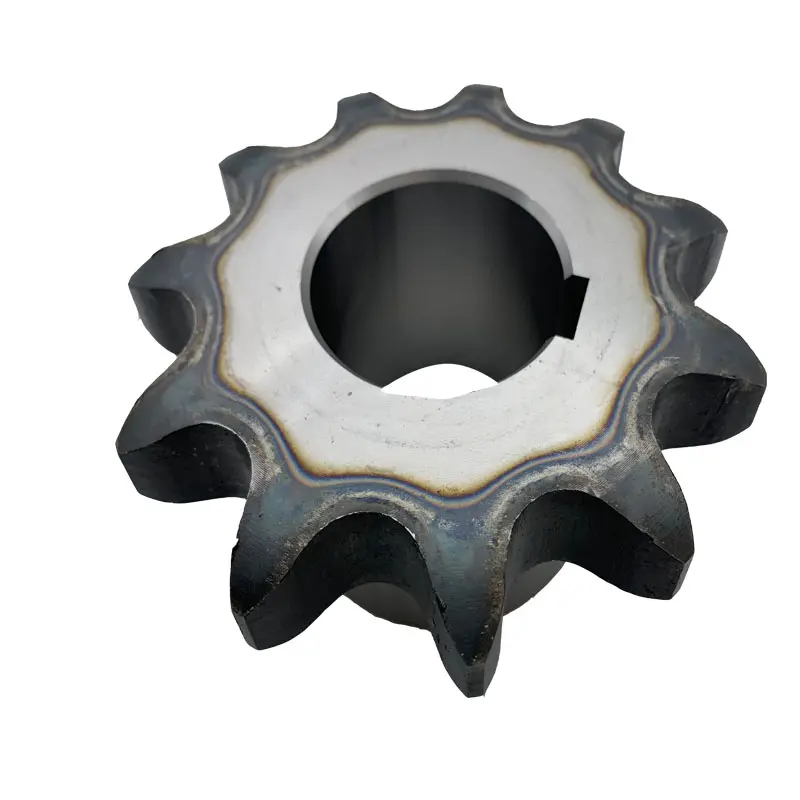
Alternatywy dla zębatek łańcuchowych w konfiguracji zębatek kół
Chociaż w konfiguracjach kół zębatych powszechnie stosuje się koła łańcuchowe, w różnych zastosowaniach istnieją alternatywne metody przenoszenia mocy:
- Przekładnia i listwa zębata: Koła zębate to koła zębate, które zazębiają się ze sobą, aby przenosić moc. Zamiast łańcucha i zębatki, koła zębate mogą bezpośrednio ze sobą współpracować, zapewniając płynne i wydajne przenoszenie mocy. Listwy zębate, będące przekładniami liniowymi, mogą być stosowane zamiast kół zębatych w zastosowaniach ruchu liniowego.
- Pasek i koło pasowe: Paski i koła pasowe zapewniają elastyczny i cichy sposób przenoszenia mocy. Działają podobnie do łańcuchów i zębatek, ale zamiast łańcuchów wykorzystują pasy. Koła pasowe posiadają rowki, które chwytają pas, umożliwiając przenoszenie mocy między kołami.
- Przekładnia: Układ zębaty składa się z wielu zazębionych ze sobą kół zębatych, które zapewniają określone przełożenia prędkości i momentu obrotowego. Układy zębate są często stosowane w złożonych maszynach i systemach mechanicznych, gdzie wymagana jest precyzyjna transmisja mocy.
- Napęd bezpośredni: W niektórych zastosowaniach można używać mechanizmów napędu bezpośredniego, w których silnik lub źródło zasilania jest bezpośrednio połączone z kołem lub obciążeniem, bez żadnych elementów pośrednich, takich jak koła zębate czy przekładnie.
- Napęd cierny: Układy napędowe cierne wykorzystują tarcie między dwiema powierzchniami do przenoszenia mocy. Jedna powierzchnia, na przykład gumowe koło, jest dociskana do drugiej powierzchni w celu przeniesienia mocy.
Wybór alternatywnej metody przenoszenia mocy zależy od różnych czynników, w tym wymagań aplikacji, dostępnej przestrzeni, prędkości, momentu obrotowego i sprawności. Każda alternatywna metoda ma swoje zalety i ograniczenia, a wybór powinien być oparty na specyficznych potrzebach układu mechanicznego.
Rozważając alternatywy dla kół łańcuchowych, należy przeanalizować wymagania konkretnego zastosowania i skonsultować się z ekspertami inżynieryjnymi lub producentami, aby określić najbardziej odpowiednią metodę przenoszenia mocy, zapewniającą optymalną wydajność i trwałość.
Noise and Vibration in wheel sprocket Configurations
In a wheel sprocket configuration, noise and vibration levels can vary depending on several factors:
- Quality of Components: The quality of the wheel sprocket components can significantly impact noise and vibration. Well-manufactured and precisely engineered components tend to produce less noise and vibration.
- Smarowanie: Proper lubrication of the sprocket teeth and chain or belt can reduce friction, which in turn helps minimize noise and vibration.
- Alignment: Correct alignment between the wheel sprocket is crucial. Misalignment can lead to increased noise and vibration as the components may not mesh smoothly.
- Tension: Maintaining the appropriate tension in the chain or belt is essential. Insufficient tension can cause the chain to slap against the sprocket teeth, resulting in noise and vibration.
- Speed and Load: Higher speeds and heavier loads can lead to increased noise and vibration levels in the system.
- Wear and Damage: Worn-out or damaged components can create irregularities in motion, leading to increased noise and vibration.
To reduce noise and vibration in a wheel sprocket setup:
- Use high-quality components from reputable suppliers.
- Ensure proper lubrication with appropriate lubricants.
- Regularly inspect and maintain the system to detect any misalignment, wear, or damage.
- Follow manufacturer guidelines for chain or belt tensioning.
- Consider using vibration-damping materials or mounting methods if necessary.
Minimizing noise and vibration not only improves the comfort and safety of the machinery but also extends the life of the components by reducing wear and fatigue.
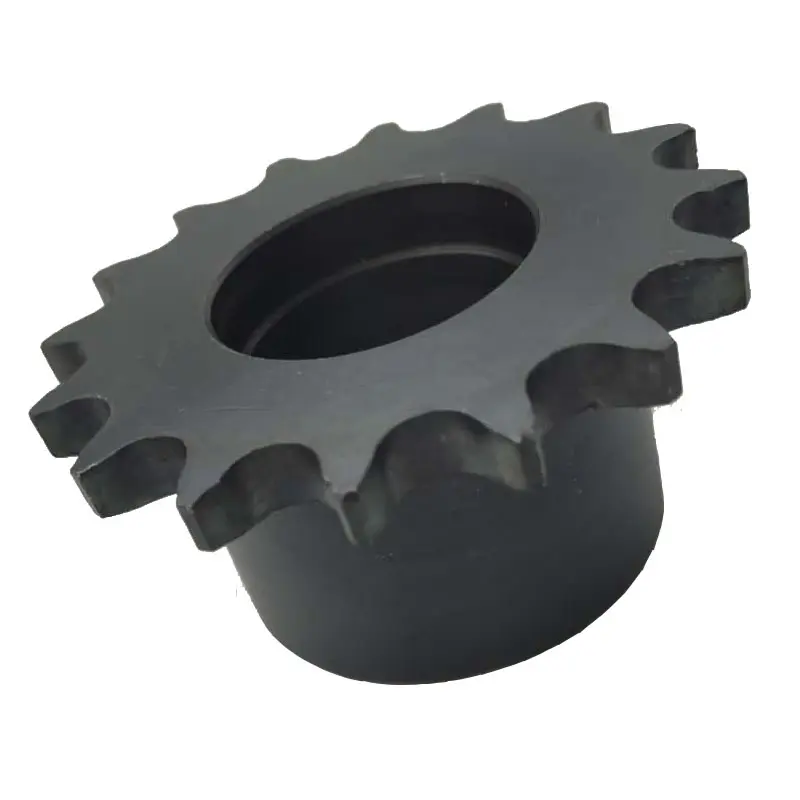
Role of a wheel sprocket in a Mechanical System
In a mechanical system, a wheel sprocket play a crucial role in transferring motion and power from one component to another. They are essential elements of various machines and mechanisms, such as bicycles, conveyor systems, automobiles, and industrial machinery. Let’s explore their functions in more detail:
1. Wheel:
The wheel is a circular component with a central shaft (axle) that allows it to rotate freely around the axle’s axis. Its primary functions include:
- Motion Transmission: When a force is applied to the wheel’s outer edge, it rotates around the axle, enabling the transfer of linear motion into rotational motion.
- Load Bearing: The wheel’s structure and material are designed to support and distribute the load placed on it, allowing smooth movement over various surfaces.
- Reduction of Friction: By using wheels, the friction between the moving object and the ground is significantly reduced, making it easier to move heavy loads with less effort.
- Directional Control: Wheels can be attached to steering mechanisms to control the direction of movement in vehicles and other equipment.
2. Sprocket:
A sprocket is a toothed wheel designed to mesh with a chain or a belt, facilitating motion transfer between the sprocket and the chain/belt. Its key functions include:
- Power Transmission: When rotational force (torque) is applied to the sprocket, the teeth engage with the links of the chain or belt, transferring motion and power from one sprocket to another.
- Speed and Torque Conversion: Different-sized sprockets can be used to adjust the speed and torque of the driven component in a mechanical system.
- Positive Drive: The teeth on the sprocket and the links on the chain/belt create a positive drive system, reducing the likelihood of slippage or loss of power during operation.
- Chain/Belt Tensioning: Sprockets help maintain proper tension in the chain or belt, ensuring optimal performance and longevity of the power transmission system.
Together, wheels and sprockets form a vital part of mechanical systems, enabling efficient motion transmission, power transfer, and control in a wide range of applications across various industries.


editor by CX 2023-09-01