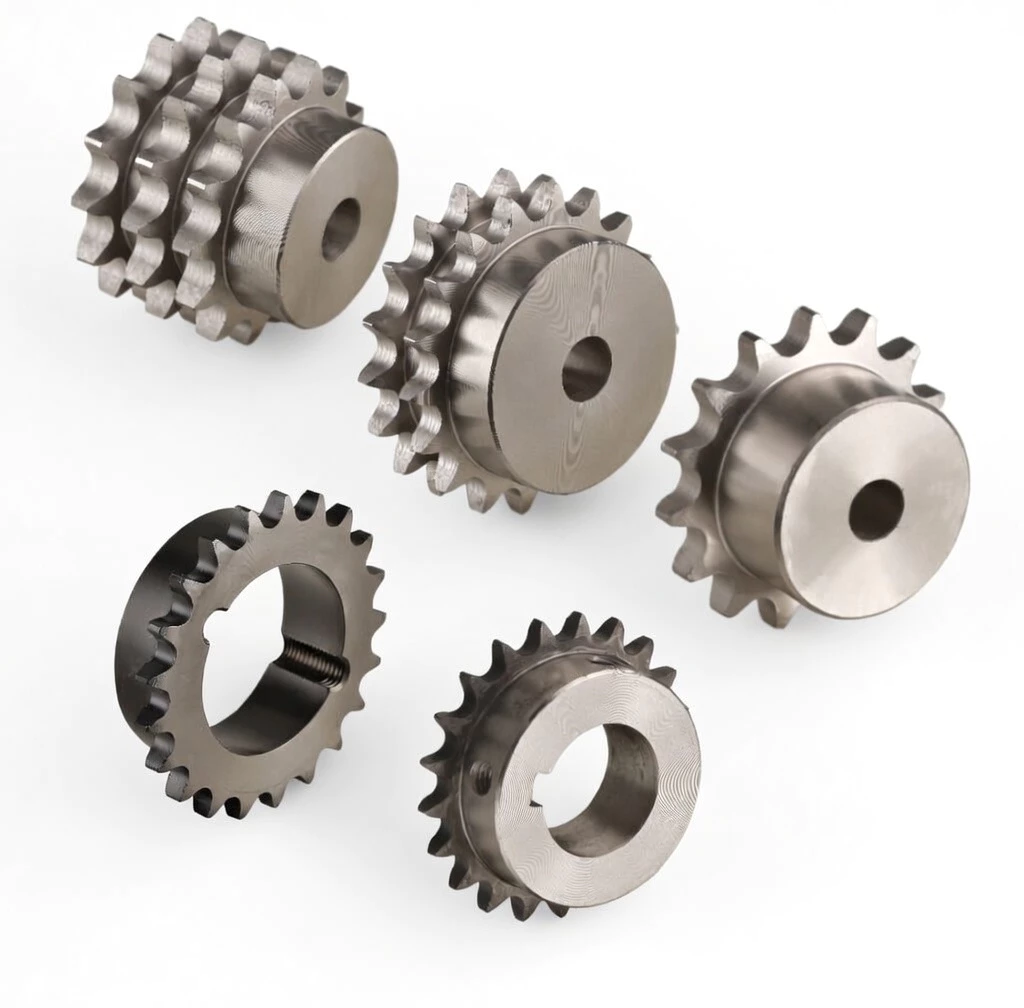
Sprocket untuk Penghantar Barang
Freight conveyors in warehousing, ports, airports, manufacturing plants, and distribution centres handle everything from individual pallets to bulk bags of material at sustained high loads. The freight conveyor sprocket is the drive component that must transmit full motor torque at the rated conveyor load, continuously, with minimal maintenance intervention. Undersized, soft, or poorly manufactured sprockets result in accelerated tooth wear, chain elongation, and unplanned conveyor stoppages that cost thousands per hour in freight throughput. View our heavy-duty sprocket catalogue →
Gambaran Keseluruhan
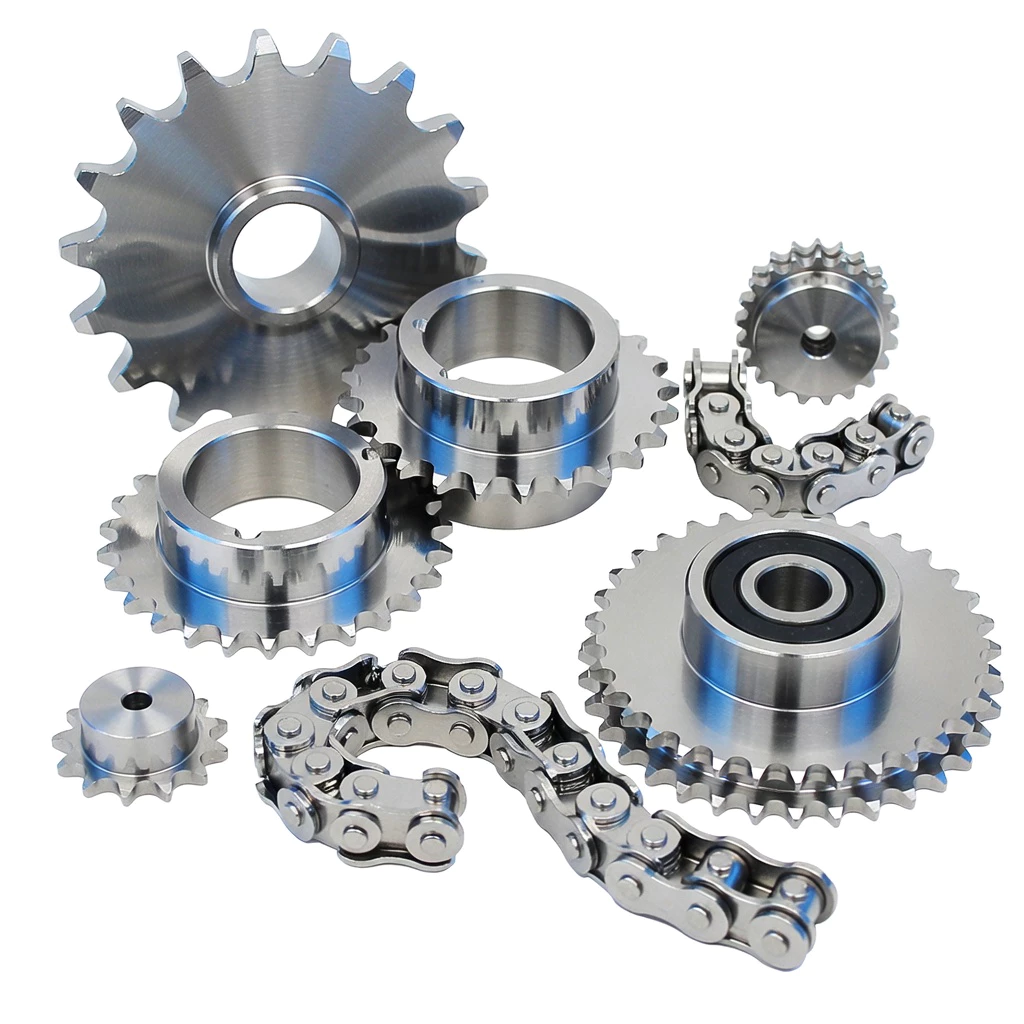
Freight conveyor drives typically use ANSI #60 through #120 chain (19.05–38.1 mm pitch) or ISO 12B through 24B equivalents, depending on the load and speed requirements. Drive sprockets are subject to high pitch-line loads, shock loading from pallets dropping onto the conveyor infeed, and fatigue from 16–24-hour daily operation cycles. At ports and airports, outdoor exposure adds corrosion as an additional challenge.
Our heavy-duty freight conveyor sprockets are manufactured from C45 carbon steel or 40Cr alloy steel (for highest-load applications), with induction-hardened teeth to HRC 50–60, finished bore or taper-bushed configurations, and dacromet or zinc coating for corrosion resistance in outdoor or humid freight environments.
Spesifikasi Teknikal
| Parameter | Freight Conveyor Value | Julat |
|---|---|---|
| Chain Standard | ANSI #60 / #80 / ISO 12B / 16B | ANSI #40–#120 / ISO 08B–24B |
| Pitch | 19.05 mm – 38.1 mm | 12.7–50.8 mm |
| Tooth Count (driver) | 13T – 21T | 9T – 38T |
| Tooth Count (driven) | 25T – 57T | 13T – 76T |
| Pitch Line Load | Up to 12,000 N per strand | Application-specific |
| Bahan | C45 / 40Cr alloy | Cast iron for low-speed heavy load |
| Kekerasan Gigi | HRC 50–60 | HRC 48–62 |
| Case Depth | 1.5–3.0 mm | Up to 4 mm |
| Gaya Hab | Taper-bushed (QD) or Type B | Type C for maximum shaft engagement |
| Max Bore | Up to 100 mm | Up to 180 mm with large QD bush |
| Permukaan | Dacromet / zinc | Plain for indoor; dacromet for outdoor |
| Strand | Simplex / Duplex | Triplex for maximum load |
| Toleransi Lubang | H7 | H6 for precision drives |
| Operating Temperature | −20°C to +80°C | — |
| Gred Pemesinan | DIN Gred 6 | — |
| Dokumentasi | Certificate available | MTC (EN 10204 2.2) standard |
| Deformasi selepas HT | ≤0.05 mm | — |
| Max Chain Speed | Up to 3.0 m/s | 2.5 m/s recommended continuous |
| Weight (ANSI #80 Z=17) | ~3.8 kg | 0.5–85 kg |
Kelebihan Prestasi
Working Principle
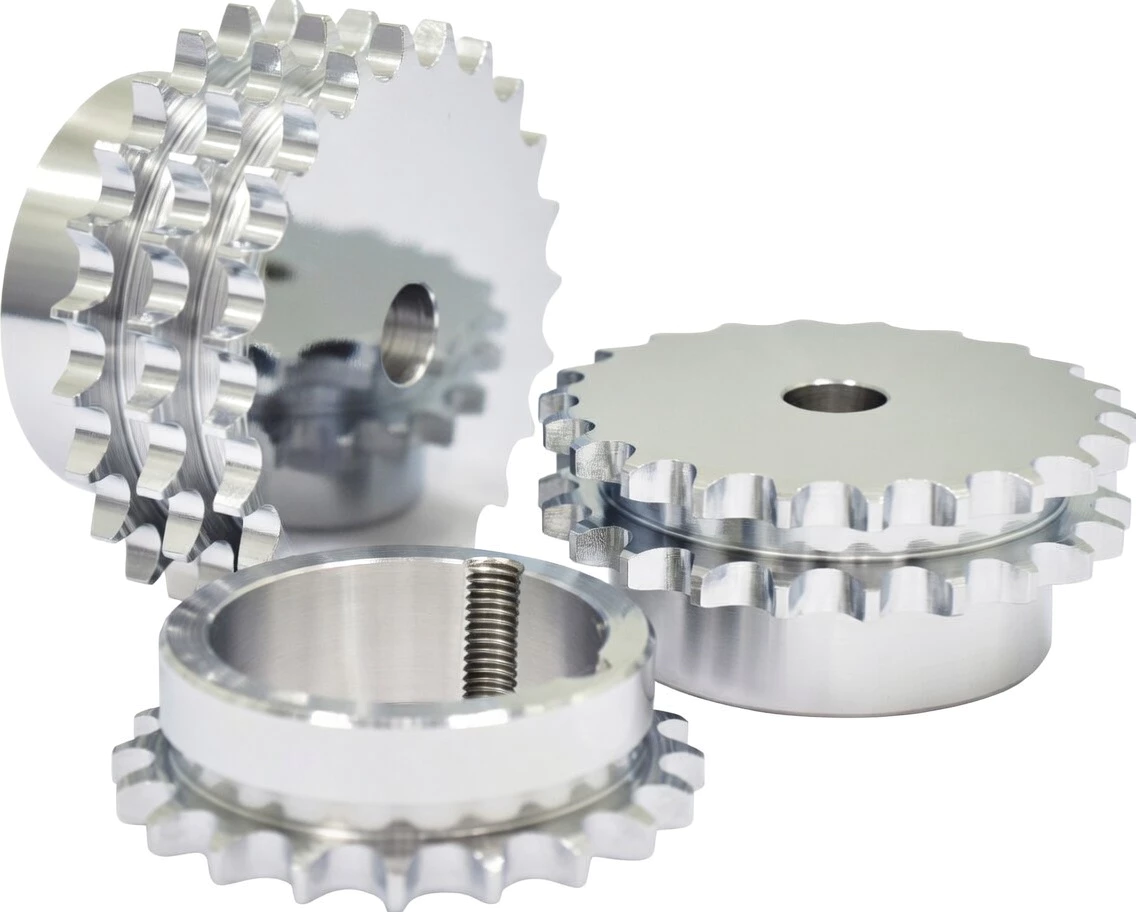
Freight conveyors with roller or slat chain decks use drive sprockets at the head end (motor drive) and tail sprockets at the return end. The drive sprocket transmits motor torque through the chain to move the conveyor deck at the rated speed under full freight load. On long freight conveyors (30–150 m), intermediate drive units with additional sprockets maintain chain tension and speed consistency across the full conveyor length. Idler sprockets on the return run prevent excessive chain sag which causes noise and chain-to-frame contact wear.
Compatibility
| Freight Conveyor / Chain | Sproket yang Disyorkan | Nota |
|---|---|---|
| ANSI #60 roller chain | ANSI #60 sprocket Z=13–25 | Standard for pallet conveyor drives |
| ANSI #80 roller chain | ANSI #80 sprocket | Higher-capacity freight systems |
| ANSI #100 roller chain | ANSI #100 sprocket | Heavy-lift conveyor and crane access |
| ISO 12B roller chain | ISO 12B sprocket | European freight conveyor equipment |
| ISO 16B roller chain | ISO 16B sprocket | Higher-load European specification |
| Rexnord, Renold, Iwis #80 chain (ref only) | ANSI #80 equivalent sprocket | Cross-reference only |
| Hytrol, Ashland, Roach conveyor (ref only) | ANSI #60 finished bore sprocket | Interchangeable replacement |
| Port gantry crane transfer chain | ANSI #100 / ISO 20B alloy steel sprocket | Outdoor, corrosion-resistant coating |
Panduan Pemilihan
Installation for Freight Conveyors
- Stop and lock out the conveyor. Apply mechanical locks to the conveyor deck to prevent roll-back under residual freight load.
- Remove freight from the conveyor section under the drive station before accessing the sprocket.
- Open the drive chain using a chain-break tool appropriate for the chain pitch. For ANSI #80 and above, use a mechanical chain press — do not use a hammer and drift.
- Remove old sprocket. For QD types, thread jack-bolts and release evenly. For plain bore, remove set-screw and slide off. For large sprockets (>10 kg) use a two-bolt puller.
- Pasang gegancu baharu. For large freight sprockets, apply light machine oil to bore and shaft, press onto shaft with hydraulic press if H6 fit. Torque all fasteners to specification. Apply thread-lock.
- Align and tension chain. Use a precision straight-edge or laser alignment tool. Set slack-side sag to 2% of centre distance. For duplex freight chains, verify equal tension on both strands.
- Test under load. Jog the conveyor with a representative freight load (at least 50% rated) before returning to full production.
Troubleshooting
| Problem | Cause | Solution |
|---|---|---|
| Chain elongation >2% within 6 months | Under-hardened sprocket teeth | Replace with HRC 50–60 hardened sprocket |
| Chain jumping at high load | Tooth wear exceeding engagement depth | Replace sprocket and chain simultaneously |
| Sprocket corrosion outdoors | Perlindungan permukaan yang tidak mencukupi | Upgrade to dacromet or zinc-nickel coating |
| Excessive vibration on freight deck | Misalignment or worn teeth | Realign; inspect and replace if worn >15% |
| Drive shaft fretting at sprocket hub | H8 bore fit too loose | Replace with H7 bore; apply retaining compound |
| Noise increase at drive station | Tooth tip hook-wear on loaded side | Replace sprocket; check chain lubrication |