Description du produit
Paramètres du produit
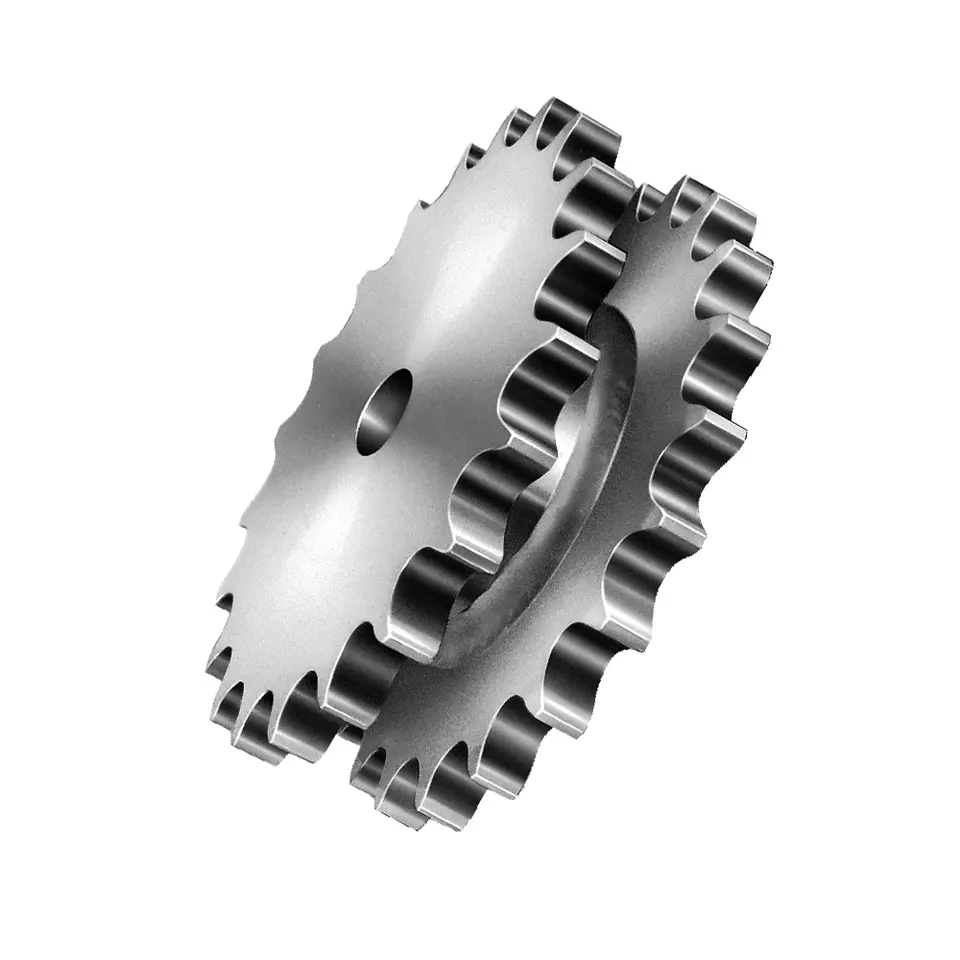
Sprockets & Idler Wheels for 802-805 Chain
Product Specifications
| CODE | Z | Do mm | DF mm |
| B08019 | 19 | 117 | 25/30/35/40 |
| B 0571 1 | 21 | 129 | 25/30/35/40 |
| B 0571 1 | 23 | 142 | 25/30/35/40 |
| B 0571 1 | 25 | 154 | 25/30/35/40 |
| B 0571 1 | 27 | 166.8 | 25/30/35/40 |
| B 0571 1 | 29 | 178.5 | 25/30/35/40 |
Product Specifications
| CODE | Z | Do mm | DF mm |
| B10019-ID | 19 | 117 | 25/30/35/40 |
| B10571-ID | 21 | 129 | 25/30/35/40 |
| B1571-ID | 23 | 142 | 25/30/35/40 |
| B10571-ID | 25 | 154 | 25/30/35/40 |
| B10571-ID | 27 | 166.8 | 25/30/35/40 |
| B1571-ID | 29 | 178.5 | 25/30/35/40 |
Product Specifications
| CODE | Z | Do mm | DF mm |
| B 0571 9-ID | 19 | 117 | 25/30/35/40 |
| B09571-ID | 21 | 129 | 25/30/35/40 |
| B09571-ID | 23 | 142 | 25/30/35/40 |
| B09571-ID | 25 | 154 | 25/30/35/40 |
Company Profile
Services we can provide
1. Produce strictly following standard dimension
2. Material: 1045 Steel / Alloy Steel / Stainless Steel 304 & 316
3. Standard: ANSI, DIN, JINS, ISO, KANA, Standard America, or customer’s drawing
4. Pilot bore, finished bore, taper bore, and special bore.
5. Bright surface / high precision / Blacking /Electrophoretic-Coated
6. Advanced heat treatment and surface treatment craft
7. Best quality and competitive price.
8. Welcome OEM / ODM
9. Processing Equipment: Hobbing machine, Slotting machine, CNC lathes, and other equipment.
10. Sprocket Models: Contains special sprocket according to customer’s drawings, standard sprocket (American standard and metric).
Customization process
1.Provide documentation:CAD, DWG, DXF, PDF,3D model ,STEP, IGS, PRT
2.Quote:We will give you the best price within 24 hours
3.Place an order:Confirm the cooperation details and CZPT the contract, and provide the labeling service
4.Processing and customization:Short delivery time
Related products:
Factory:
As a professional China sprocket manufacturer and professional supplier, we ensure the quality of every sprocket. All items are checked and tested thoroughly during every working procedure and after the product is finally manufactured to ensure that the best quality product goes out in the market.
| Standard ou non standard : | Standard |
|---|---|
| Application: | Motor, Motorcycle, Machinery, Agricultural Machinery, Car |
| Dureté: | Hardened Tooth Surface |
| Méthode de fabrication : | Engrenage roulant |
| Forme de la partie dentelée : | Spur Gear |
| Matériel: | Acier inoxydable |
| Samples: |
US$ 9999/Piece
1 Piece(Min.Order) | |
|---|
Comment identifier et résoudre les problèmes courants liés aux roues et aux pignons
Identifier et résoudre les problèmes courants des roues et des pignons vous permettra d'assurer leur bon fonctionnement et de prévenir d'éventuels problèmes. Voici quelques étapes à suivre :
- Bruit anormal : Si vous remarquez un bruit inhabituel pendant le fonctionnement, cela peut indiquer un mauvais alignement, des pignons usés ou une chaîne détendue. Vérifiez le serrage des boulons et des fixations et assurez-vous du bon alignement des pignons.
- Glissement de la chaîne : Le déraillement de la chaîne peut être dû à une tension insuffisante ou à des dents de pignon usées. Vérifiez la tension de la chaîne et ajustez-la au niveau recommandé. Inspectez les dents du pignon et remplacez-les si nécessaire.
- Usure irrégulière : Une usure irrégulière des dents du pignon peut être due à un mauvais alignement ou à une chaîne usée. Vérifiez l'alignement des pignons et ajustez-le si nécessaire. Si la chaîne est détendue ou présente des maillons endommagés, remplacez-la.
- Vibrations excessives : Des vibrations excessives peuvent être causées par des roues déséquilibrées ou des pignons mal alignés. Vérifiez que les roues ne sont ni voilées ni endommagées et assurez-vous du bon alignement des pignons.
- Sauter la chaîne : Si la chaîne saute des dents du pignon pendant le fonctionnement, cela peut être dû à des dents de pignon usées ou à une chaîne détendue. Vérifiez l'état des dents du pignon et remplacez-les si nécessaire. Ajustez la tension de la chaîne.
- Blocage de chaîne : Un blocage de la chaîne peut survenir en présence de débris ou de saletés entre la chaîne et les pignons. Nettoyez soigneusement la chaîne et les pignons afin d'éliminer toute obstruction.
- Usure excessive de la chaîne : Inspectez régulièrement la chaîne afin de détecter tout signe d'usure, comme un allongement, des maillons endommagés ou de la rouille. Remplacez la chaîne si elle est fortement usée afin d'éviter d'endommager les pignons.
- Surchauffe: La surchauffe peut être due à un frottement important entre la chaîne et les pignons ou à une lubrification insuffisante. Assurez-vous d'une lubrification adéquate et vérifiez l'absence de défauts d'alignement ou de points de blocage dans le système.
En identifiant ces problèmes courants et en effectuant des inspections régulières, vous pouvez diagnostiquer les problèmes rapidement et prendre les mesures correctives appropriées, assurant ainsi le bon fonctionnement et la longévité de l'ensemble pignon de roue.
Inspecting a wheel sprocket for Wear and Tear
Regular inspection of the wheel sprocket is essential to ensure their proper functioning and to identify any signs of wear and tear. Here are the steps to inspect a wheel sprocket:
- Visual Inspection: Start by visually examining the wheel sprocket for any visible signs of wear, damage, or deformation. Look for cracks, chips, dents, or any irregularities on the surface of both components.
- Check for Misalignment: Verify that the wheel sprocket are properly aligned with each other. Misalignment can lead to accelerated wear and affect the overall performance of the system.
- Measure Wear: Use calipers or a wear gauge to measure the sprocket’s tooth profile and the wheel’s rolling surface. Compare these measurements with the original specifications to determine if significant wear has occurred.
- Inspect Teeth and Chain Engagement: If the wheel sprocket are part of a chain drive system, closely examine the sprocket teeth and chain engagement. Worn or elongated teeth can cause poor chain engagement and lead to premature failure.
- Lubrication: Check the lubrication of the wheel sprocket. Insufficient or excessive lubrication can cause increased friction, leading to wear and reduced efficiency.
- Bearing Condition: If the wheel is mounted on a shaft with bearings, inspect the bearings for any signs of wear, noise, or rough movement. Properly functioning bearings are crucial for the smooth operation of the system.
- Inspect Mounting Hardware: Ensure that all nuts, bolts, and other mounting hardware are securely tightened. Loose fasteners can cause vibration and misalignment issues.
- Check for Contaminants: Remove any debris, dirt, or foreign particles that may have accumulated on the wheel or sprocket. Contaminants can accelerate wear and damage the components.
- Replacement or Maintenance: Based on the inspection results, determine if any parts need replacement or if maintenance is required. Address any issues promptly to prevent further damage and maintain the system’s performance.
Regularly scheduled inspections and maintenance can help prolong the lifespan of the wheel sprocket assembly, optimize performance, and ensure the safety of the mechanical system.
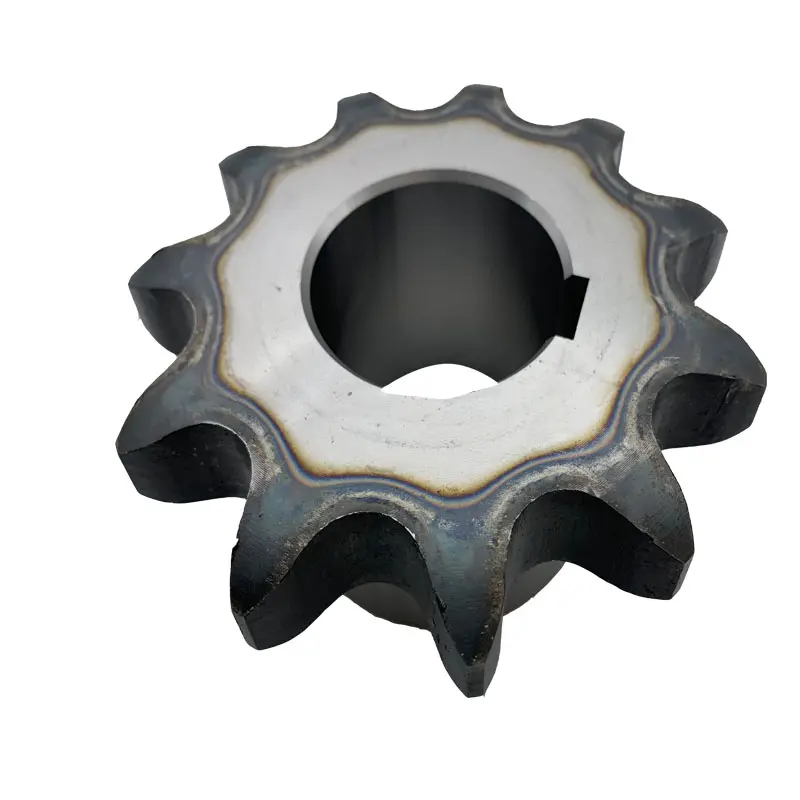
How Does a wheel sprocket Assembly Transmit Power?
In a mechanical system, a wheel sprocket assembly is a common method of power transmission, especially when dealing with rotary motion. The process of power transmission through a wheel sprocket assembly involves the following steps:
1. Input Source:
The power transmission process begins with an input source, such as an electric motor, engine, or human effort. This input source provides the necessary rotational force (torque) to drive the system.
2. Wheel Rotation:
When the input source applies rotational force to the wheel, it starts to rotate around its central axis (axle). The wheel’s design and material properties are essential to withstand the applied load and facilitate smooth rotation.
3. Sprocket Engagement:
Connected to the wheel is a sprocket, which is a toothed wheel designed to mesh with a chain. When the wheel rotates, the sprocket’s teeth engage with the links of the chain, creating a positive drive system.
4. Chain Rotation:
As the sprocket engages with the chain, the rotational force is transferred to the chain. The chain’s links transmit this rotational motion along its length.
5. Driven Component:
The other end of the chain is connected to a driven sprocket, which is attached to the component that needs to be powered or driven. This driven component could be another wheel, a conveyor belt, or any other machine part requiring motion.
6. Power Transmission:
As the chain rotates due to the engagement with the sprocket, the driven sprocket also starts to rotate, transferring the rotational force to the driven component. The driven component now receives the power and motion from the input source via the wheel, sprocket, and chain assembly.
7. Output and Operation:
The driven component performs its intended function based on the received power and motion. For example, in a bicycle, the chain and sprocket assembly transmit power from the rider’s pedaling to the rear wheel, propelling the bicycle forward.
Overall, a wheel sprocket assembly is an efficient and reliable method of power transmission, commonly used in various applications, including bicycles, motorcycles, industrial machinery, and conveyor systems.


editor by CX 2023-10-09