Description du produit
Q1: What information will be highly appreciated for a quotation?
A: It will be preferred if you can offer us the drawings, heat treatment and surface treatment requirements, required quantity, quoted currency (USD or EUR), or samples.
Q2: Are you a trading company or factory?
A: CZPT is a factory wholesaler located in ZheJiang .
Q3: What is your terms of payment?
A: T/T 30% in advance, and 70% before shipment. We’ll show you the photos of the products and packages before you pay the balance.
Q4: Do you test all your goods before delivery?
A: Yes, CZPT has adopted a strict quality management system and all the items will be inspected according to the inspection instruction with good inspection records.
Q5: Is there any customer that has assessed your quality management system?
A:Yes, CZPT has passed the audit of many customers, such as Mitsubishi, CLAAS, Kardex and so on.
Q6: How does your company ensure the quality of the raw material?
A: The steels are purchased from our domestic CZPT steel mills. After receiving the raw material, the steel will be inspected by spectrograph imported from Germany. Besides, the CZPT number of steel will be well-managed in our ERP system to ensure the traceablity of our products.
Q7: How do you ensure the high quality of products?
A: With integral manufacturing processes, a strict quality control system and imported machines, we can manufacture high-quality products.
Q8: What are your terms of delivery?
A: EXW, FOB China Port.
Q9: How about your lead time?
A: Normally it will take 45 days after receiving your advance payment. The specific lead time depends on the items and the quantity of your order.
Q10:T/T payment Minimum order quantity:
d (Outside Diameter) MOQ
d≤50mm 500 PCS
50mm<d≤150mm 200 PCS
150mm<d≤300mm 50 PCS
300mm<d≤500mm 30 PCS
|
Our brand |
GUARDX |
|
Product |
pignon |
|
Sprocket Material |
carbon steel,stainless steel C45/SUS304/Q235/C20/C35/Q345/16MnCr5/20CrMo/35CrMo/40Cr/42CrMo/50CrV |
|
Teeth |
9T-120T |
|
Sprocket Size |
DIN8196/JIS1802/GB1243 |
|
Processing |
forging, hobbing, precision machining, heat treatment, surface treatment |
|
OEM |
SCS offers OEM service |
|
Machining Equipment |
Air hammer//electric screw press, imported vertical and horizontal CNC lathe, imported machining center, CNC tapping center, CNC hobbing machine, CNC cylindrical grinder , welding machines, vertical and horizontal hydraulic broaching machine. automatic production lines of high-power CNC heat treatment. |
|
Heat Treatment |
Normalizing/quenching and tempering/ carburizing and quenching |
|
Surface Treatment |
Zinc plated, non-chromate dacromet treatment,chromium plated, black oxide treatment, phosphorization, anodic oxidation, nickel plated |
|
application |
cover a wide range of sector including agriculture machinery, logistics warehousing,garage,food Machinery,escalator and so on. |
|
packing |
the sprocket are packed in plywood case lined with corrugated paperboard or according to customers requirement. |
| After-sales Service: | One Year |
|---|---|
| Warranty: | One Year |
| Condition: | New |
| Samples: |
US$ 5/Piece
1 Piece(Min.Order) | Order Sample |
|---|
| Personnalisation : |
Disponible
| Demande personnalisée |
|---|
.shipping-cost-tm .tm-status-off{background: none;padding:0;color: #1470cc}
| Shipping Cost:
Estimated freight per unit. |
about shipping cost and estimated delivery time. |
|---|
| Payment Method: |
|
|---|---|
|
Initial Payment Full Payment |
| Currency: | US$ |
|---|
| Return&refunds: | You can apply for a refund up to 30 days after receipt of the products. |
|---|
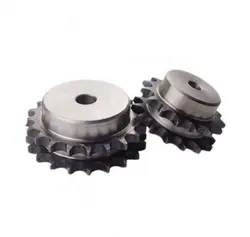
Best Lubrication Practices for wheel sprocket Systems
Proper lubrication is essential for maintaining the efficiency and longevity of wheel sprocket systems. The lubrication practices can vary depending on the specific application and the environment in which the system operates. Here are some best practices for lubricating wheel sprocket systems:
- Cleanliness: Before applying any lubricant, ensure that the wheel sprocket surfaces are clean and free from dirt, debris, and old lubricant residue. Cleaning the components helps prevent contaminants from mixing with the lubricant and causing additional wear.
- Choose the Right Lubricant: Select a lubricant specifically designed for the wheel sprocket system. Consider factors such as load, speed, temperature, and environmental conditions when choosing the appropriate lubricant. Some systems may require grease, while others may need oil-based lubricants.
- Apply Adequate Amount: Apply the lubricant in the right quantity to ensure proper coverage of the contacting surfaces. Too little lubricant may not provide sufficient protection, while too much can lead to excess heat and waste.
- Regular Lubrication Schedule: Establish a maintenance schedule for lubrication based on the operating conditions of the system. In high-demand applications, more frequent lubrication may be necessary to prevent premature wear.
- Monitor and Reapply: Regularly monitor the condition of the wheel sprocket system and observe any signs of inadequate lubrication, such as increased friction or unusual noise. Reapply lubricant as needed to maintain optimal performance.
- Re-lubrication After Cleaning: If the wheel sprocket system is cleaned, ensure that fresh lubricant is applied after cleaning to restore the protective layer.
- Consider Lubrication Type: Depending on the application, consider using dry lubricants or solid lubricants for environments where dust and dirt accumulation may be a concern.
It’s essential to follow the manufacturer’s recommendations and guidelines for lubrication. Additionally, consult with lubrication experts or equipment suppliers for specific recommendations based on your wheel sprocket system’s unique requirements.
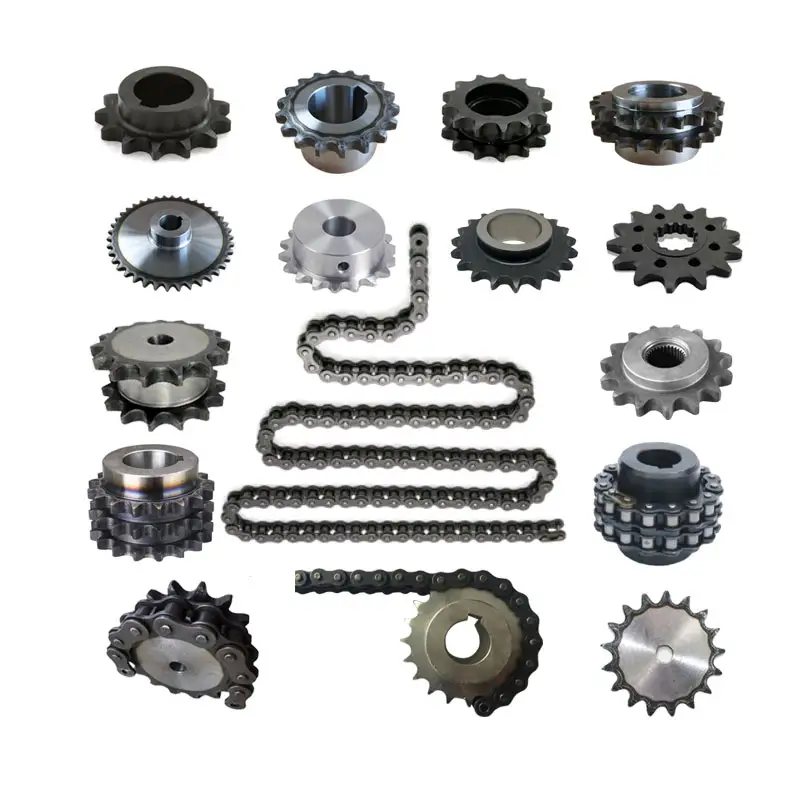
Noise and Vibration in wheel sprocket Configurations
In a wheel sprocket configuration, noise and vibration levels can vary depending on several factors:
- Quality of Components: The quality of the wheel sprocket components can significantly impact noise and vibration. Well-manufactured and precisely engineered components tend to produce less noise and vibration.
- Lubrication: Proper lubrication of the sprocket teeth and chain or belt can reduce friction, which in turn helps minimize noise and vibration.
- Alignment: Correct alignment between the wheel sprocket is crucial. Misalignment can lead to increased noise and vibration as the components may not mesh smoothly.
- Tension: Maintaining the appropriate tension in the chain or belt is essential. Insufficient tension can cause the chain to slap against the sprocket teeth, resulting in noise and vibration.
- Speed and Load: Higher speeds and heavier loads can lead to increased noise and vibration levels in the system.
- Wear and Damage: Worn-out or damaged components can create irregularities in motion, leading to increased noise and vibration.
To reduce noise and vibration in a wheel sprocket setup:
- Use high-quality components from reputable suppliers.
- Ensure proper lubrication with appropriate lubricants.
- Regularly inspect and maintain the system to detect any misalignment, wear, or damage.
- Follow manufacturer guidelines for chain or belt tensioning.
- Consider using vibration-damping materials or mounting methods if necessary.
Minimizing noise and vibration not only improves the comfort and safety of the machinery but also extends the life of the components by reducing wear and fatigue.
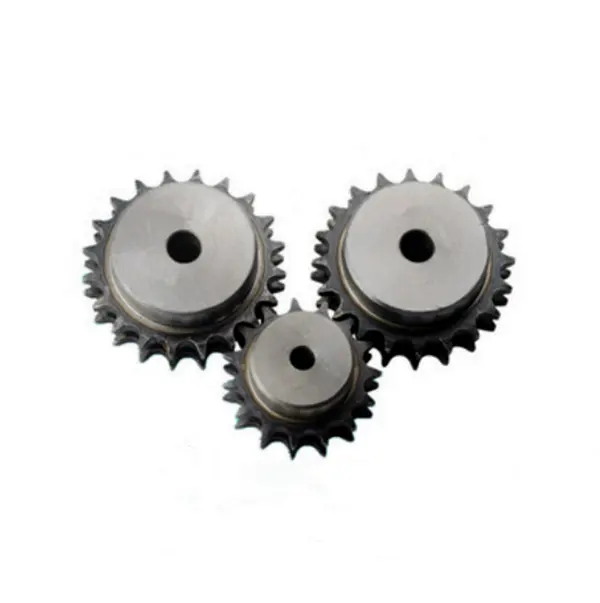
Principe de fonctionnement d'un système de roue et pignon
Dans un système roue-pignon, le pignon est une roue dentée qui s'engrène avec une chaîne ou une courroie pour transmettre le mouvement de rotation et la puissance d'un composant à un autre. Son principe de fonctionnement peut être expliqué en plusieurs étapes :
1. Alimentation électrique :
Le système commence par une source d'énergie, telle qu'un moteur électrique ou un moteur thermique, qui génère un mouvement de rotation ou un couple.
2. Pignon et chaîne/courroie :
La puissance est transmise au pignon, monté sur un arbre. Ce pignon possède des dents qui s'emboîtent dans les maillons de la chaîne ou s'engrènent avec celles de la courroie.
3. Mouvement chaîne/courroie :
Lorsque le pignon tourne, il entraîne la chaîne ou la courroie grâce à l'engrènement de ses dents. Ce mouvement est transmis à l'élément relié, qui peut être un autre pignon, une roue ou toute autre pièce de la machine.
4. Puissance de sortie :
Le mouvement de rotation ou la puissance est ensuite transmis au composant connecté, qui remplit une fonction spécifique selon l'application. Par exemple, cette puissance peut servir à entraîner un convoyeur, à faire tourner les roues d'un véhicule ou à actionner diverses machines industrielles.
5. Vitesse et couple :
La taille du pignon et le nombre de dents, ainsi que la taille de la chaîne ou de la courroie, déterminent le rapport de vitesse et de couple entre les composants d'entrée et de sortie. Modifier la taille du pignon ou utiliser des pignons de tailles différentes dans le système peut modifier les caractéristiques de vitesse et de couple de la machine.
6. Efficacité et maintenance :
Une transmission de puissance efficace repose sur un alignement et une tension corrects de la chaîne ou de la courroie avec le pignon. Un entretien régulier, comprenant la lubrification et l'inspection, est essentiel pour garantir un fonctionnement optimal et prévenir l'usure prématurée ou l'endommagement du système.
Le système de pignon de roue est largement utilisé dans diverses applications, notamment les bicyclettes, les motos, les machines industrielles, les équipements agricoles, etc., où une transmission de puissance efficace et un contrôle du mouvement sont nécessaires.


editor by CX 2023-11-27